Archive for March, 2023

Magpies? Really?

March 29, 2023

A huge may tree adorns the west boundary of our front yard. A robin has been perched in the top of it throughout this past winter. Our robin. He (she?) was there last winter. I’m frequently greeted by her chirping when I go out to retrieve the morning paper. Hi Mrs. Robin! Good morning to you too! (Of course I took a photo of her)
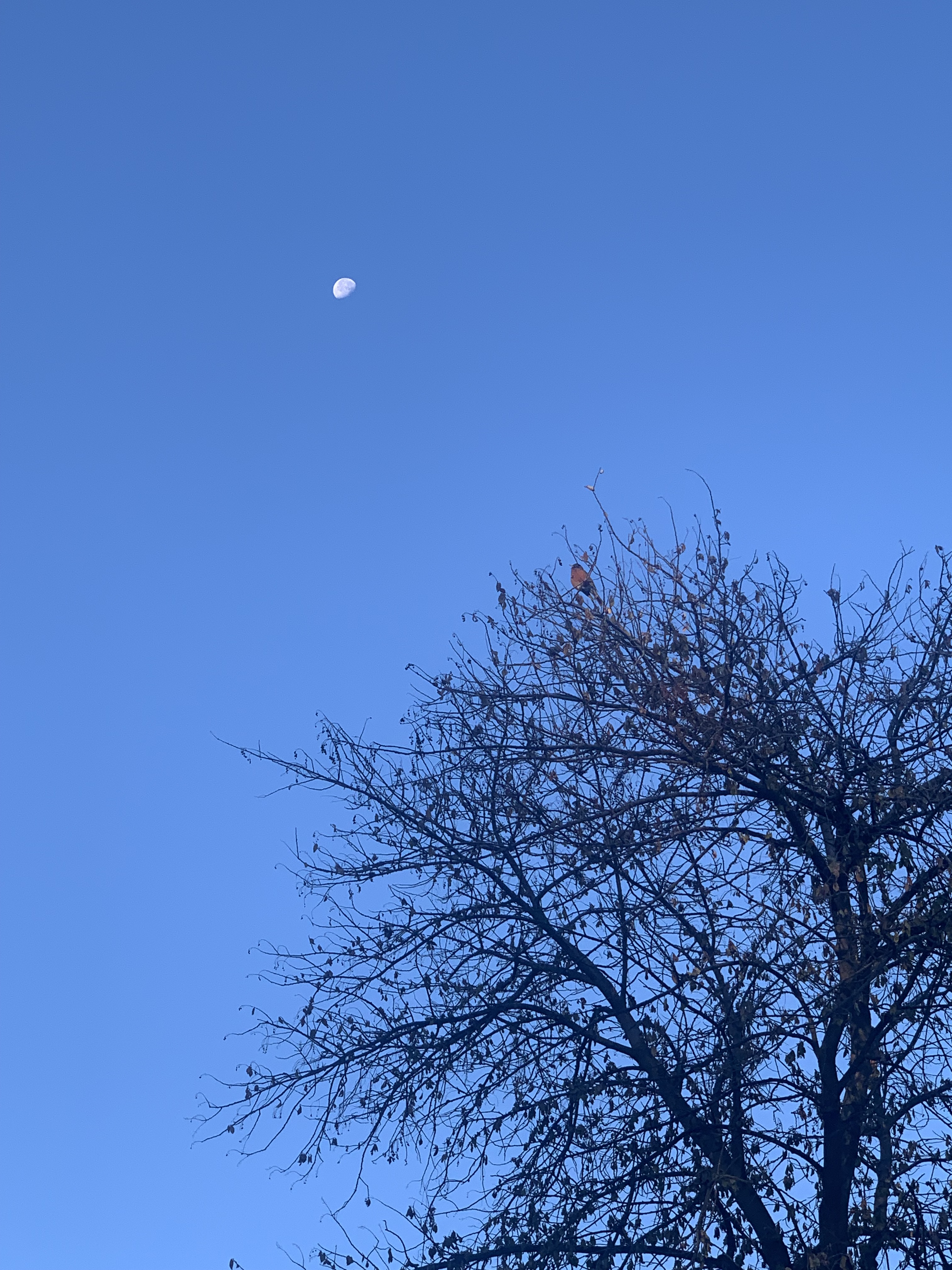
November 13, 2022 – 7:58 AM

Every summer we witness a few robin fledglings, either by watching them fledge in a backyard nest or spotting little ones chirping and hopping behind their parents. We always have a nest somewhere. I love to study them and blog about them. I must have written at least 24 robin blogs. One year, about 5 summers ago (?) we had a nest in our back yard, the eggs had hatched, the parents were busy busy feeding the noisy little babies. Then one morning, the nest was empty. What? After this discovery I recalled how I had just run three magpies off our deck. YOU! YOU DID THIS! I just figured the magpies had ganged up on the robins (those bullies!) and snatched the little ones.

Imagine my alarm when, three or four weeks ago, I saw a magpie sail past our dining room window with a large sprig in its beak. Uh-oh! I lost sight of it and looked to see where it landed with that sprig. Huh. No clue.

Well of course that magpie was building a nest. And unbeknownst to me, I was capturing photos of it the whole time. My idea of interacting with winter is to hunker in the house and occasionally open the front door to take photos of the latest accumulation of snow. I typically step out on the front stoop, point my i-Phone westward, and capture the view with our front may tree. Well, guess what? Want to see the slide show of a magpie nest being built? It starts on February 20. Nothing going on here, right?

Feb 20, 2023

Then, February 28. Cold, but innocent. Nothing happening here? … perhaps

Then on March 3, huh, a definite thickening of those lower branches hanging down. Gravid. Like the thickening of a womb in preparation for pregnancy.
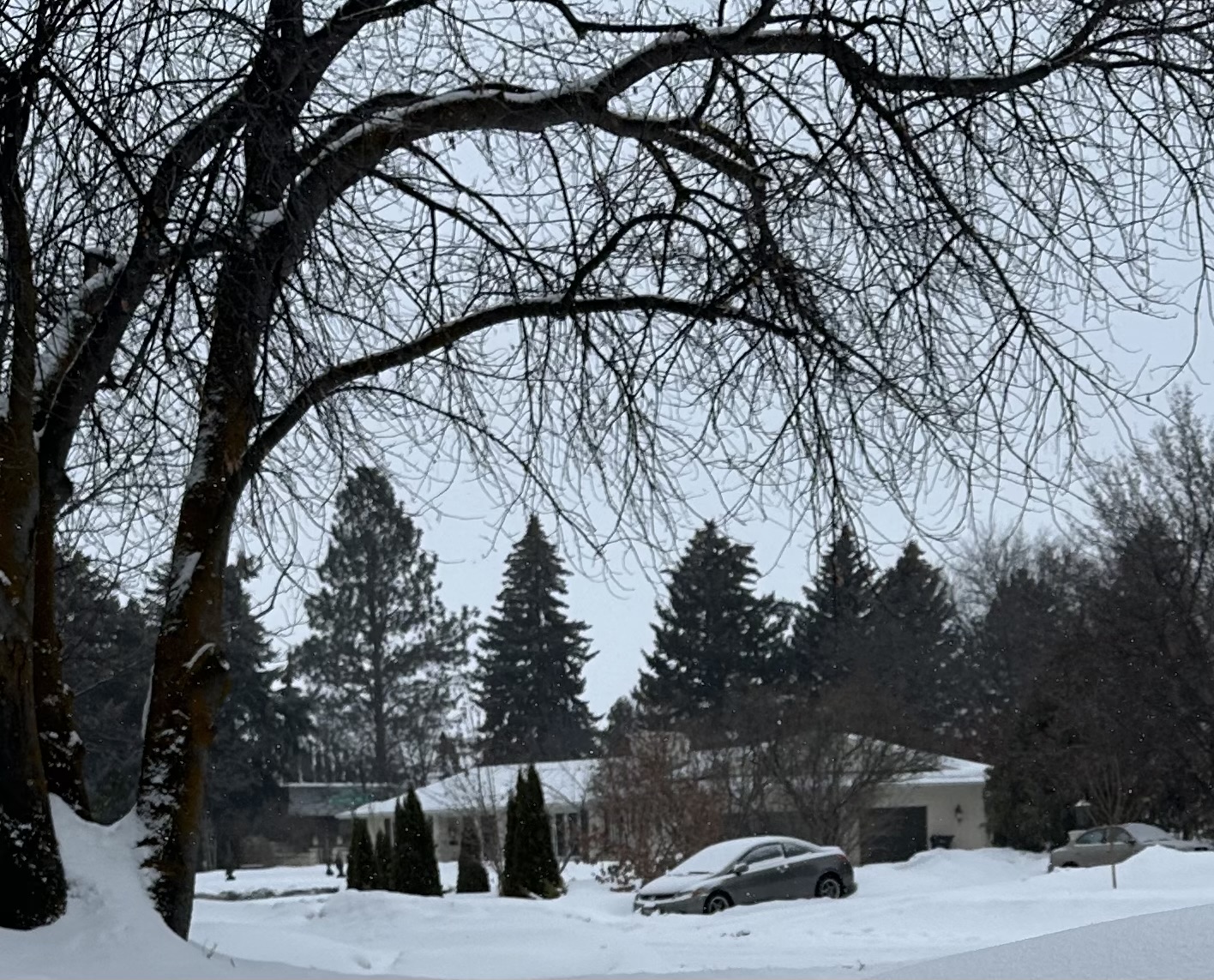
Two days later – March 5 – definite thickening in those lower branches just above the line of spruce trees

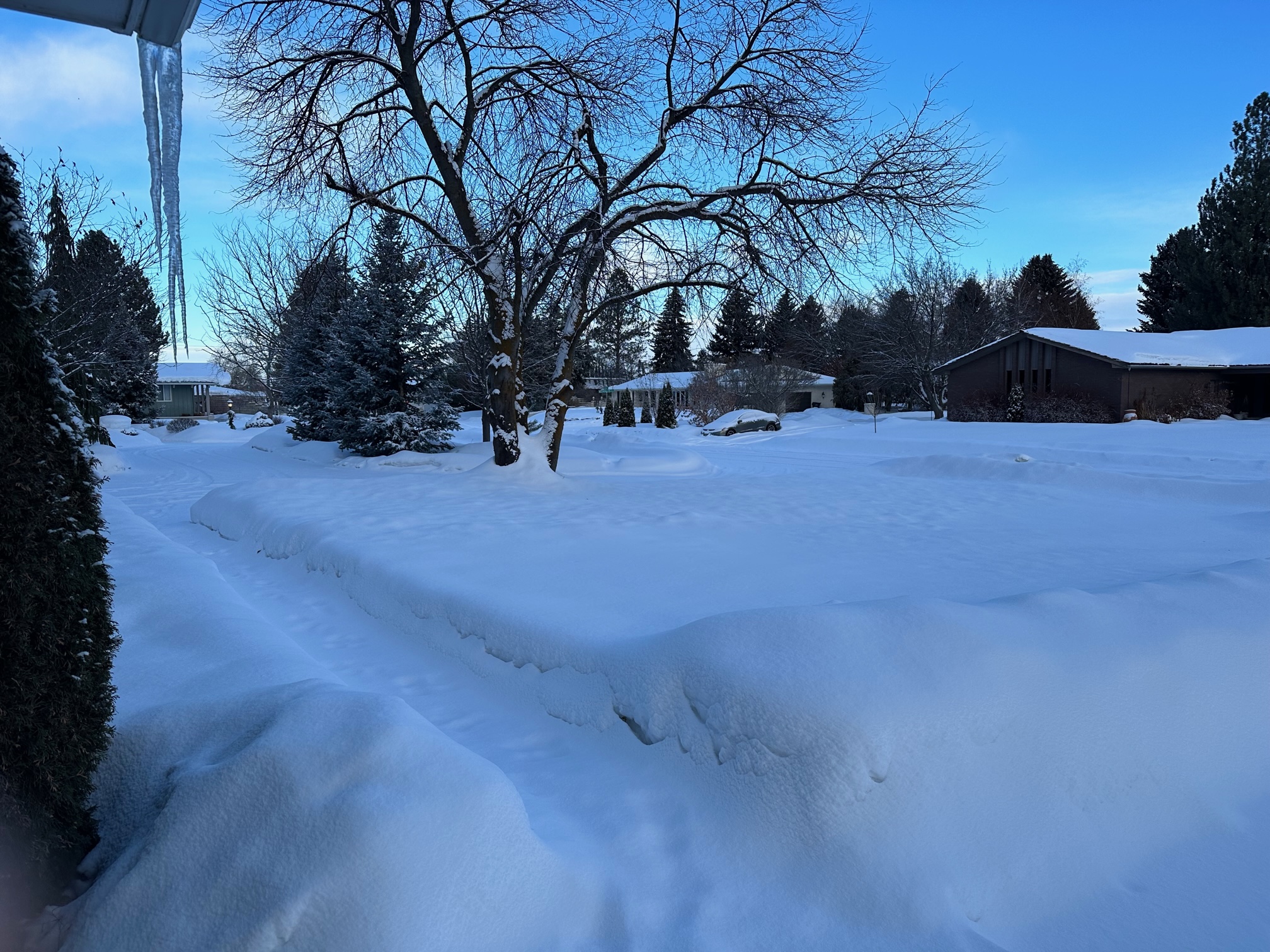
March 10! I had actually used this photo in my Kauai blog, joking that the huge icicle was no spider web, or some such thing, oblivious to the expanding construction project in our May tree.
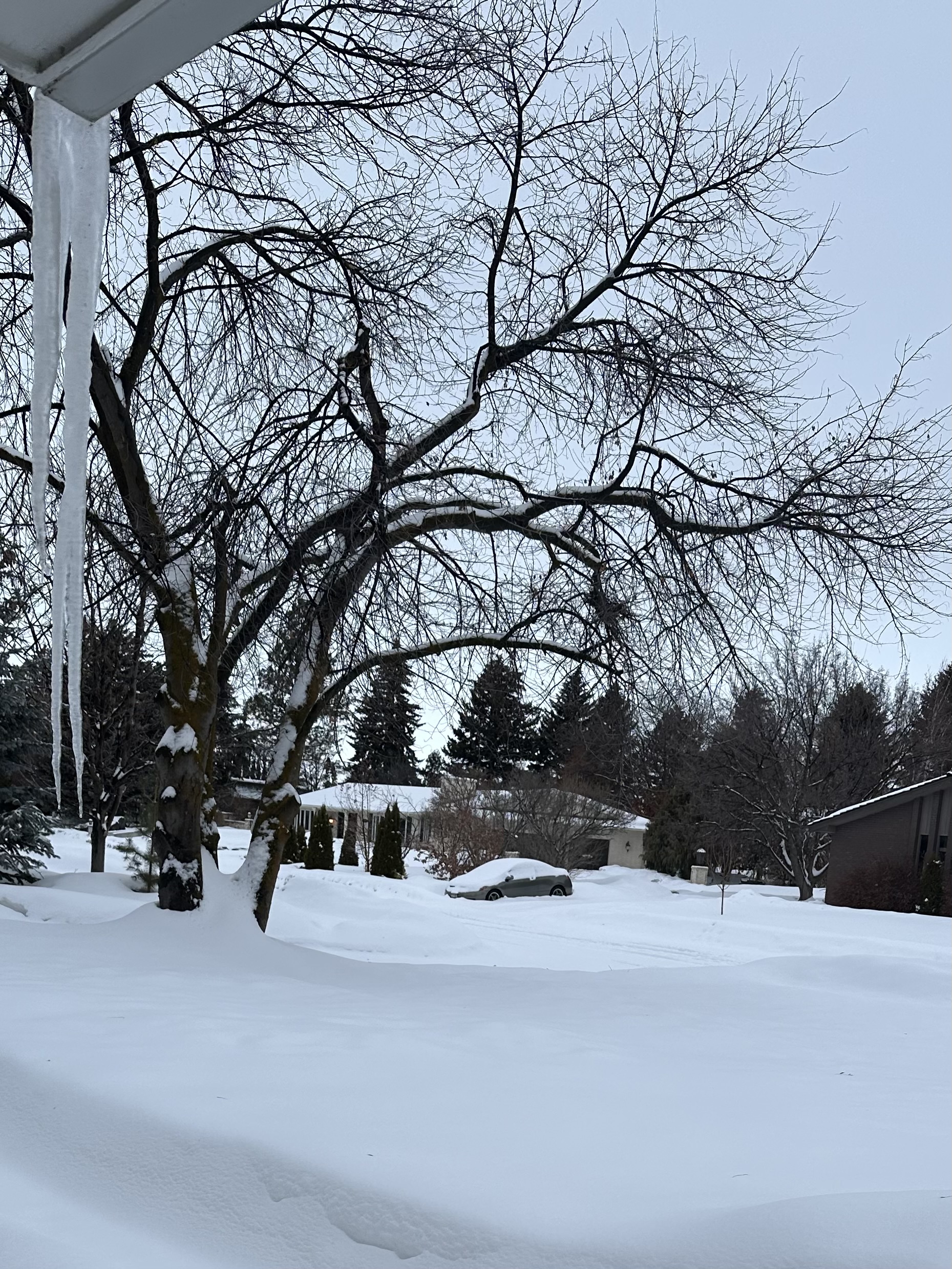
March 10 – This would have been the moment to intervene. Had I recognized the situation – magpies building a nest right in our front yard. In our ‘Robin tree!’ But no. They kept building, I was capturing it on camera, and we were oblivious.

I guess the epiphany came on March 11. There they were! Both of them hard at work on that nest. From what I’ve since read about magpies, the male typically delivers the construction material to the female who builds the nest. You can see the female’s tail in this photo, sicking up out of the nest parallel to the male.
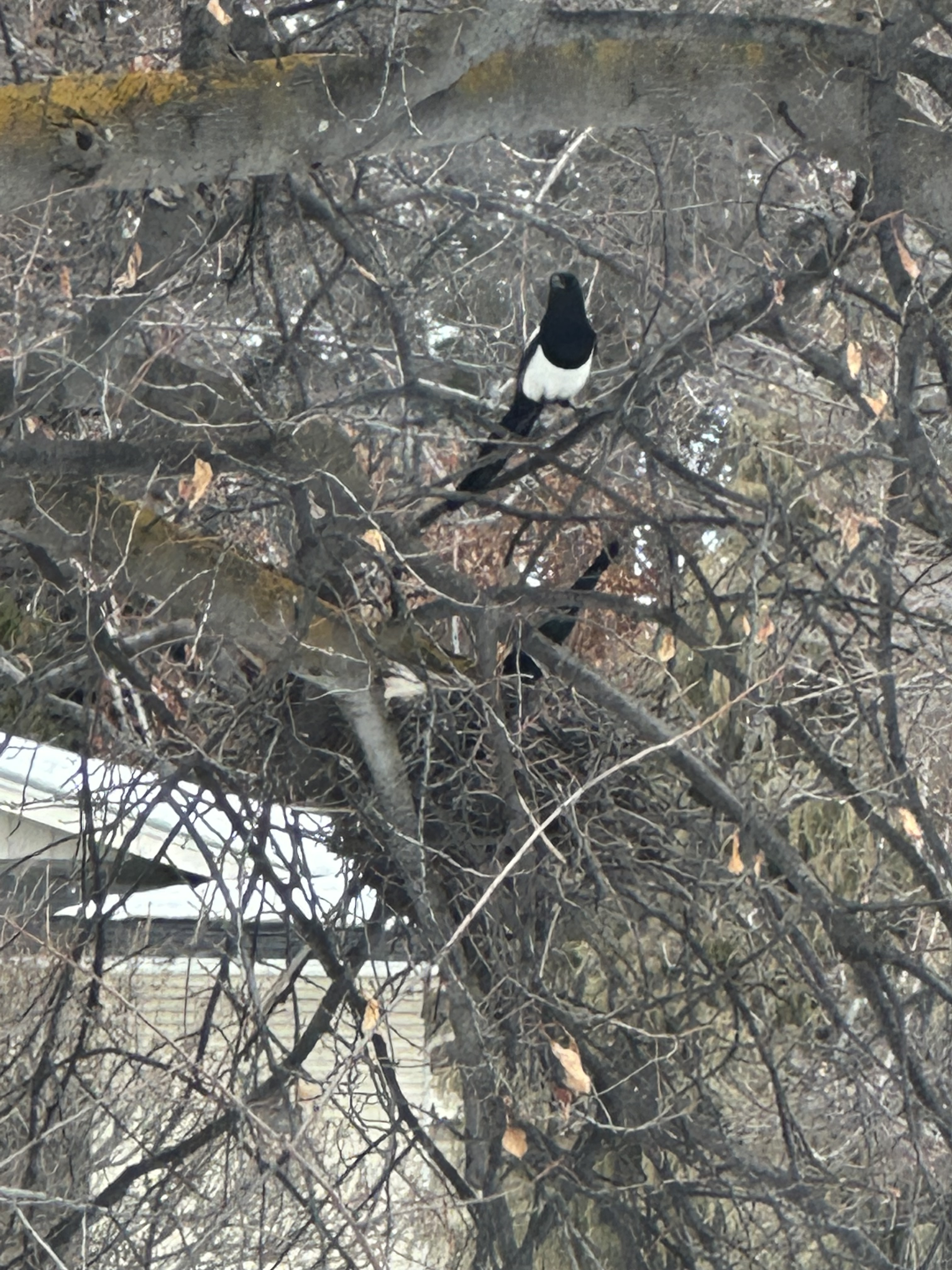
Magpies are building a nest in our front may tree! I just couldn’t grasp the reality of it. I’ve never seen a magpie nest as far as I know. I thought they nested near open fields. Not near humans!

I started doing some research. Here’s a link: https://bonnersferryherald.com/news/2016/nov/10/magpie-the-chatterbox-of-the-bird-world-11/ These black-billed magpies are native to Idaho and the western half of North America. I guess one could argue that they were here before humans and think about how a family of magpies must feel about a big house or a human neighborhood going up next to them! I already knew they don’t migrate in the winter. How does the saying go … “they’re scrappy- when the going gets cold they don’t get going.” They tough out the winter, which tells you how smart and industrious they are.

Magpies are part of the Corvidae family, along with the crows, ravens and blue jays. Indeed, they are highly intelligent, one of the smartest animals in the animal kingdom. Magpies are so noisy because they have communication abilities similar to basic human language, including telling if another magpie is lying!

I wanted to capture closer photos and videos of their industrious nest building, but I was confined to taking them through our dining room window. No matter how busy they were building inside the nest, as soon as I even turned the front door knob to step outside they flew away. So every photo and video you see was taken from inside the house.

Took this video on March 12. Through our dining room window, of course. Turn your sound up so you can hear the proud male announcing his delivery to the female!

Here’s a photo I took a little later on March 12. Look how big that nest is already. Maybe they’re about finished with it.
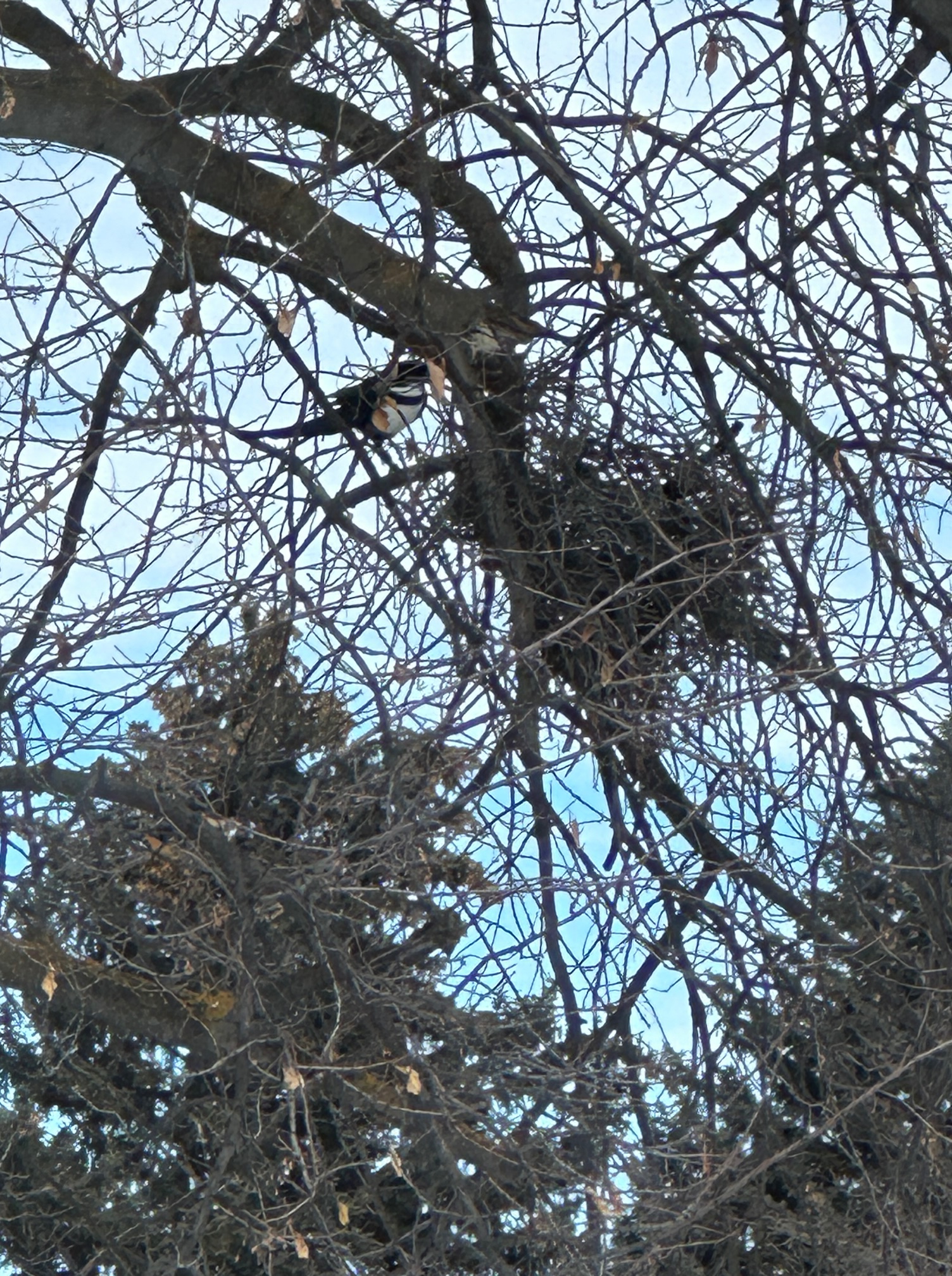
March 13 – huh, they seem to be adding a canopy or something…

By March 15 it’s clear they are building a two-story condo

March 17 – you work downstairs and I’ll work upstairs!

March 17 – Really shaping up! See the front entrance? There’s a hole there between the two stories.
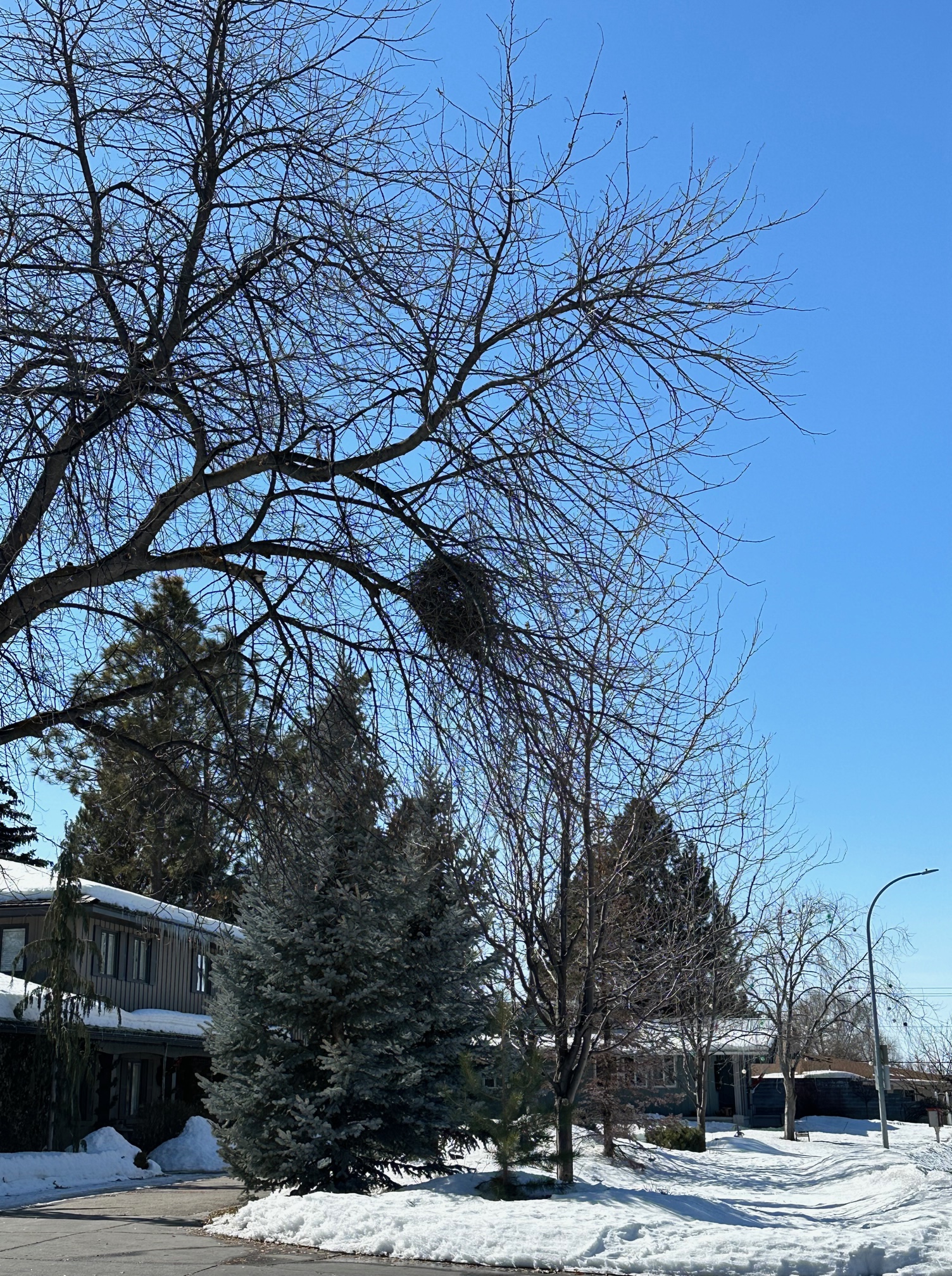
March 21. Welcome first day of spring! No wonder they build a dome over the nest
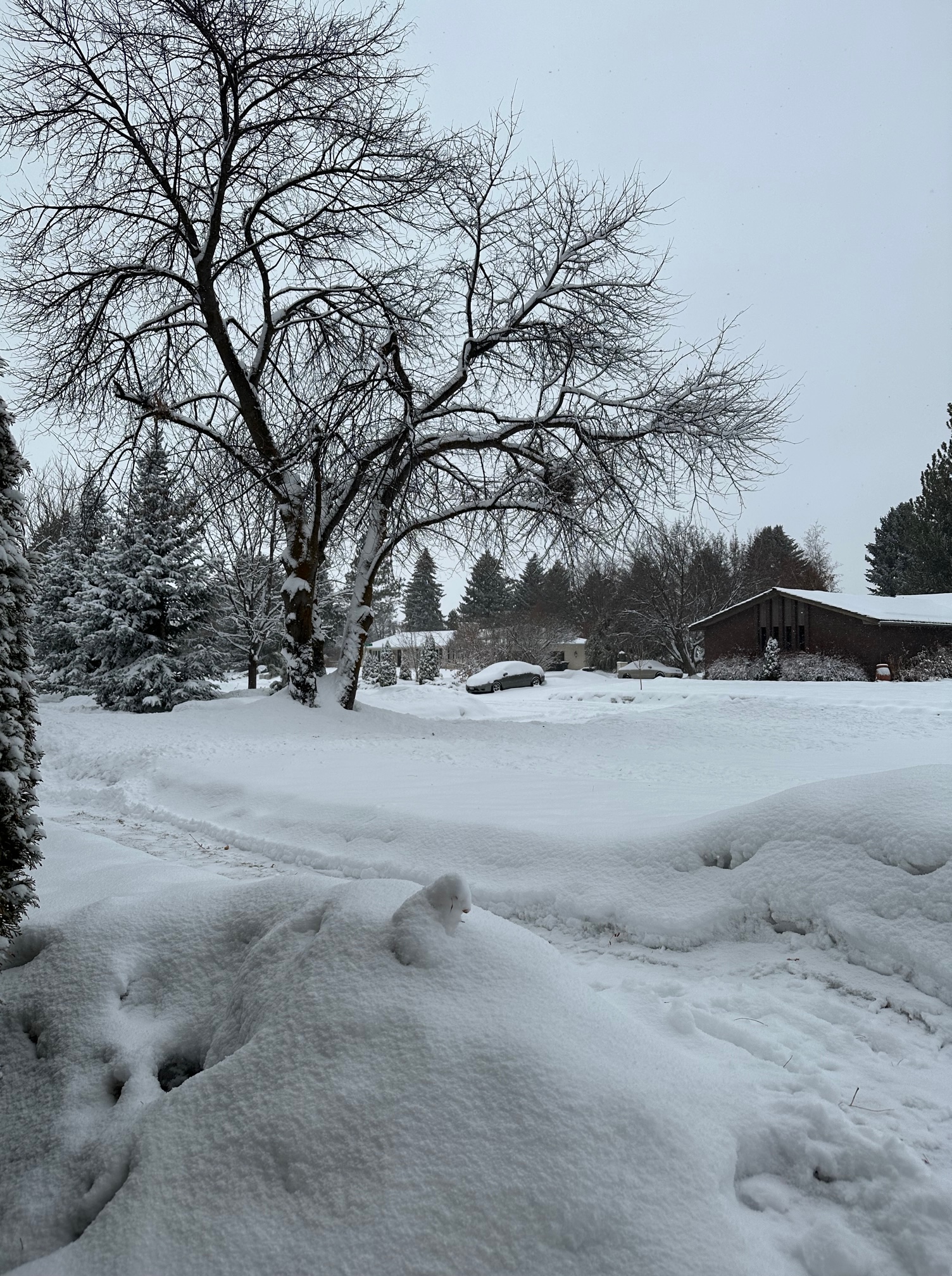
Fire up the furnace!
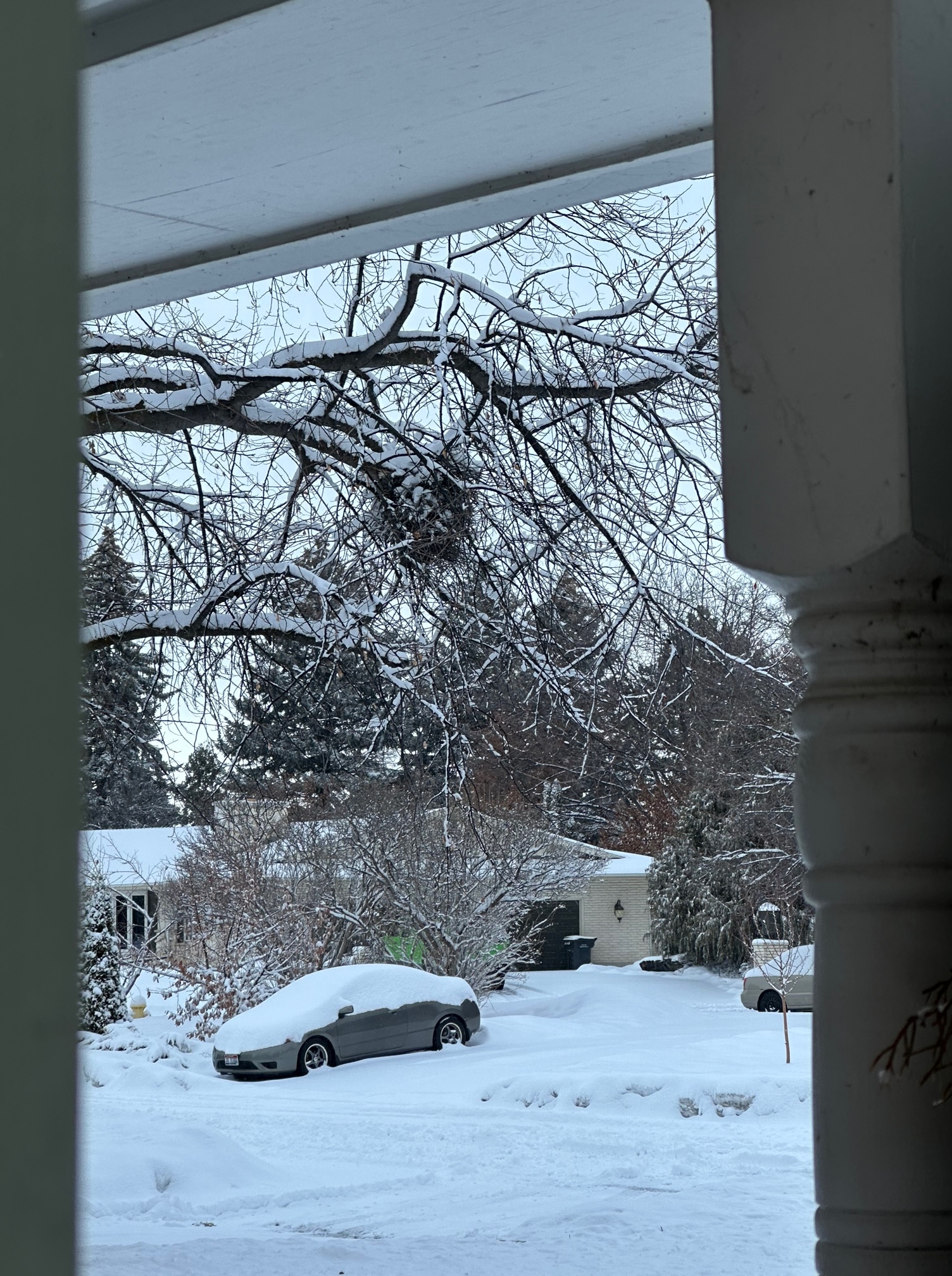
On March 22 I took this video. It’s a little long, 48 seconds, but it’s quite entertaining. One of the magpies drops an 18-inch twig and then flies down, attempts to retrieve it, but maybe decides otherwise (?) Smart move. The other magpie flies in to assist.

They are so industrious and persistent!

Saturday, March 25. Do you suppose you would notice this nest if you were to walk down our street?

It honestly looks like a giant womb. Which, I suppose it is.

Check out this link to learn more about magpie nesting. https://birdfact.com/articles/magpie-nesting The nesting season is April to July. Egg-laying typically starts in late March or April. Magpies may start building their nests as early as December. It obviously takes several weeks to build them. But they usually finish the nest in March.

I took this photo this morning.
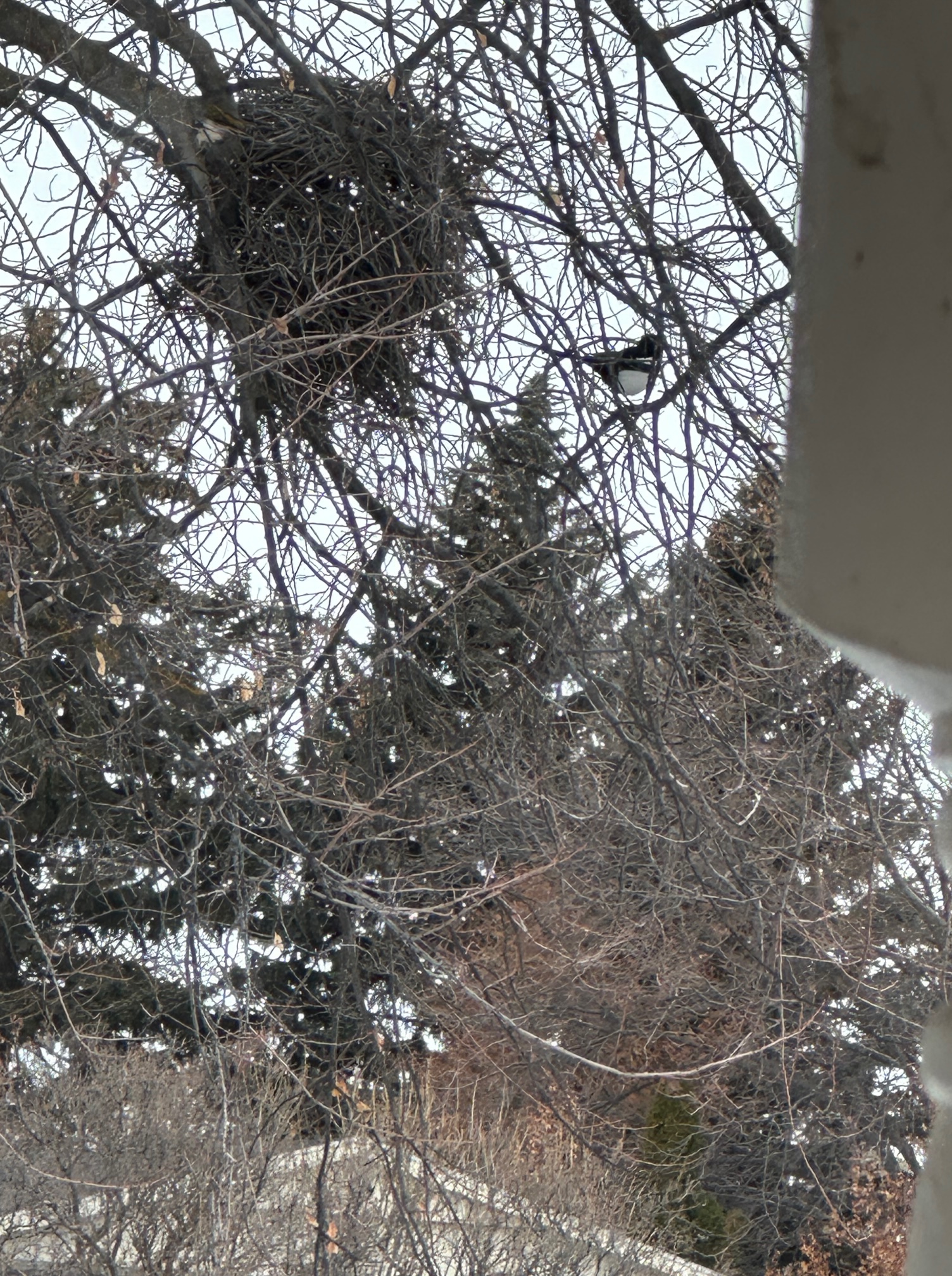
The magpies have been adding finishing touches, likely lining the inside now with moss, animal fur, feathers and other soft materials. When will they lay their eggs?

At some point that may tree will leaf out obstructing the clear view of the comings and goings of this magpie family. May trees typically bloom and leaf out in the first week of May. But this year?? The way ‘spring’ is going, I’m thinking … June?

Watching these magpies is going to be interesting. Especially with all the other activity going on around here. Just last Thursday evening David came in from the back patio, “Hey check out the owl in our back spruce tree.” I did. Except when I went out there the “Whoo-whoo-whoo-ing’ was coming from across the street. So I went out the front door – captured this video. (Turn up your sound!)

Yeah, two great horned owls calling to each other. As I took the video the one roosting in our back spruce tree flew overhead and landed in a spruce tree near the other one.

And since then I’ve been watching carefully and wondering … what does an owl’s nest look like?

Yes, methinks things are going to get interesting around here with those magpies.

Aloha, Kauai!

March 19, 2023

Kauai 2023 – Part 4

I feel weird, like I’ve left us marooned in Kauai. I have to get us back home. Spring in Idaho is nigh upon us! (Yeah, right.) Somehow I can’t move on from Kauai until I wrap up our January 2023 trip and get us safely home again.

Our last hike was on the Club Med Ruins path in Princeville on the north shore where we enjoyed gorgeous views of Hanalei Bay from the east and checked out the surfers. Well now we are in Hanalei Bay walking the beach. Here you see a view of the ‘dock of the Bay’ looking north – that greenery in the background is where we were walking yesterday – where the failed Club Med and other resorts were never built.

Okay so you’re walking the beach with us now. Here’s a video. Feel the ocean breeze on your face and the sounds of the roiling surf:

Let’s walk the whole expanse of the beach and back again. Oh, wait a minute. Too late. While we were busy taking photos and videos the rest of the group made it to the end of the bay and are already on their way back toward the dock.

That’s Eric, David and Victor on the far left side of the photo. Steph is on the far right – she likes to walk along the shore and soak her feet in the salt water.

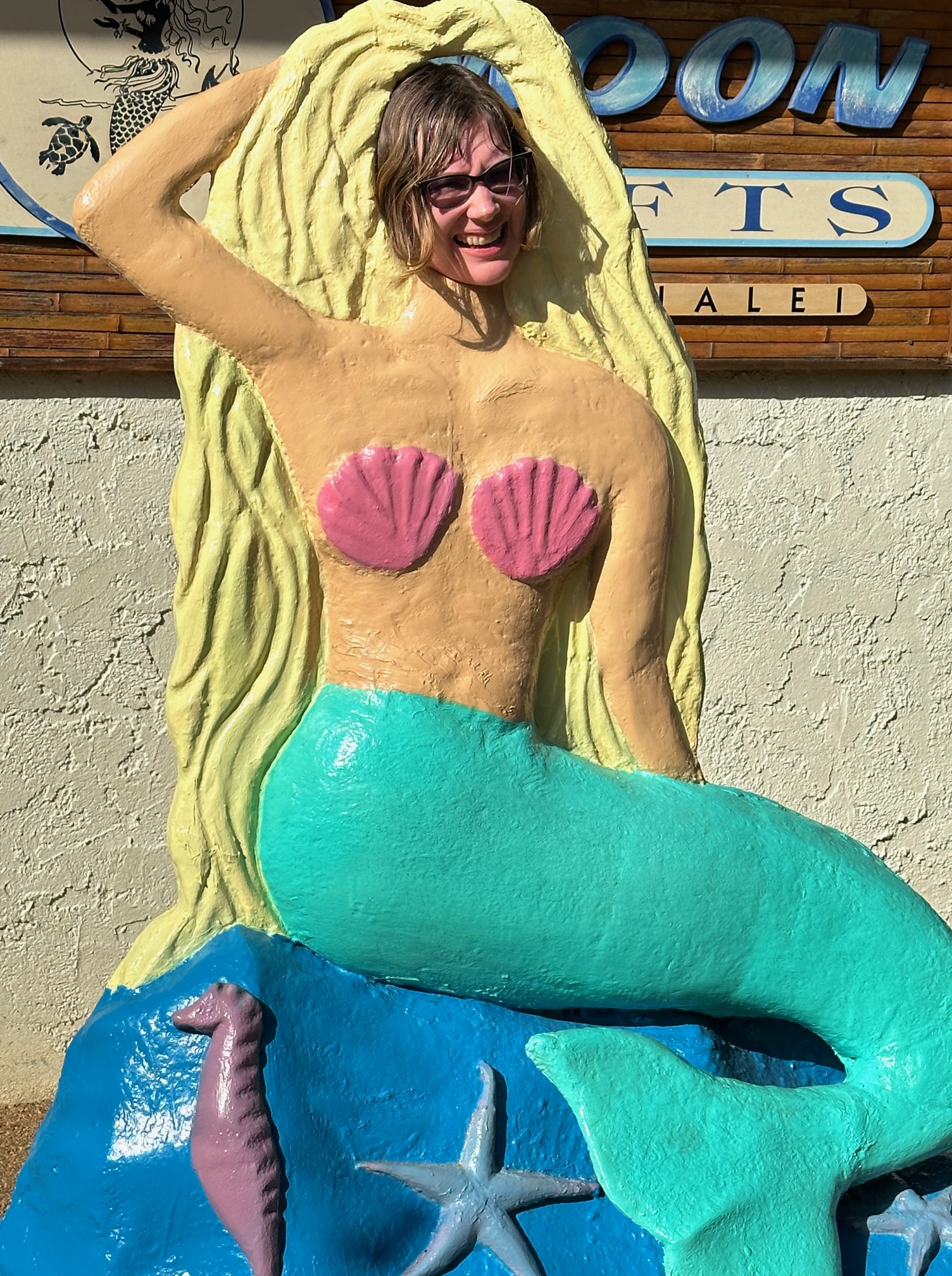
And look who washed up the beach!

A mermaid named Megan!

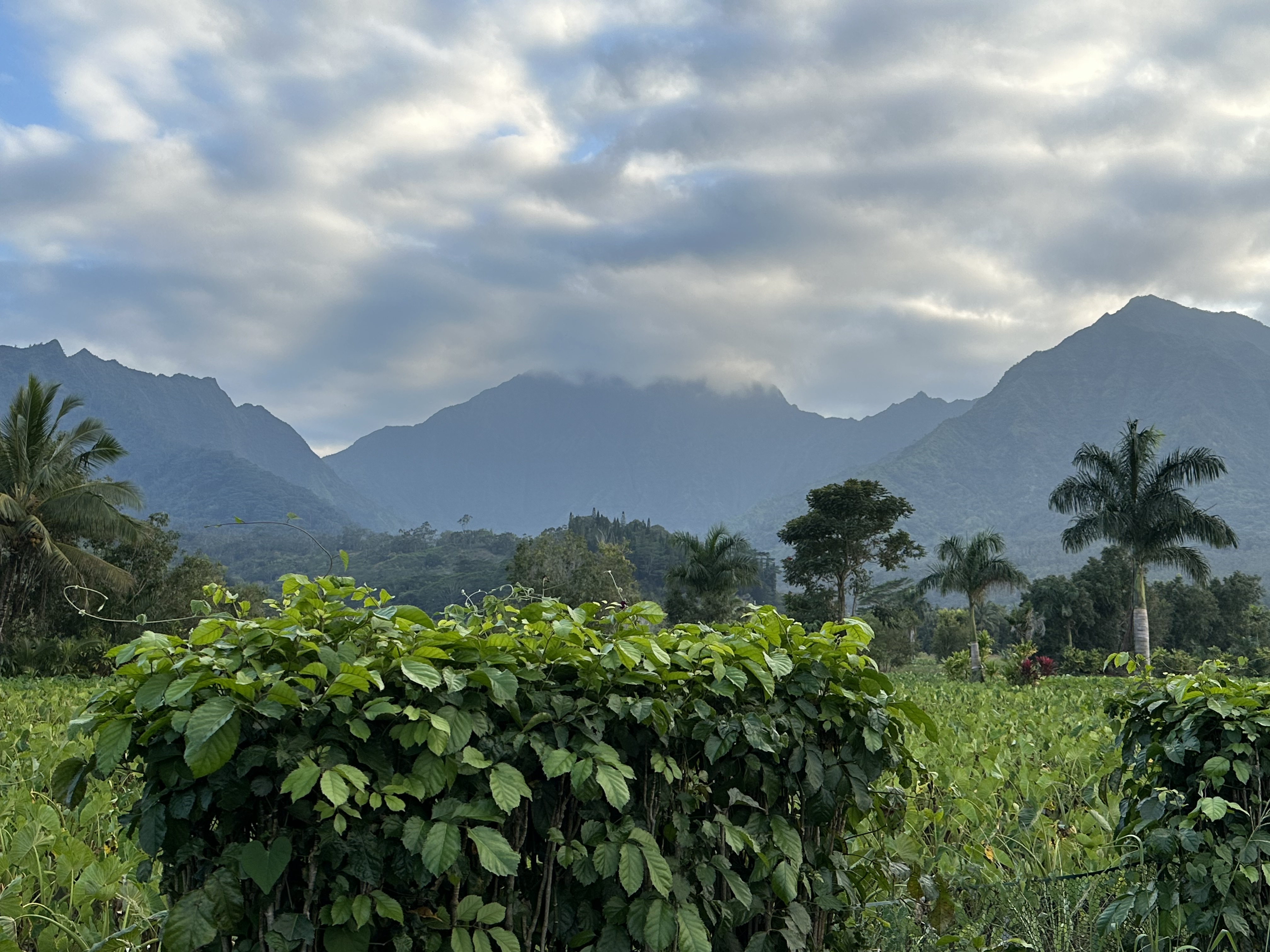
We pull up in the parking lot behind the Hanalei Market. I’m always dragging behind. But when I climb out of the car I can’t help but take a photo. Check out the view!

We shop for a bunch of organic food. Yum! Eric’s got the goods.

I hope Sasquatch doesn’t carry Eric off on his bicycle

Oh but there’s a high surf today so of course we have to drive just a few miles further north on the northern tip of Kauai to Lumaha’i Beach! You pull off the side of the road above the beach and park. Then walk down a short, steep, windy path to the beach. Whoa. No swimmers today. Better stay back a ways from the crashing surf! Here, I took a photo. And a video …

I leaped up onto a ledge when a rogue wave came crashing in – almost lost my sandals. Ran into a couple on the ledge. They allowed that it wasn’t a smart move to be standing on the beach today taking videos. (Smart for tourists, though, who may never make it back here?) Yeah, do you know what the locals call this beach? they said. LumaDIE’ i beach. Oh!

To give you a little perspective on what a Lumadie’i surf might look like, here’s a You tube video – ‘Big surf at Lumaha’i January 28, 2016.’ (This might be the same You tube video I shared in a previous blog – but it’s worth sharing again.) Let me just say, a lot of girls in string bikinis risked their young lives to bring you this video, which, I assume is not being taken by their parents:

We’re headed back up to the car now, on a path through a mini-jungle.

You’re welcome, fellas! Hey, this is Kauai.

But before we leave the island, I must share the most charming experience of all, that of witnessing the nesting Layson albatross. Which, by the way, are an endangered species. Here’s a link for you: https://www.google.com/search?q=Laysan+albatross&ie=UTF-8&oe=UTF-8&hl=en-us&client=safari

Layson albatross spend most of their lives flying over the open ocean and can spend up to six years at sea. They only return to land to breed and raise their chicks on nesting sites on the northwestern Hawaiian Islands, mostly Midway and Layson Island but also on the north shore of Kauai. Albatross have a 20-40 year life span. They return to the very place they were born (called imprinting) and engage in elaborate mating dances until they find a mate at about 8 years old.

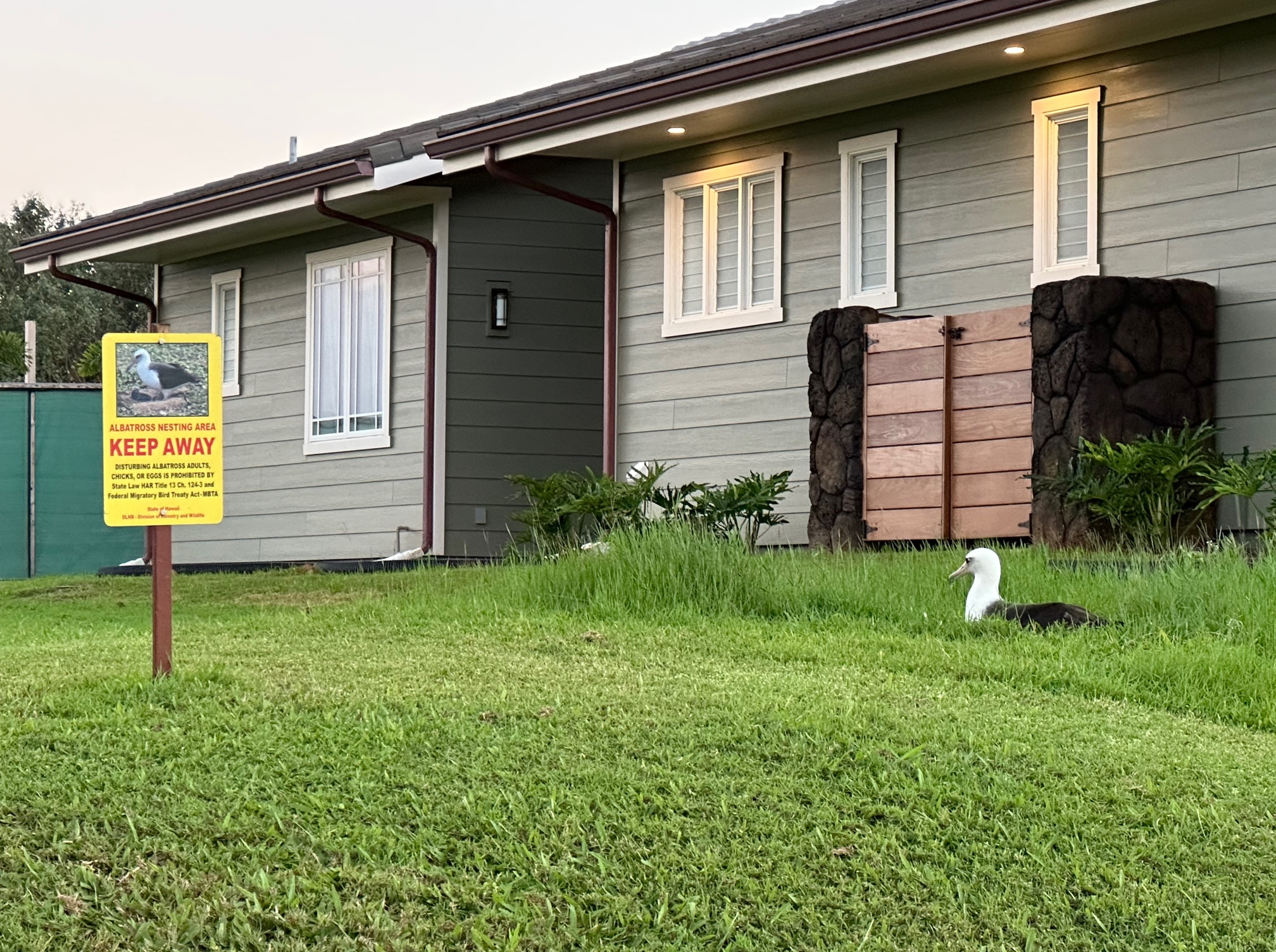
We always encounter albatross when we visit Steph and Vic in Princeville because there are usually a few nesting albatross on their street. Sure enough, this year there are two nesting albatross right in the yards of a neighbor 3 doors down. I took this photo from the street just walking past it.

We always encounter albatross when we hike Larsen’s beach. They have a nesting site on top of the bluff at the end of the point. Larsen’s beach is probably our favorite hike on Kauai’s north shore, as we also frequently encounter endangered sea turtles and Monk seals sunning themselves on the beach. I’ve blogged about our hikes there several times, but we just can’t leave Kauai (sigh) without me sharing photos and videos from this year. Are you coming along?

They are magnificent in flight

There’s one flying overhead!

Walking back now, we encounter one all by himself, engaging in mating calls, perhaps? Certainly he’ll catch the attention of another albatross!

We encountered a monk seal too. Do you see it in this photo? Look in the sand.

I’m always lagging behind. Do you see Eric and David in this photo? We’ve almost made it to the point at Larsen’s beach.

Find Eric in this photo:

Here’s a photo of Megan as we head back toward the trail head at Larsen’s beach.

Enough already. Get your butts home to Idaho! Okay…

Aloha, Kauai.

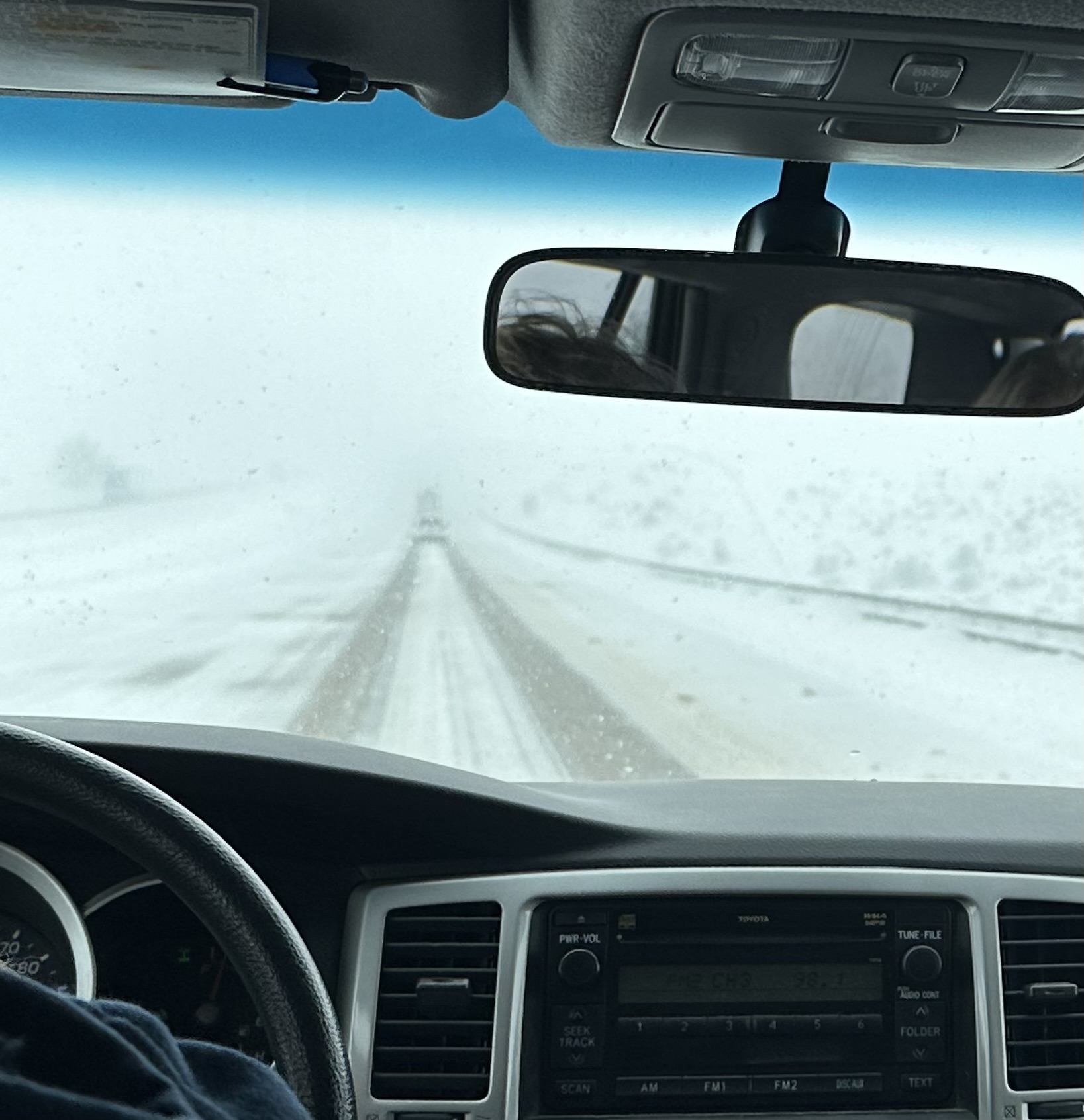
Thursday evening January 26, 2023, and we’re headed to the airport in Lihue to catch the red eye to Los Angeles. I’m a little sad and my phone is stowed away in my purse. Enough photos! We land in LA without a hitch (thank goodness) about 7am Friday and catch our second flight to Salt Lake City. We land in Salt Lake before noon. Of course I just don’t sleep well on the red eye so I’m glad I’m not the one driving us the 200+ miles home to Idaho Falls. Accompanied by ‘old man winter.’ I pull my phone back out and capture a few photos of our drive home from the back seat. Here we are nearing Malad, Idaho. David is driving.
Make sure your seatbelt is securely fastened. It gets messier.

Eric takes over the wheel. David didn’t sleep well on the red eye either.

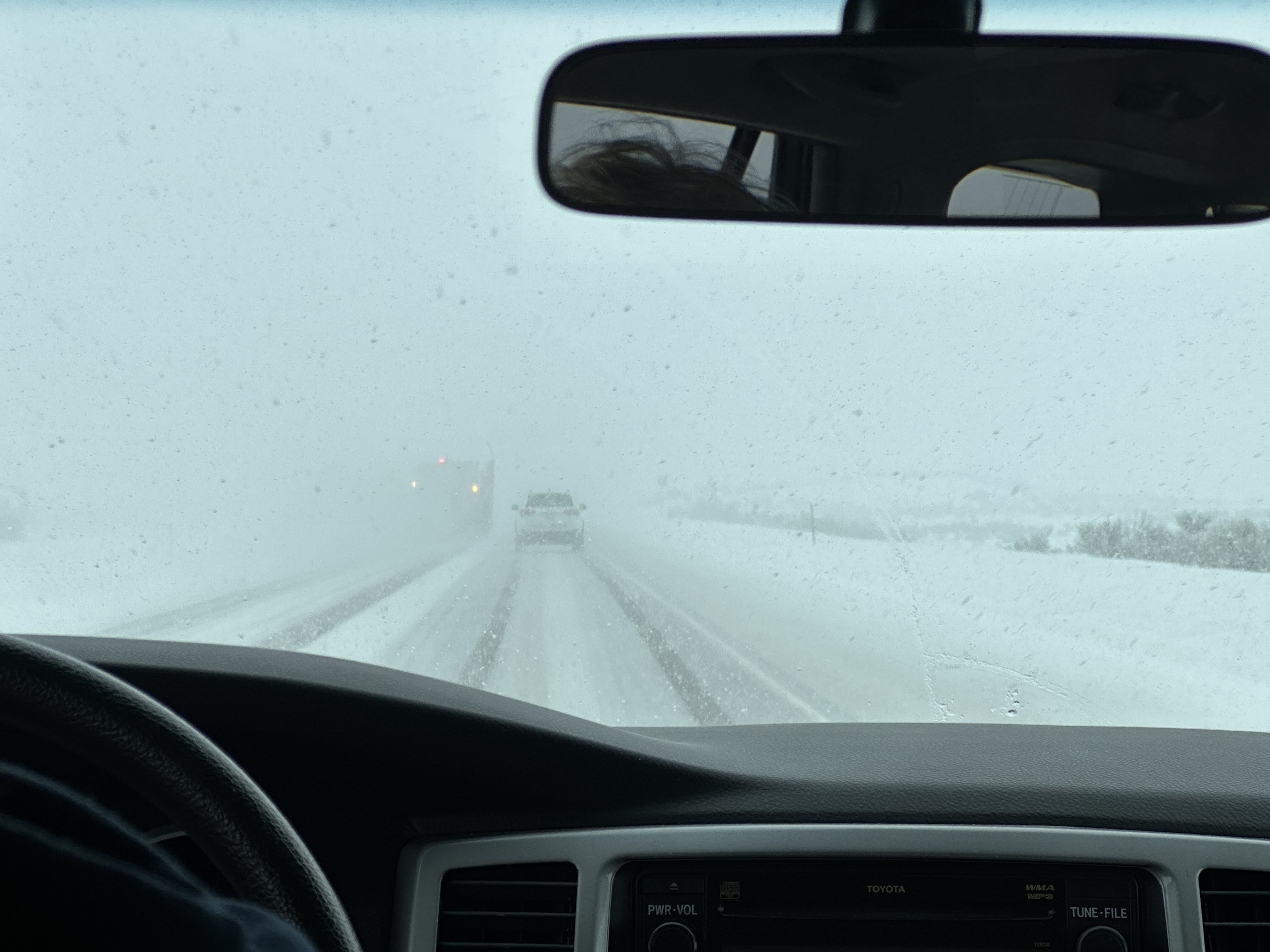
Near McCammon, Idaho now. Snowplows are a welcomed sight! Well, if you have enough visibility to see them…

Near Inkom, Idaho now. Uh-oh.

Dropping into Pocatello

Oh goody! How many miles to Idaho Falls??

We’re just a few miles from home now. Oh no!

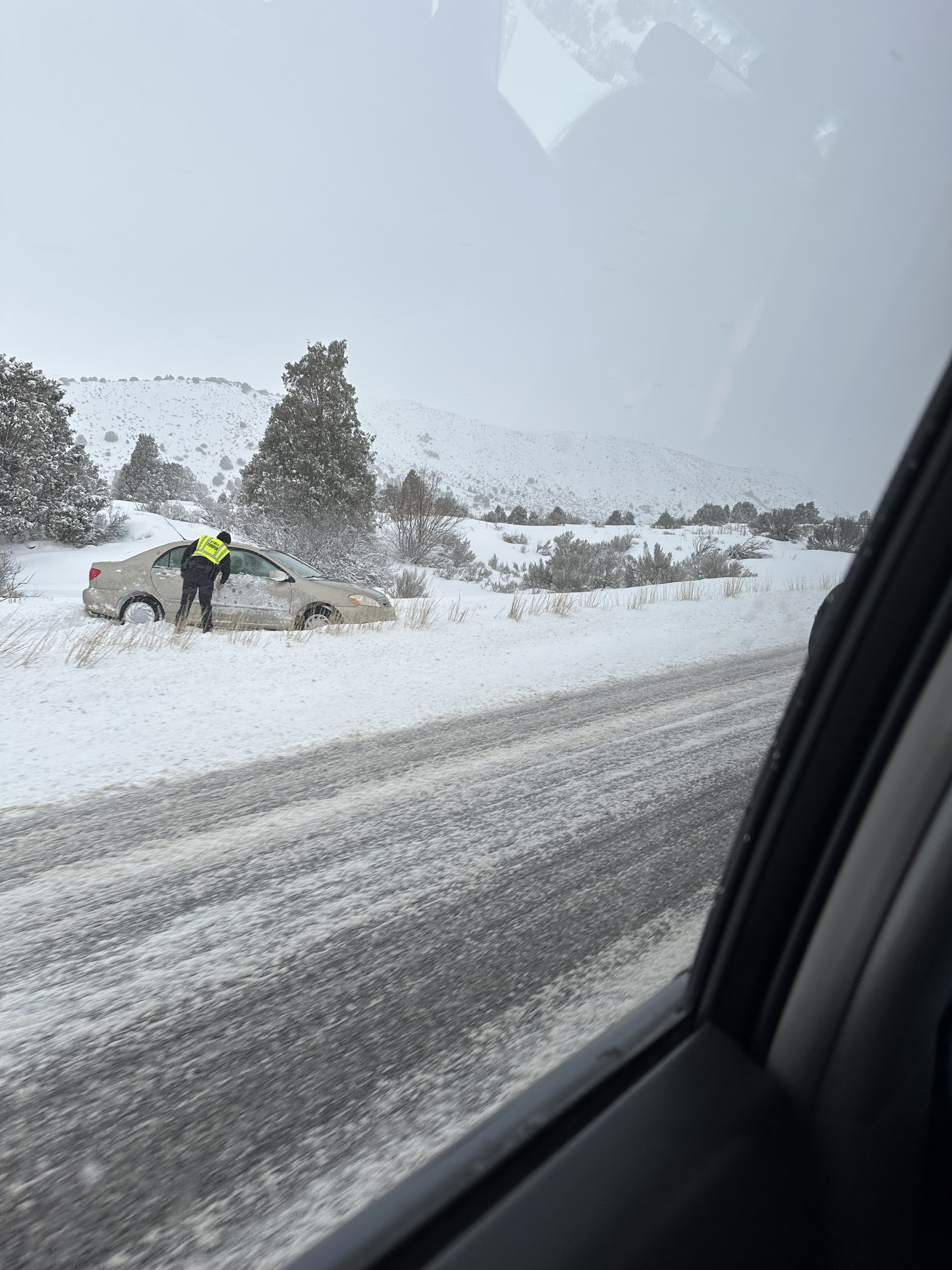
There were five cars off the road in the last ten miles. Oh goody. A tow truck! Somebody will be vey happy to see him!

Just pulled onto our street.

I’m not sure why the photo is so blurry. The scene did seem a bit surreal, arriving home jet lagged and stressed out from travel after spending 15 days in Kauai.

We hunkered in for the long haul alongside old man winter. After we were home, Victor and Stephanie sent us updates from Kauai. On February 1st, just 5 days after we left, the baby albatross on their street (where I had taken the photo) hatched out. Victor sent a photo:

A few days later the second baby in their neighborhood hatched. It seems like a miracle that these babies can survive – sitting in nests on the ground. It’s possible because everyone in the neighborhood is on guard for their safety, keeping their dogs leashed, (what about cats? Yikes!) and there are no mongoose (hopefully) on Kauai.

On February 27 we received this video from Steph and Vic. The baby is now almost a month old. A time for celebration! Watch the video carefully and you will see the baby in the nest to the right of the sign in the video:

Here in southeast Idaho we’ve experienced one of the coldest, snowiest winters in 20 years. We still have mountains of snow in our front yard, accumulating since November with not much melting in between. We have been hopeful for signs of spring and by golly I saw one the other day when a magpie flew past our front window with a large sprig in its beak. Sure enough a pair of magpies are working feverishly on a 2-story magpie bungalow in our front may tree.

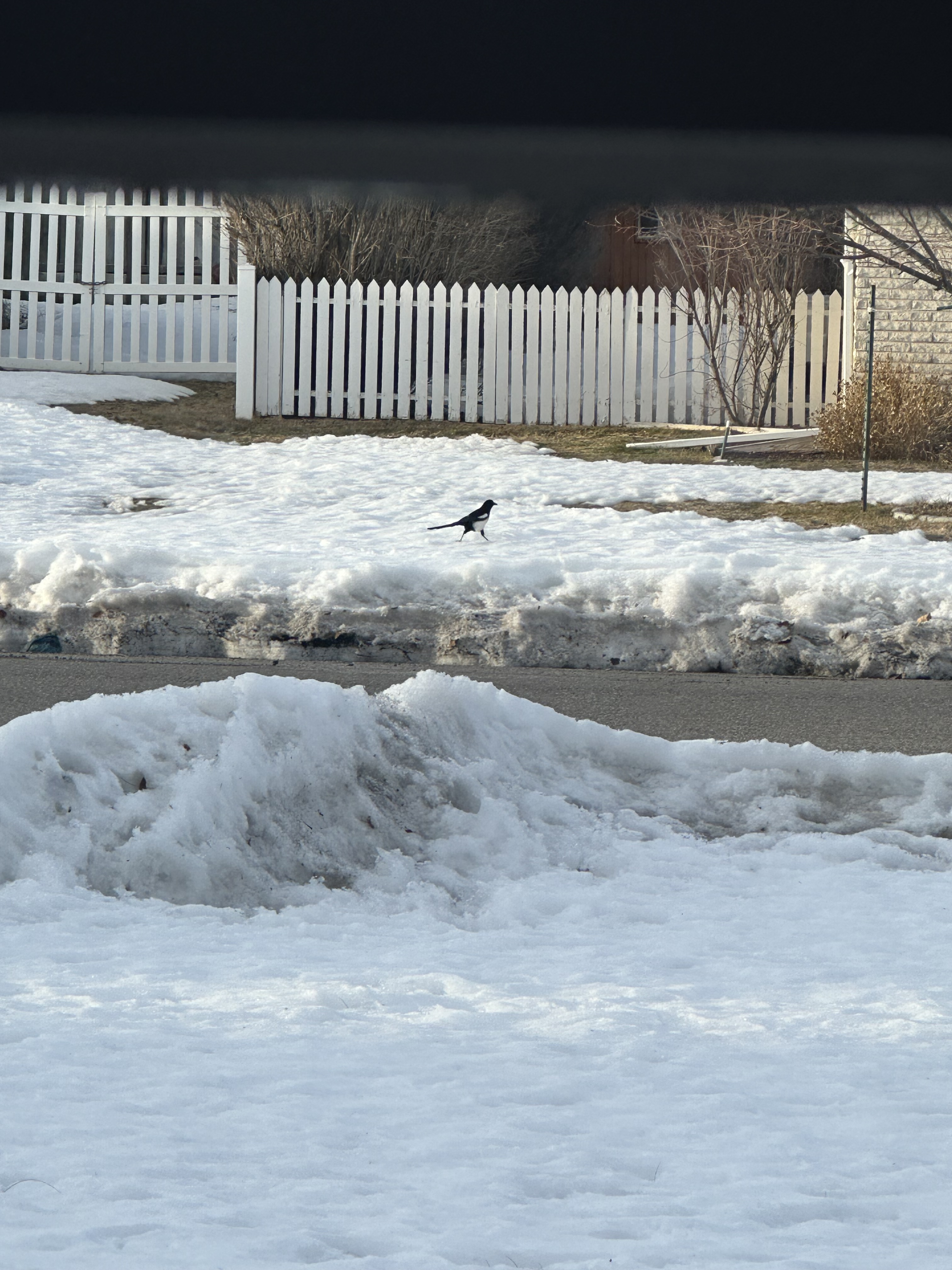
In case you don’t know what a magpie looks like, I just captured this picture of one of the pair. Boy have they been busy.

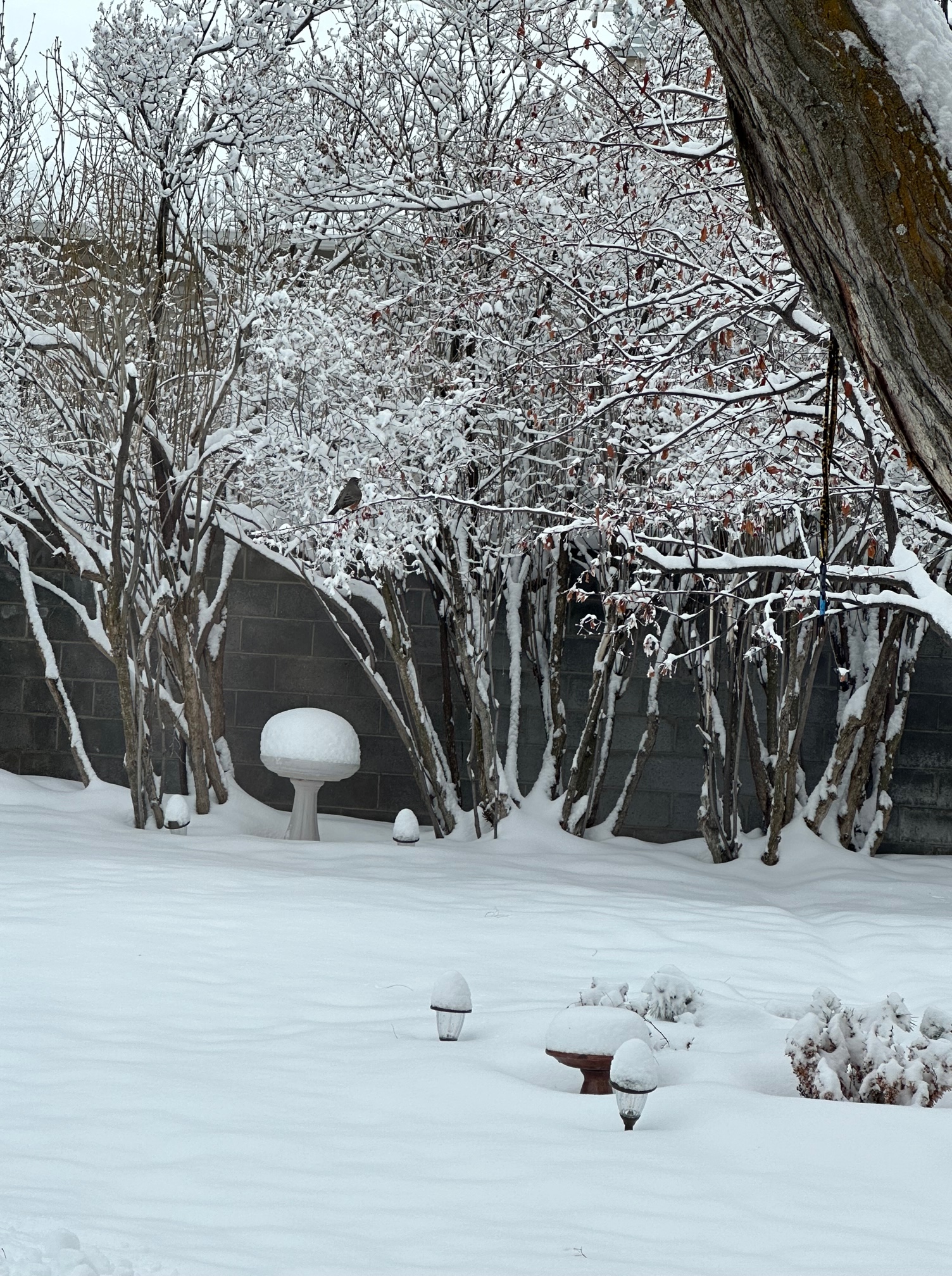
Oh, and did I mention that I also captured a photo of a robin in our back yard? Tough bird, that one. A sign of spring? Hey, I’ll take it!

And what’s the current weather forecast for Idaho Falls? “A return of snow on the first day of spring.”

And now you know why I’ve had such a hard time leaving Kauai.

Hanalei Plantation Trail – ‘Club Med Ruins’

March 11, 2023

Kauai 2023 – Part 3

One of our favorite hikes on Kauai’s north shore is the Hanalei Plantation Trail. The trail starts right below a family owned fresh food stand called Nourish Hanalei at the end of Plantation Road in Princeville – https://www.nourishhanalei.com

The area has an interesting history. Check out this link! – https://www.outdoorproject.com/united-states/hawaii/old-club-med-trail The trail runs through the Old Hanalei Plantation that is now known as the Club Med Ruins because there actually was a Club Med Resort on this property in the 1970’s.

The area was a filming site in the movie South Pacific before it was developed. In the 1960’s it was developed into a resort called the Hanalei Plantation Hotel that was then converted to a Club Med resort in the 1970’s. The Club Med resort operated for a few short years but then closed in the late 70’s due to financial hardship. Then in 1979 Honolulu developer Bruce Stark purchased the property with a plan to build 60 condos. The company poured a number of foundations and some walls and stairs before going bankrupt. The foundations remain, which is why the location is still known locally as the ‘Club Med Ruins.’ The path has remained open so people can walk the grounds and enjoy the views of Hanalei Bay. It is still private property. Signs are posted everywhere to stay on the path. A group is proposing some kind of future development but there is strong resistance from the community that has so far kept it from happening.

Let’s do it! We have arrived about 9am, before Nourish Hanalei has opened to make sure we can get a parking space.

Nourish Hanalei

Take in the view at this little stand! The Hanalei river and Hanalei Bay…

The easy walking path down the center of the ruins leads to a promontory point at the east end of the Hanalei Bay. I assume from the article in the link that this is where the resort lobby was planned. It offers a stunning view of the Hanalei bay and dock.

We’re down at the shore now. You’re standing right next to me looking east at the Hanalei dock.

Take the path in front of us and you can follow the shore all the way to the beach. Or follow the path to the right that leads through the woods to Pu’u Poa Beach. We go right.

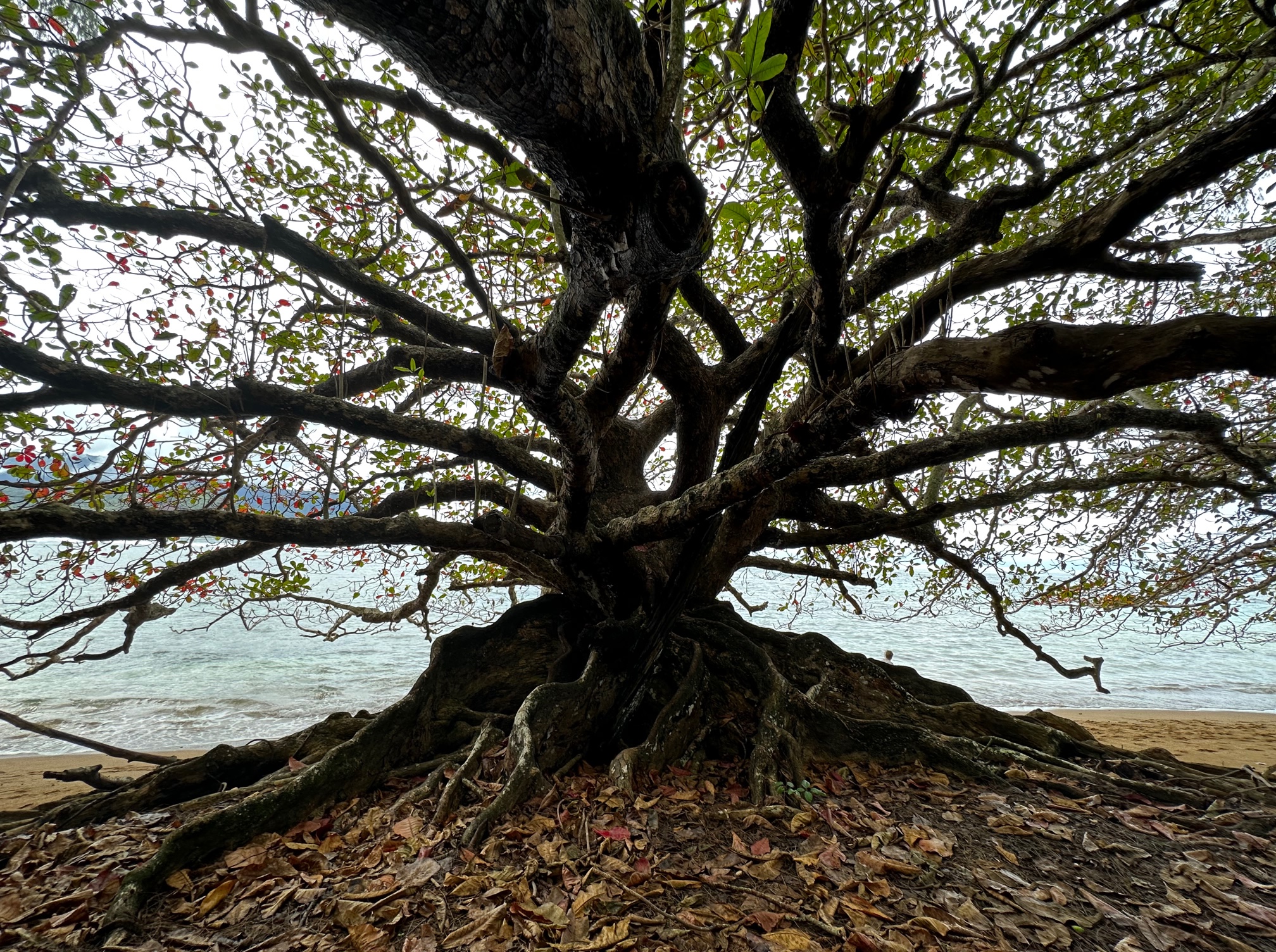
Encounter some ancient gnarly trees

The trees in the forest almost look frozen in motion, as if they could suddenly spring to life and those tentacled roots could come tromping toward us. Run those tourists out of the woods!

Path to Pu’u Poa Beach

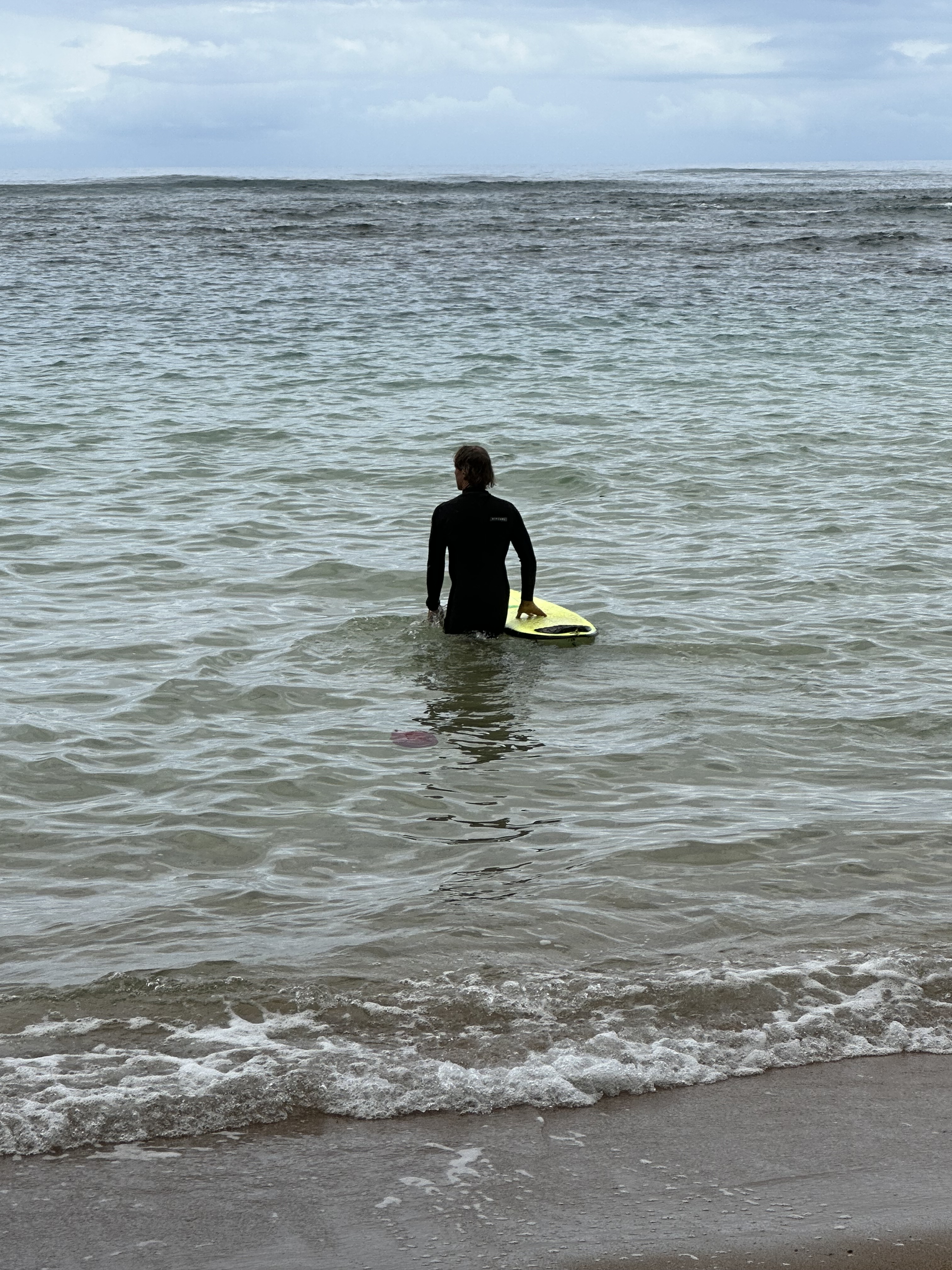
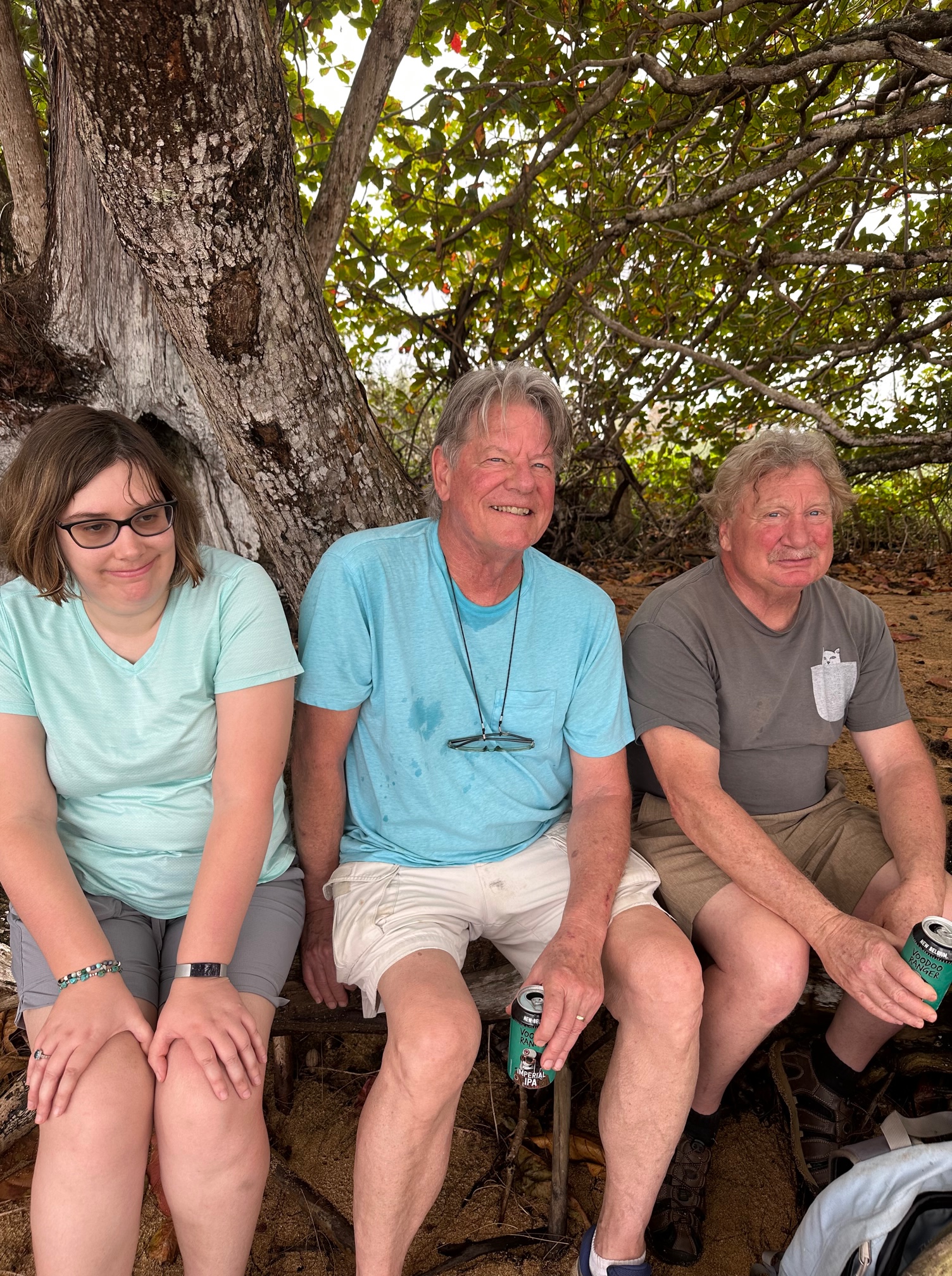
Ah, but we’re saved by a surfer who suddenly appears on the beach. He must have parked near us and walked the same path down. Here’s Megan, David and Eric settled in on one of those elevated roots to watch him.

You ready to go surfing? Let this surfer dude show you how it’s done. He’s just entered the water

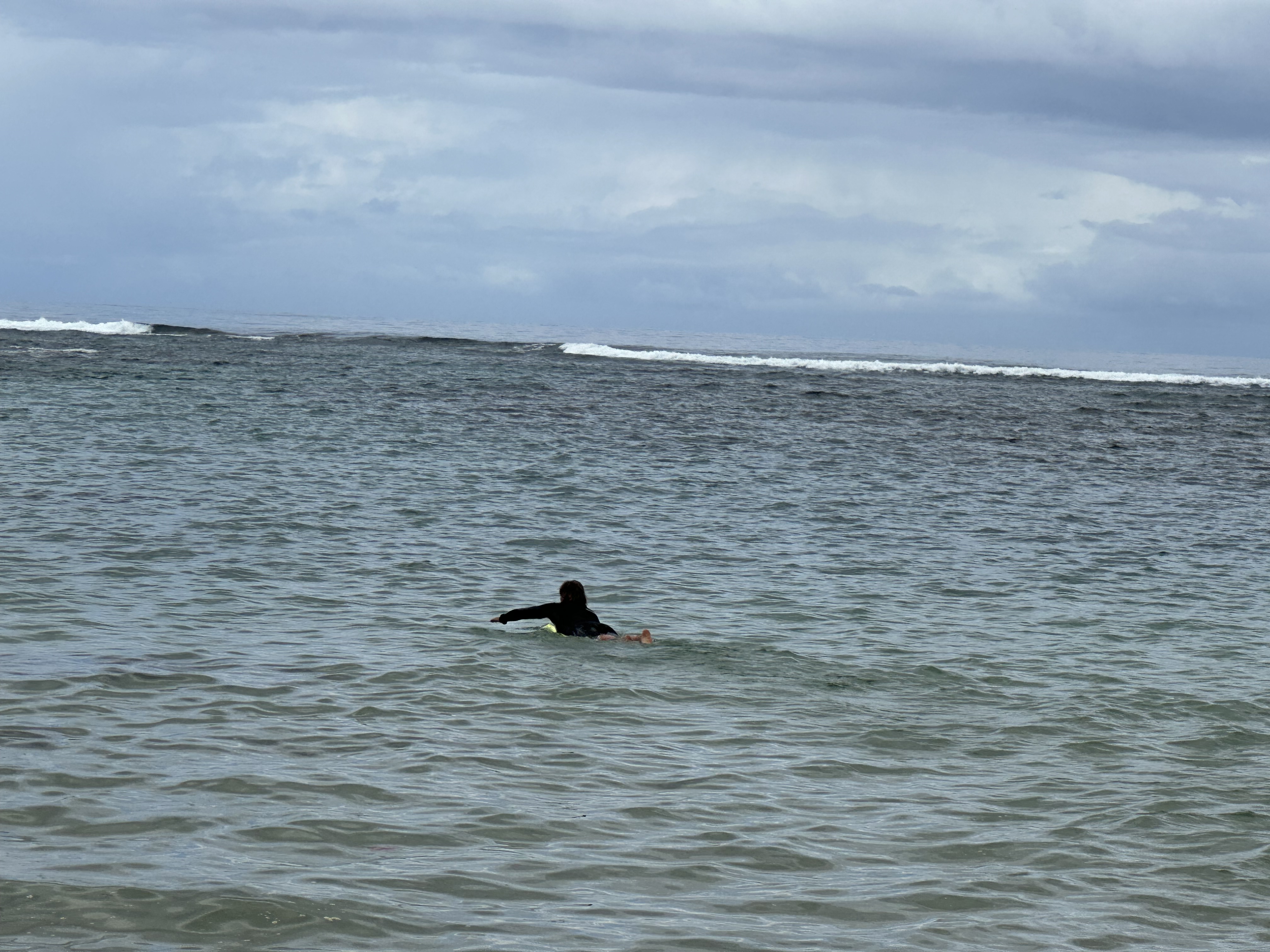
Watch him navigate the wide distance to the waves

He’s way out in the distance now, working his way east toward the other surfers in the bay

He’s up! Well, may not be him, there’s quite a few surfers out there trying to catch a wave. This one is obviously a seasoned pro.

Walking back up the path to the car now.

Eric and Steph

It’s so overgrown you hardly notice any ruins.

I heard a beautiful songbird along the way

No idea what kind of bird that is with such a joyful song.

Life is good!

Uh, wait a minute. We’re not in Kauai anymore. This whole blog had me in a trance. All I have to do is sign off this computer and open our back door…

Yeah, like here in southeast Idaho spring is just around the corner.

Mongoose, Mosquitos, Centipedes and Spiders

March 5, 2023

Kauai 2023 – Part 2

So, exactly how many feral chickens are loose on Kauai? Recent tracking (as of July 2022) suggests as many as 450,000, or about six chickens to every human. Their numbers have grown significantly over the years since hurricane Iniki in 1992. Why? Because the chickens on Kauai have no significant predators. The island is free of mongooses.

Mongooses are native to India. But they are now widespread on the islands of Hawaii, Maui, and Molokai. A brownish weasel-like animal, about 2 feet long, with short legs and long tail, they were originally introduced to Hawai’i in 1883 by the sugar industry to control the rats in the cane fields (with a stop in Jamaica, where they were also introduced). Except the plan failed because mongoose are active during the day and rats are primarily active at night. Oops. Mongoose eat birds and their eggs, small mammals, reptiles, insects … they are especially dangerous predators for the native ground nesting nene and albatross and endangered sea turtles.

Although there are no known populations on Kauai, the Kauai Invasive Species Committee (KISC) is actively controlling the mongoose species. Sightings of mongoose (or any other pests on their target list) should be reported to them immediately. They will come and survey the situation and remove the pest for free. Check out their link:https://www.kauaiisc.org/kiscpests/mongoose/

According to their site, one female mongoose was found dead along a road in 1976 near Kalaheo and sightings have been reported all over Kauai. In May, 2012, KISC captured the first live mongoose near the Lihue Airport. (Yikes!) A mongoose was captured in October 2016, again at the Lihue Airport. Then another mongoose was trapped five years later, in December 2021, at the Nawiliwili boat harbor. https://beatofhawaii.com/mongooses-in-hawaii-why-latest-find-on-kauai-is-so-disturbing/ Very unsettling!

So yeah, because there aren’t mongoose the wild chickens are proliferating. I’m sure the locals don’t enjoy the habits (pooping, cock-a-doodle-do-ing at all hours, aggressively begging for food, and ruining your garden) and antics of the wild chickens as much as the tourists do.

One detail I left out of my previous blog was, while I was following those wild hens around, taking videos of their tiny chicks, Megan was getting eaten by mosquitos. Mosquitos? In Paradise? Admittedly it was near dusk when we walked on that trail, but in the previous nine trips to Kauai I don’t think I got bitten by a mosquito even once. How could it be that in a space of a few minutes Megan got bitten 5-6 times? How was I not aware after all these visits to Kauai that they do have mosquitos? Of course,Google can answer these questions! https://www.scientificamerican.com/article/some-people-really-are-mosquito-magnets-and-theyre-stuck-that-way/ Yes, some humans are mosquito magnets and other humans, well, mosquitos just aren’t attracted to them (try not to take this personally).  The subjects in the experiment with greater amounts of carboxylic acid on their skin were most attractive to mosquitos while those with low amounts were least attractive. And apparently, your blood type or diet has nothing to do with it, your corboxylic acid levels are fixed: Once a mosquito magnet, always a mosquito magnet.

Hawaii hasn’t always had mosquitos, of course. They were introduced in the early 1800’s via the whaling ships. https://reviverestore.org/the-plan-to-restore-a-mosquito-free-hawaii/ Six separate species of mosquitos are now found on the islands. Two species transmit deadly human diseases (dengue, chikunguna, and Zika) while one transmits avian malaria. Native Hawaiian species have not developed resistance to mosquito transmitted diseases and so invasive mosquitos carrying avian malaria are particularly dangerous to Kauai’s forest birds, which are fighting extinction. And as far as humans go, if you are planning a trip to Kauai and wondering about the mosquito situation, here is a site – a trip advisor forum on mosquitos in Kauai with lots of discussion from self-proclaimed mosquito magnets… https://www.tripadvisor.co.nz/ShowTopic-g29218-i304-k10810066-Mosquitoes-Kauai_Hawaii.html

While we’re on the subject of Non-Native invasive species in Kauai, you can imagine how easily cockroaches arrived in Hawaii as stowaways in shipping containers, starting about 200 years ago. According to this article – https://cockroachfacts.com/cockroaches-in-hawaii/ – there are nineteen different species of cockroaches in Hawaii. But in my ten visits to Kauai, I’ve only spotted one roach, a very large cockroach, likely the American cockroach. It was sprawled out, not moving one bit, in the entry to the ladies room in the Lihue airport. The horde of women entering and exiting the restroom simply stepped around it. No one said a word about it and certainly we weren’t going to soil our shoes squishing it!

So what’s the point of this blog, you ask? I dunno. I started thinking more about the feral chickens and why they are so happy and prolific on Kauai, which got me on the subject of the mongoose and other invasive species in Kauai. Like the centipede. Check out this link: https://a-z-animals.com/blog/hawaii-centipedes/

There are three types of centipedes in Kauai. The Vietnamese Centipede (can probably guess where it came from) is giant – can grow up to 8 -10 inches long. Vietnamese centipedes prefer warm damp areas like under rocks, woodpiles and mulch. It is not common to find them inside homes, thank goodness. I have never seen a centipede in Kauai, but I haven’t been camping! I got a charge out of this story, a 5-minute read, by Gabriel Morris – who, in March 2022, decided to pitch a tent on a secluded beach on the northern shore of Kauai. He scraped out an area of thick leaves and scared up three centipedes in the process. Just scraped them out a few feet way with his shovel. Kept his tent zipped up except to answer nature’s call during the night and left his tent flap open for a minute. Well you can guess what happened. Let me just tell you that these huge centipedes have one tough exoskeleton. And they bite, but don’t worry, Gabriel did win the battle unscathed against his unwanted roommate.

To put a wrap on this I will post one insect photo I did take, that of the common garden spider of Kauai. Where did I take it? Off the edge of Steph and Victor’s front porch.

It’s quite thrilling to see a garden spider with its zig-zag patterned web. They’re magnificent, don’t you think? I don’t remember the last time I saw a garden spider on the mainland. Here’s a link to the five biggest spiders in Kauai, the garden spider being one of them: https://a-z-animals.com/blog/the-5-biggest-spiders-in-hawaii/ Garden spiders will bite if threatened, with swelling, pain and redness. It would probably take either a very brave or very stupid bird to try and eat that spider. None of us were going to mess with it.

Lastly, did I mention that there are no snakes in Kauai? Oh, except for the Brahminy Blind Snake that looks like an earthworm, believed to have arrived via potting soil from the Philippines in the 1930’s. https://maalaea.com/are-there-snakes-in-hawaii/ It’s approximately six inches long, and feeds on ants and termites. Now that’s the type of invasive species we’re lookin’ for!

Just for the heck of it, I’ll step out on our front porch and take a photo.

That’s no spider web attached to our gutter. It’s still a freakin’ winter wonderland here in southeast Idaho.