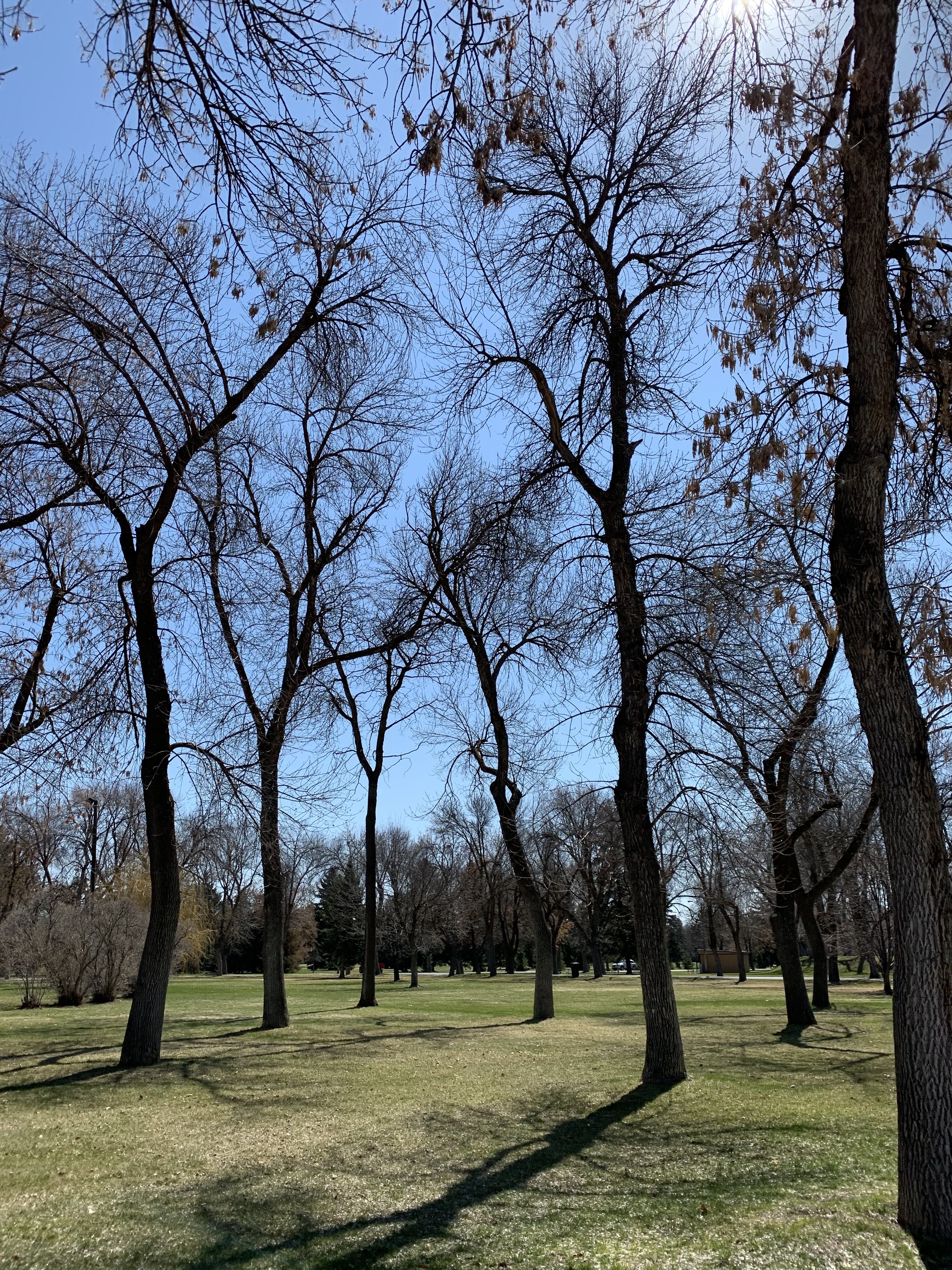
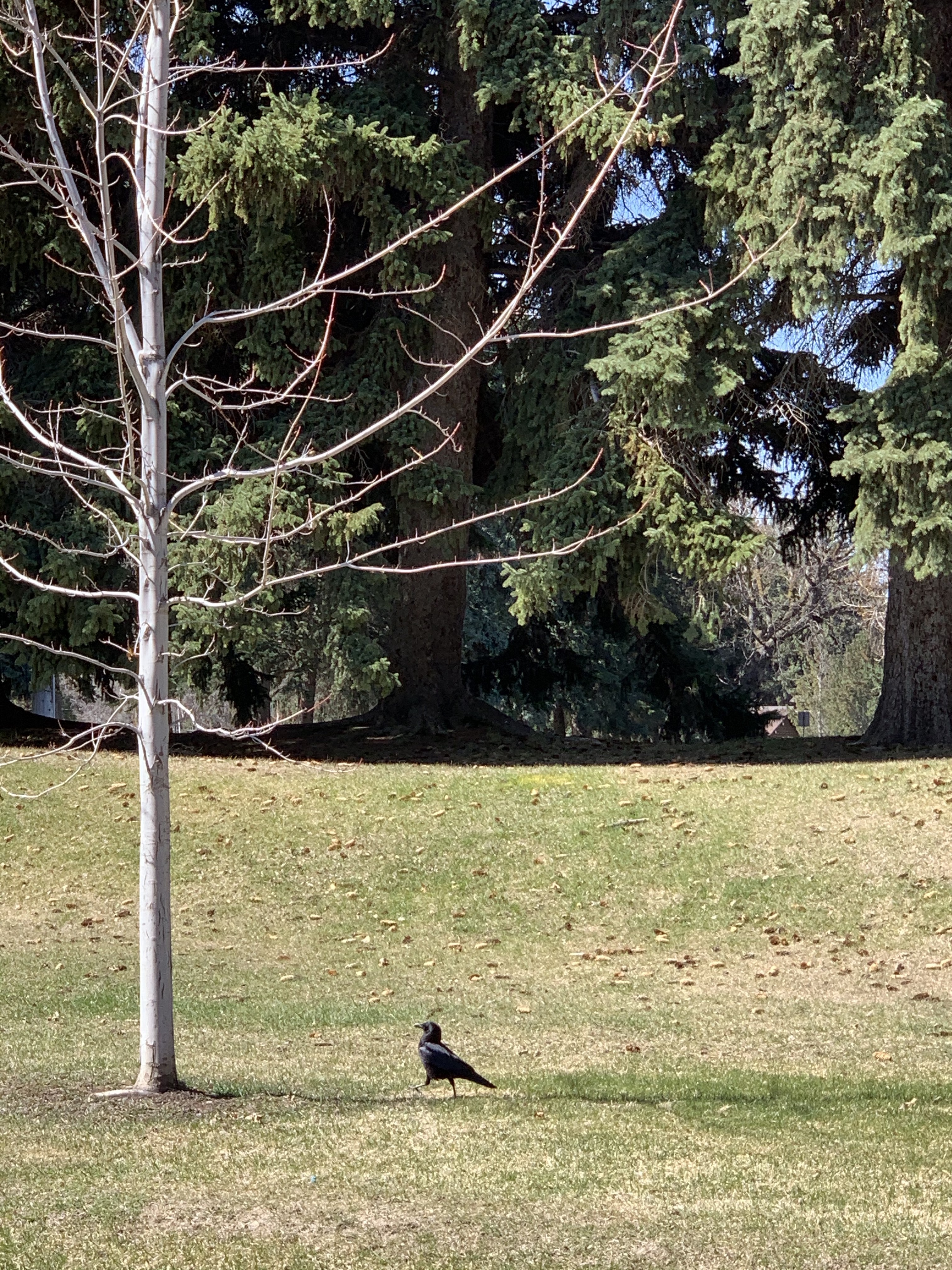
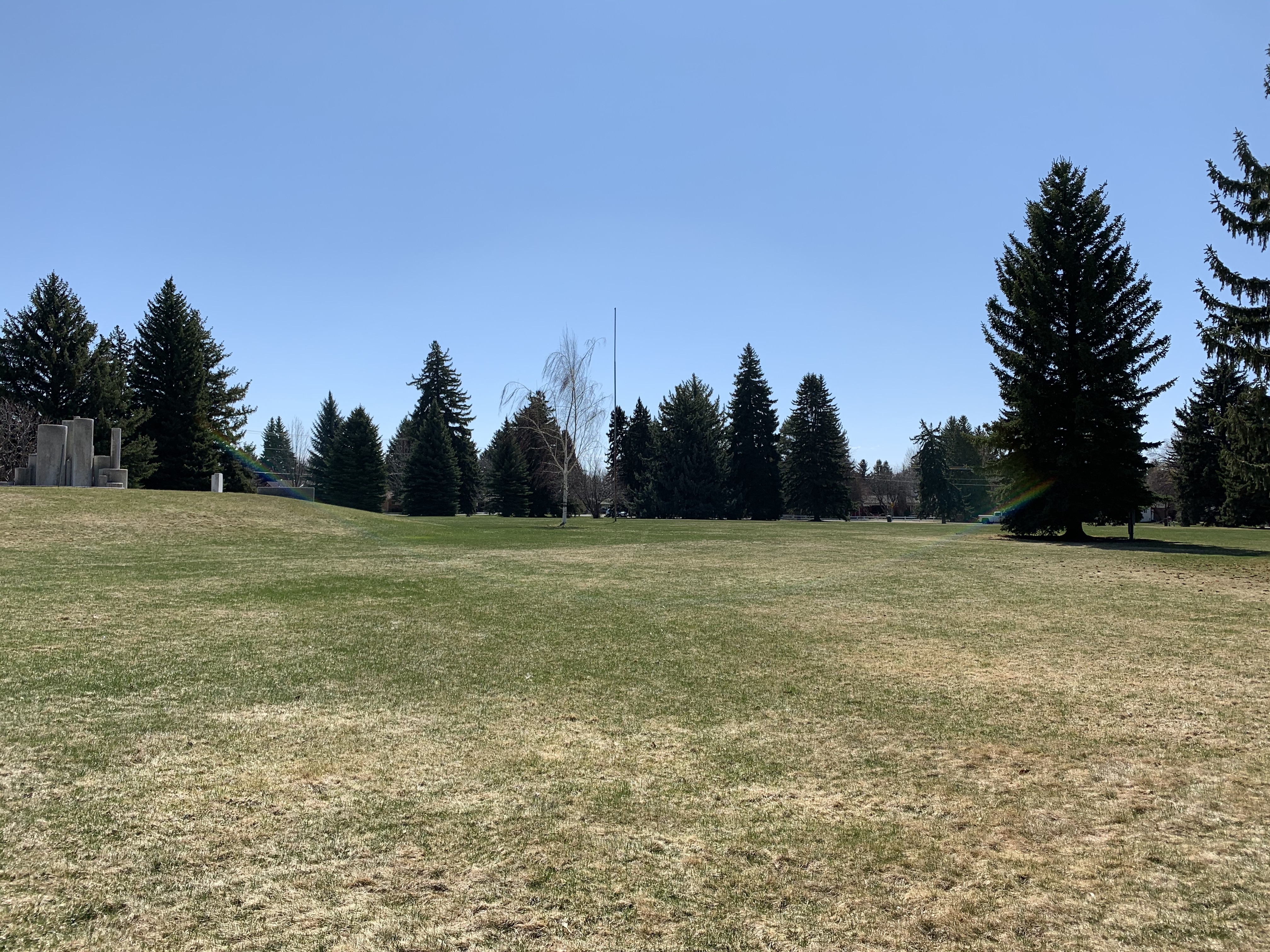
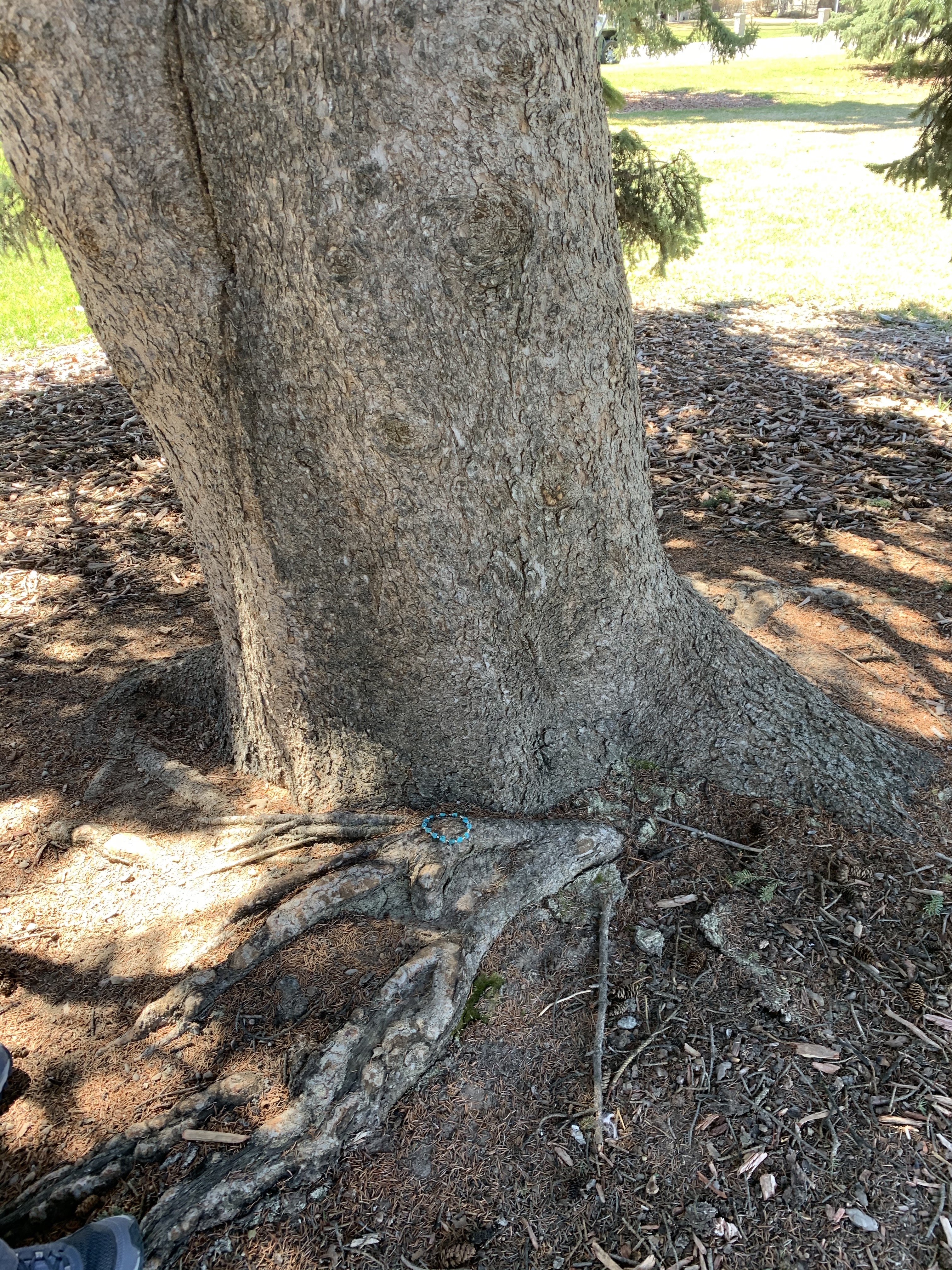
Archive for the ‘Spring’ Category

Magpies – Part 5 – Magpie Mania

June 5, 2023

It’s been 50 days since I last blogged about the magpies nesting in our front may tree. What an interesting experience it has been, witnessing this pair of black-billed magpies build their nest just 20 feet from our front door. They built an elaborate domed nest over several weeks, which I describe in my first blog written on March 29. I had been stepping out our front door to take photos of the worst southeast Idaho winter we’ve had in over 30 years (ahem), and inadvertently also photographed the building of the nest. I was confounded by its discovery and my first impulse was to devise ways to run the magpies off, those noisy, smart, pesky, bully birds whom nobody seems fond of. My only previous history with magpies was to chase them off our property for the past 22 years and hold them to blame for the disappearance of baby songbirds.

But I was suddenly fascinated with them, and discovered lots of interesting facts and history about magpies, which I blogged about while watching and waiting for the pair to lay eggs. I wrote my last blog on April 16, when I was pretty sure the female was beginning to nest. Magpies mate for life and raise one brood per year. They typically lay 3-6 eggs, which hatch in 16-20 days. The male feeds the female throughout incubation. The babies fledge after 3-4 weeks.

The lucky thing was, I could view the nest from our front dining room window. And our kitchen window. And our upstairs bedroom and office windows. I found myself looking for them constantly, I’d hear a squawk and race to the window. I loved watching this pair. And taking photos and videos. It made me so happy to see them together.

Winter seemed like it would never end. We had another snow storm on April 21. I worried a bit about how the female would keep the eggs warm and the male would find enough food under a new blanket of snow to feed them both.

April 21, 2023

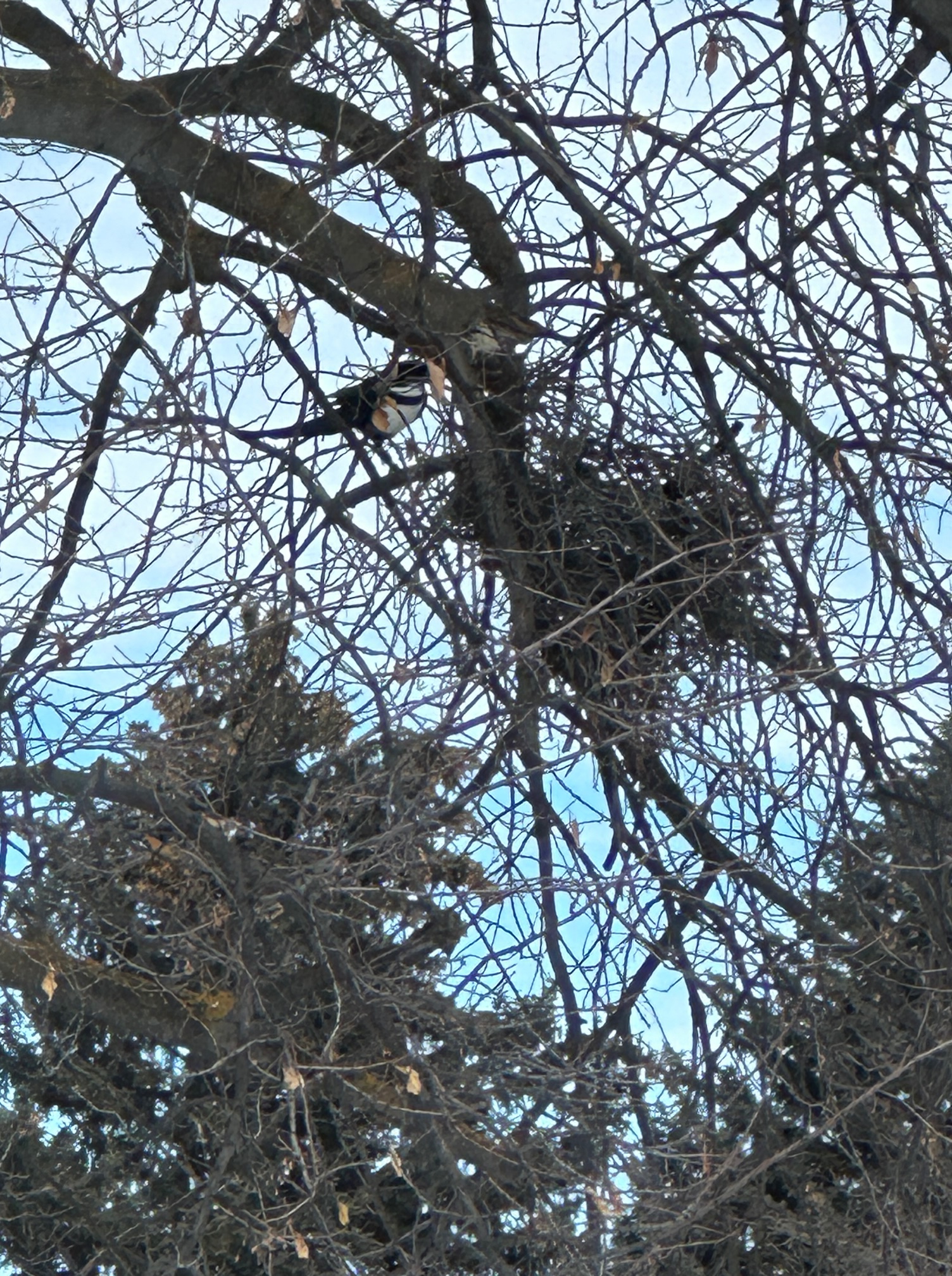
The nesting female would hop out of the nest and shake herself off, fly to a nearby tree or lawn to exercise her wings, but then head right back to the nest. Her long tail was a bit bent from roosting.
I’ve captured lots of photos and videos of the magpies. (Surprise, surprise)
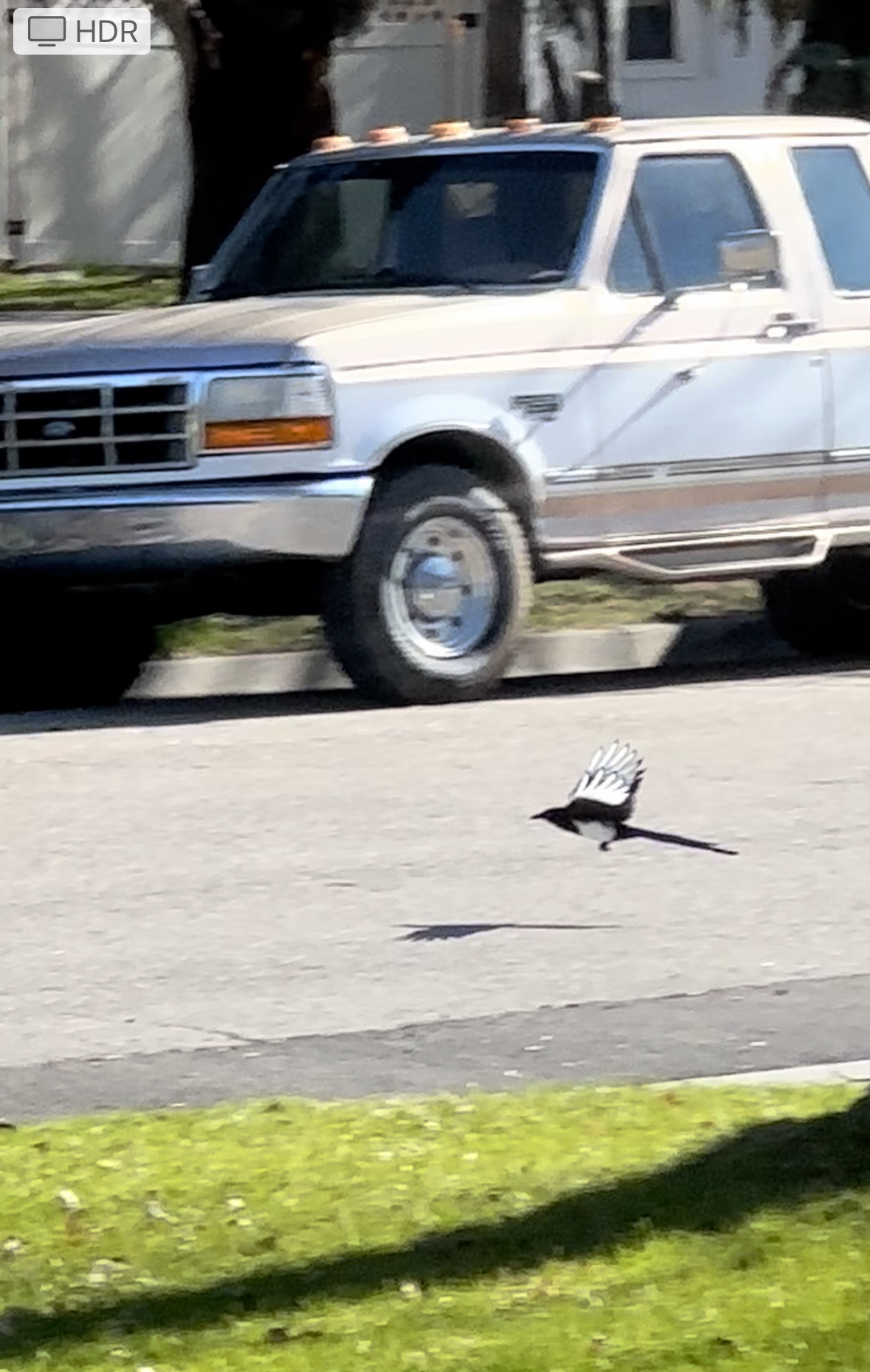
Magpies in flight, magpies in our back garden.
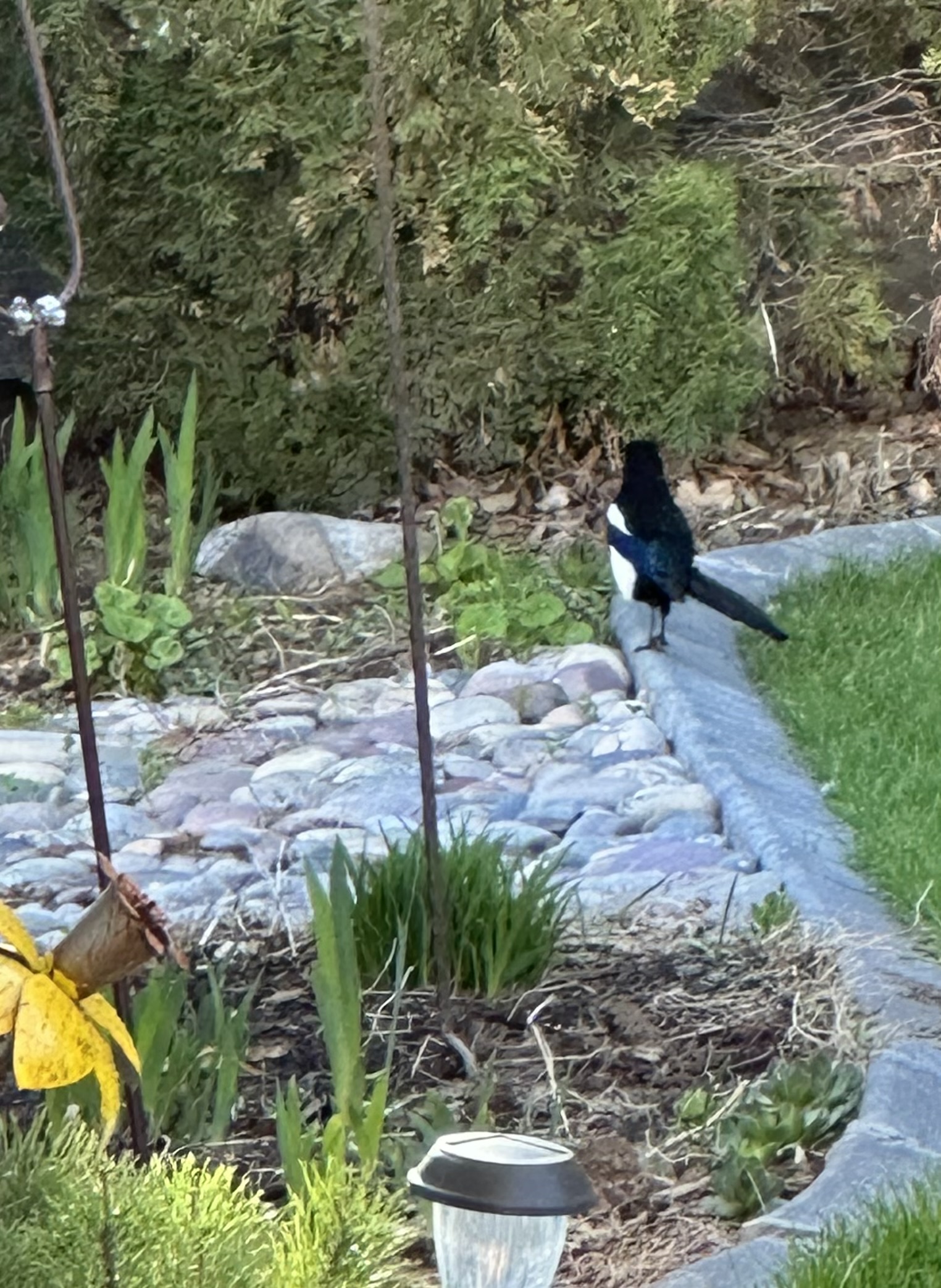
To say I was obsessed with the magpies would be a gross understatement. One Sunday I came down with the blues. I had flats of annuals to plant but just couldn’t get myself motivated. But I knew the cure. The magpies saved me. Seeing both magpies hop out of the nest buoyed my spirits.

Of course, I’ve yet to plant the flowers in the gardens. I don’t want to miss anything with the magpies.

Both parents were feeding the babies now. Such a happy time. I captured a video of them canoodling on the roof across the street. So sweet!

I planted the flower pots on the deck on May 20. Three days later, on the evening of May 23rd, we got hammered with a huge rain/hail storm, dumping 1-3 inches of rain and hail over a couple of hours. I took a short video of the storm through our dining room window, capturing the edge of the may tree with the magpie nest.

The magpies survived in their domed and roofed nest. I wonder about the robins and other songbirds? Our flower pots were completely hammered.

I expected the babies to fledge around Memorial Day. The may tree had leafed out and the babies were very quiet. Although you could hear tiny sqawks when one of the parents arrived in the nest.

Yes, the magpies had survived the hail storm, but on Saturday morning, May 27, I heard a magpie squawking like mad in our front bushes by our fountain up next to the house. I opened the front door and it flew off. Huh. Maybe an intruder? David came to me later that afternoon. “I don’t know if you saw it, but there are magpie feathers scattered in an area by the front fountain.” What?? I ran out there. Sure enough. A scattering of feathers – a magpie had been killed. Did a cat get it? Magpies are relatively slow flyers. Was it an owl or hawk? Oh, surely it’s not one of our magpies! But how could it not be? Although we have seen other magpies around. I clung to the hope…please, please, let it not be one of ours!

That afternoon about 4 PM I spotted one of the parents feeding the babies. I quick! captured a video

Yes! Such a hopeful sign.

But that would be the last time. On Memorial Day, two days later, I found a dead baby magpie in the same spot where I had discovered its … father? mother? With only one parent it would have either died of hypothermia or starved to death. I took a photo of the dead baby. It had feathers and I bet it was about ready to fledge. I came in the house and told David. Do you want to see the photo of the dead baby? I asked. Why would I want to see that?? he said. I dunno. Dang it! I was so sad.

Two days later David was out digging up dandelions in our front yard and found another baby in the grass just 10 feet away from where I had seen the other one. Maybe the remaining magpie had kicked the babies out of the nest so they would die quickly and wouldn’t have to suffer starvation.

The nest was empty now and our whole place was quiet. I could hear magpies chattering in neighbors’ yards but honestly didn’t spot a one in our yard for several days.

Then this past Saturday, just two mornings ago, the most amazing thing happened. I’m a heavy sleeper in the early morning hours and I nearly always miss the chirping of the birds. But I was awakened by a huge racket in our front may tree. It was really something. I jumped up and scrambled to find a phone to take a video.But I needn’t have hurried. The racket in our front may tree, coming from what must have been about 20-30 magpies, went on for nearly 15 minutes. It was a funeral for our little family.

Which brings me to the topic of my next blog.

In the meantime, I hope to finally get our flowers and tomatoes planted. I’m sure they’re all rootbound as hell.

Magpies- Part 4 – Tales and Superstitions

April 16, 2023

Whenever I tell someone about the magpies nesting in our front yard they almost always react with an “Oh no!” or an expression of, ‘oh, you poor thing.’ Over the 22 years we have lived in this house the only interaction I’ve had with magpies was to run them off, because I don’t want them messing with the robins and other pretty sounding songbirds. Which is easy. You just open the front door and the magpies fly off. I’ve even run them off the the neighbor’s yard across the street, to protect the nesting duck in their front marigold patch. I’d open our front door and clap. Off they flew. They have very sharp senses. I’ve never seen a magpie nest, or even imagined magpies nesting near us during the past 22 years we’ve lived at this address. Until now.

It is still a surprise to look out at our front may tree.

Friday, April 14, 2023

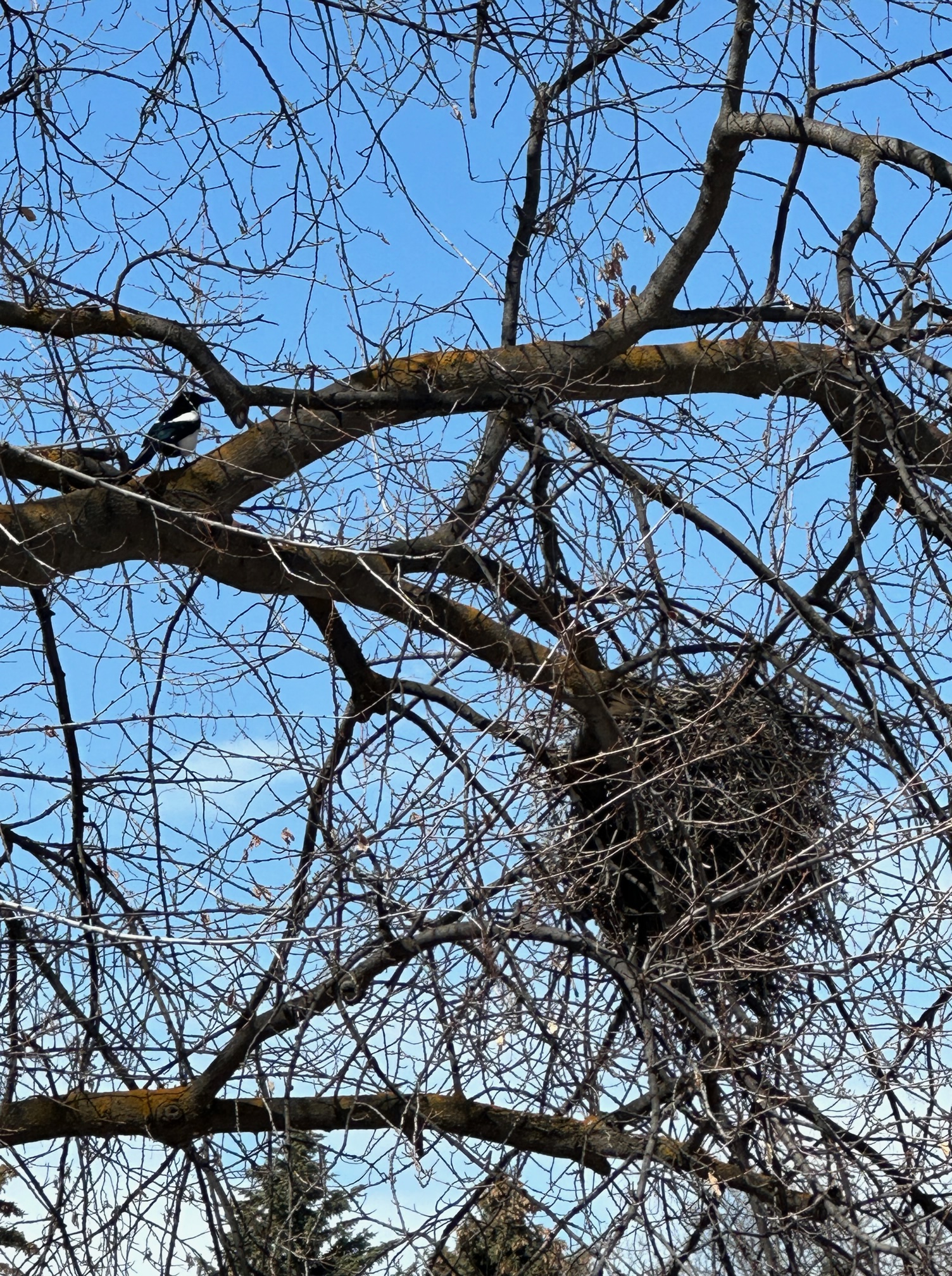
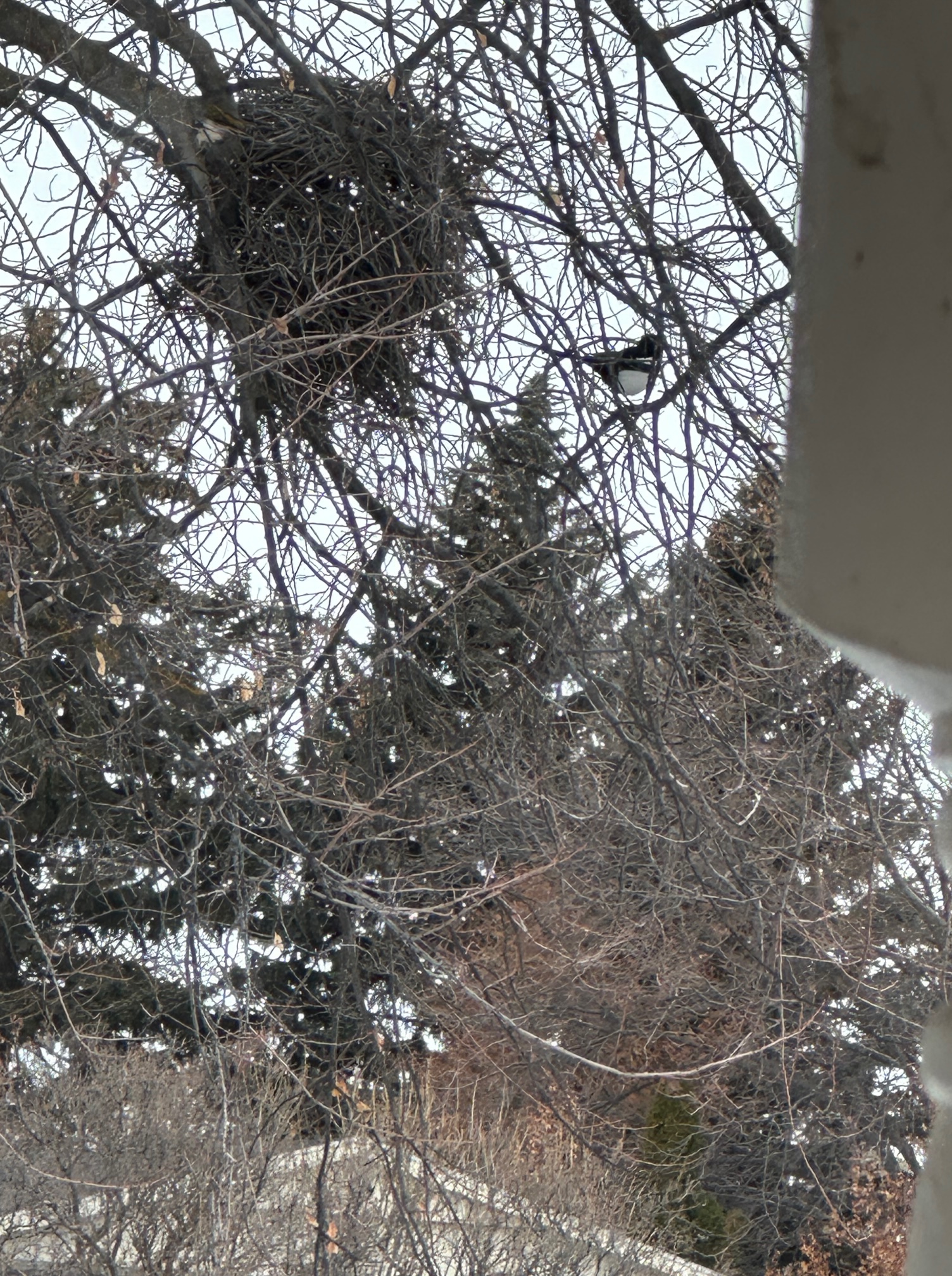
I don’t see no nest, do you? Yeah, it’s like the elephant in the room, or in this case, the elephant in the tree. I’ve been closely watching them and I’m about positive the female laid her first eggs this past Tuesday, April 11. I told a friend that, she said, no way. There is no way those eggs will survive the weather. I wonder too. We had about 3 days of spring, when she appeared to be nesting and perhaps laid her first eggs, then winter was back.

Thursday, April 13

The female would hop out of the nest, shake herself off, then hop back in. Good thing the nest is domed. Although not leak proof! The male is close-by. And sure enough he is feeding the female.

And look! The robin is back! Assuring us, everything is fine.

Magpies have such a horrible reputation, the yakkity, garbage eating bullies of the bird world that will destroy your gardens and decimate the populations of nearby nesting, more sweet sounding songbirds. But how much of that is true? I did a little research. The Romans believed magpies were highly intelligent with excellent reasoning abilities. In ancient Greece, magpies were sacred to the God of wine, Bacchus. Native Americans considered magpies to be sacred messengers of the creator or even a guardian with shamanic properties. They wore magpie feathers to signify fearlessness.

In Korea the magpie is celebrated as a “bird of great good fortune, of sturdy spirit and a provider of prosperity and development.” Korean children were taught that “when you lose a tooth, throw it on the roof singing a song for the magpie. The bird will hear your song and bring you a new tooth.” https://en.wikipedia.org/wiki/Oriental_magpie. Similarly, in China magpies are seen as an omen of good fortune and killing one would bring the reverse. The Manchu Dynasty (the Great Qing Dynasty and last dynasty that governed China from 1636-1912) adopted the magpie as a symbol of its imperial rule, declaring it the official ‘bird of joy.’ Mongolians believed magpies controlled the weather.

The magpie was seen as a very important, positive mythological bird in history, until the Christians arrived on the scene. https://www.birdspot.co.uk/culture/magpies-and-superstition The story was told that when Jesus was crucified, two birds came to perch on his cross, a dove and a magpie. The dove grieved for Jesus and caught his tears but the magpie did not. Thus, magpies were eternally damned in the eyes of Christianity because they supposedly did not grieve the death of Christ. In the 19th century a vicar reported one of his servants explaining that the magpie is the only bird not to enter Noah’s ark, preferring to sit outside chattering and swearing in the pouring rain. The church also started the rumor that magpies carry a drop of the devil’s blood in their tongues. If you were to cut the tongue to release the blood then the magpie would be capable of human speech. BTW, the magpie is already capable of mimicking human speech, how in the world would a human cut its tongue? So who is smarter, (guns and opposable thumbs aside) humans or magpies? One could wonder…

In Britain there is probably no other bird more associated with superstition than the magpie. It is generally considered bad luck to come across a lone magpie. Not entirely sure why, but magpies often mate for life, so seeing a single magpie may mean it has lost its mate and therefore, the chance of it bringing bad luck is higher. Coming across a larger group of magpies could actually bring you good fortune and wealth. To help ward off the bad luck that might come your way when meeting a single magpie you might want to either salute the magpie, or say “Good morning general” or “Good morning captain!’ or say “Good morning Mr. Magpie, how is your lady wife today?” or “Good morning Mr. Magpie, how are Mrs. Magpie and all the little magpies?” or say, “Hello Jack, how’s your brother?” or Doff your hat, spit three times over your shoulder, or lastly, blink rapidly to fool yourself into thinking you’ve seen two magpies. You know, to ward off back luck, just in case.

It’s Sunday, April 16, and we checked on the magpies, first thing. Sure enough they were both out there. I started writing my blog and noticed things started to seem more quiet than usual. I kept glancing out the window, especially when I heard magpie calls. For some reason for the past few hours I’ve only seen one. I’ve seen the female emerge from the nest, alight on a limb and call. And then return to the nest. I’ve glanced out to see a magpie fly out of the nest, was it the male, flying off after feeding the female inside the nest? I hope so. I have to admit that I’m a bit worried. I hope they are fine; I’m just missing the signs. Why is it so quiet and why have I only seen one over the past several hours? Could something have happened to the male? You know their reputation around here. Oh man. I shared my concern with David, had he seen the two of them? No, not since 7:30 this morning. “But hey” David reminded me, “You’ve been running them off for the past 22 years, all worried about the robins, and now you’re heartbroken with worry that something might have happened to the magpies?”

Yep, pretty much. If I see even one magpie I’m going to salute it, “Good morning Mr. Magpie, how is Mrs. Magpie and all the little magpies?” And hope with all my heart that they are fine.

Magpies – Part 3 – Our Noisy Lovable Neighbors

April 11, 2023

A pair of magpies has built a nest right in our front yard in a huge may tree that hasn’t leafed out yet. I’ve been mostly photographing them through our front dining room window. They used to fly off as soon as I opened the front door. But they’ve become more comfortable and bold of late, or maybe undeterred in their quest to raise a family. This morning I walked out on the front stoop and took this video. They don’t appear to be nesting yet. You will see the mate fly across the view in this video.

You could play that video in a continuous loop and that’s pretty much what it sounds like around here. Even as I write this blog that magpie has alighted somewhere on another end of the property going ‘yaak’ ‘yaak’ ‘yaak’. It’s a different sound than the “yak-yak-yak-yak’ we were hearing, until about a week ago. Is it some huge announcement to the the animal world, “This is our territory and we’re raising a family!” I hope they have only claimed as territory the west end of our front yard surrounding the tree.

They are never far apart from each other.

Magpies mate for life. They are usually at least two years old when they choose a mate and they stay together year-round. If one of them dies then the other may find a new mate. They will even try to find a surrogate parent to help with raising the young if a mate dies while they are nesting. Although I did wonder if they also divorce, and sure enough, according to this Wiki link, https://en.wikipedia.org/wiki/Black-billed_magpie – divorces are possible: one South Dakota study found about an 8% rate of divorce, but another 7-year study in Alberta found divorce rates up to 63% (hey, so they’re smart and complicated, like humans).

Black-billed magpies, also known as the American magpie, are native to the northwestern half of the the US and Canada. Here’s a screenshot of the map in the Wiki article showing their habitat.

Magpies (and other corvids like crows, ravens and jays) are considered to be the smartest non-mammal animals. Of course we humans are much smarter, the smartest of all animals and mammals, with our guns and opposing thumbs, the species at the top of the food chain. When Lewis and Clark first encountered black-billed magpies in South Dakota in September of 1804, they reported the birds as being very bold, hopping into the tents of Plains Indians in search of meat, some which were tame enough to take food from the hand. Magpies followed the buffalo herds, picking insects and ticks off their backs but when the white man came along and decimated the buffalo herds in the 1870’s, magpies switched to cattle, horses and mules. By the 1960’s they had also moved into the emerging towns and cities of the west.

During the first half of the 20th century magpies developed a bad reputation because they stole game bird eggs and also because they picked at the sores on the backs of cattle, for example, their fresh wounds from being branded, and saddle sores on horses and other unhealed wounds. So humans systematically trapped and shot magpies. Bounties of one cent per egg or two cents per head were offered in many states. In Idaho the death toll eventually amounted to an estimated 150,000. In 1933, 1033 magpies were shot in an exterminating contest in Washington’s Okanogan Lakes Region, by two 6-person teams of bounty hunters. Many magpies also died from eating poison set out for coyotes and other predators.

Luckily magpies survived human’s extermination efforts in the early part of the 20th century, and they are common and widespread today. Their main natural predators are owls, crows, raptors, dogs and cats. They can have eggs stolen out of their nests by raccoons, hawks, weasels and minks. Most males appear to begin breeding in their second year. Mean life expectancy in the wild is 3.5 years for males and 2.0 years for females. Although, in captivity magpies can possibly live up to 20 years. It’s a hard scrabble life for magpies.

I’ve been watching the magpies closely today. One of them is chirping constantly.

I saw the two of them together on a limb near the nest and then one of them hopped into the nest and stayed there until I got tired of watching, a good ten minutes. The female incubates and the male feeds the female throughout incubation and guards the nest. I’m wondering … is the female laying eggs now? The female lays up to 13 eggs, but the usual clutch size is 6 or 7. Incubation period is 16-21 days.

One magpie, (the male?) is still talking constantly. I just now stepped out the front door and captured this video:

Tuesday, April 11, 2:26 PM. Did we possibly just witness the male deliver food into the nest for the incubating female? Has she started laying and incubating eggs!? It’s admittedly a good day to lay eggs. We’ve had a two-day sunny warm spell here with temps soaring into the mid-sixties. Of course, the weather forecast calls for a 25-degree drop in temperature over the next 48 hours.

I have to admit – I’ve become quite attached to these magpies. Ol’ grandma here will keep a close watch and do my best to scare off predators and any unwanted visitors, like their wily close cousins the crows.

At this point, I just don’t want anything seriously bad to happen to this budding little magpie family. Is that just too much to ask of Mother Nature and the Universe? Yes?

Magpies? Really?

March 29, 2023

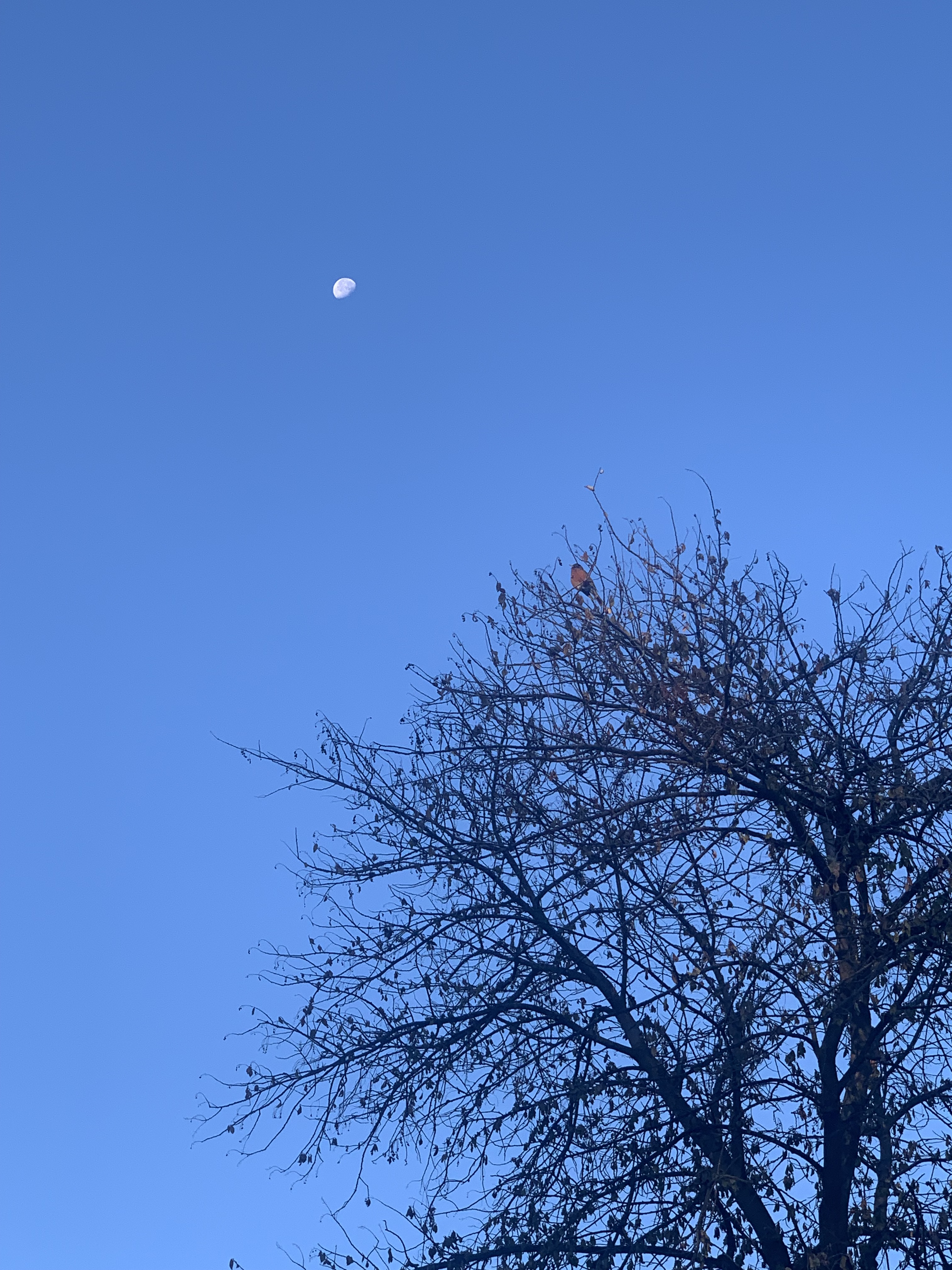
A huge may tree adorns the west boundary of our front yard. A robin has been perched in the top of it throughout this past winter. Our robin. He (she?) was there last winter. I’m frequently greeted by her chirping when I go out to retrieve the morning paper. Hi Mrs. Robin! Good morning to you too! (Of course I took a photo of her)

November 13, 2022 – 7:58 AM

Every summer we witness a few robin fledglings, either by watching them fledge in a backyard nest or spotting little ones chirping and hopping behind their parents. We always have a nest somewhere. I love to study them and blog about them. I must have written at least 24 robin blogs. One year, about 5 summers ago (?) we had a nest in our back yard, the eggs had hatched, the parents were busy busy feeding the noisy little babies. Then one morning, the nest was empty. What? After this discovery I recalled how I had just run three magpies off our deck. YOU! YOU DID THIS! I just figured the magpies had ganged up on the robins (those bullies!) and snatched the little ones.

Imagine my alarm when, three or four weeks ago, I saw a magpie sail past our dining room window with a large sprig in its beak. Uh-oh! I lost sight of it and looked to see where it landed with that sprig. Huh. No clue.

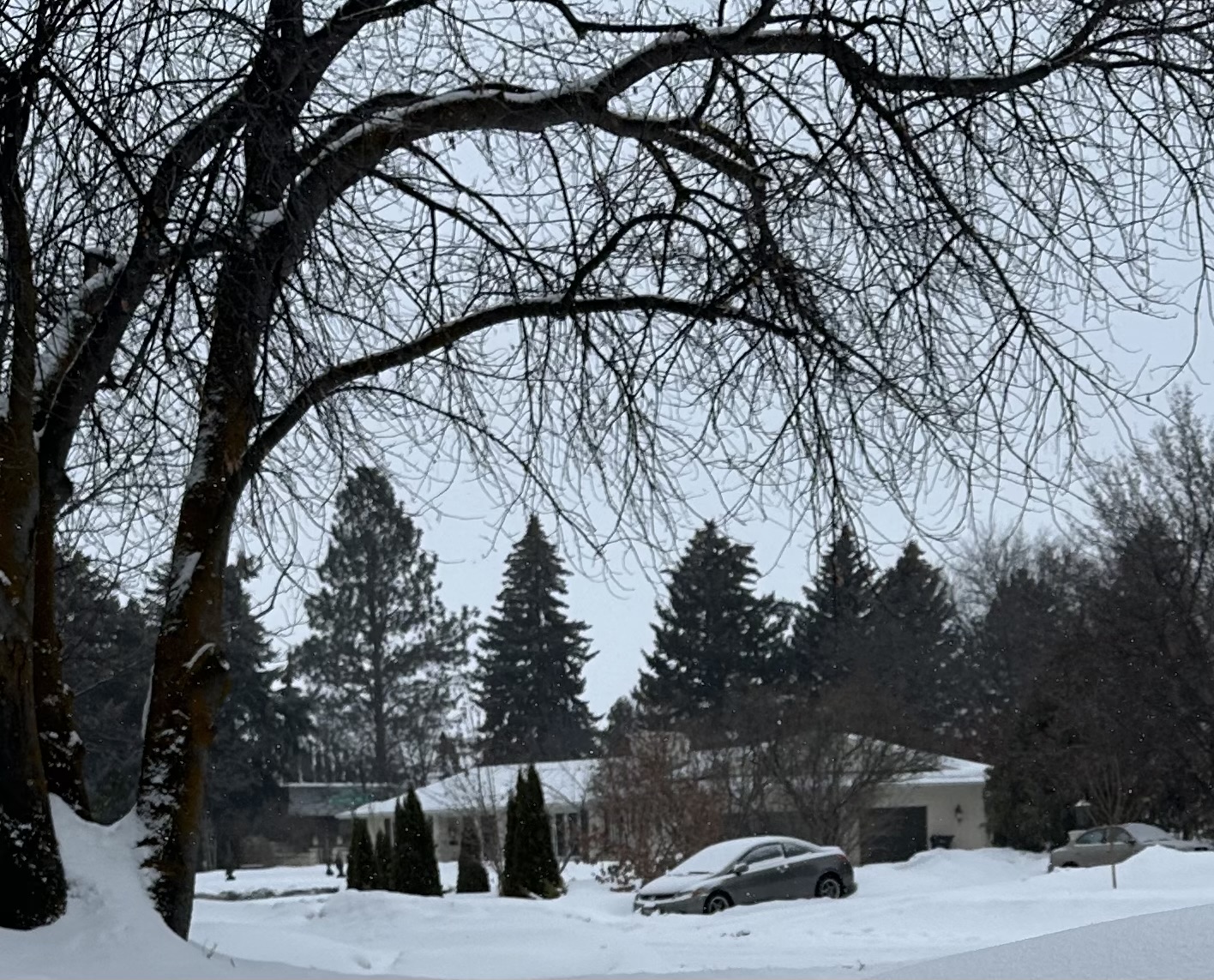
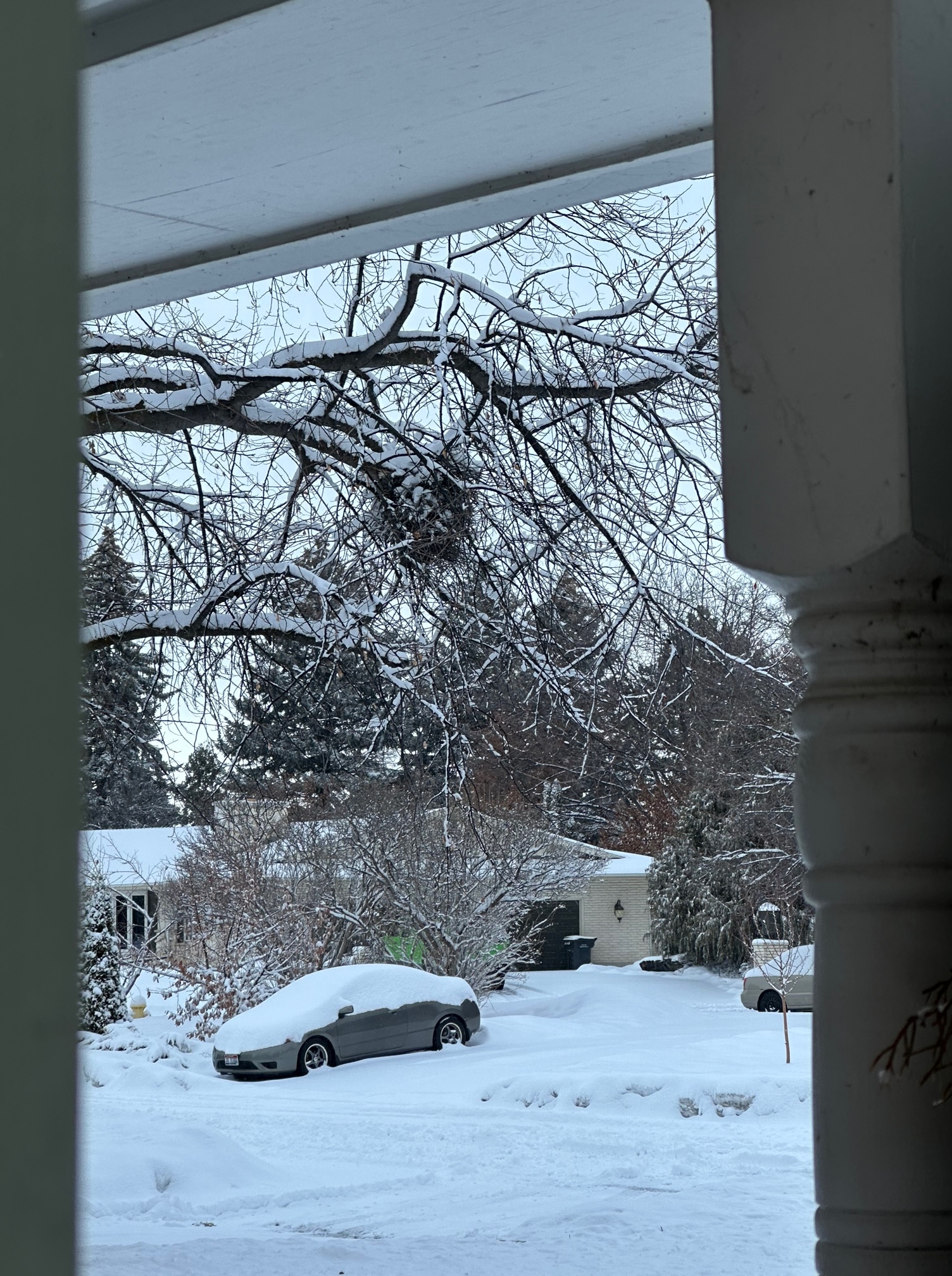
Well of course that magpie was building a nest. And unbeknownst to me, I was capturing photos of it the whole time. My idea of interacting with winter is to hunker in the house and occasionally open the front door to take photos of the latest accumulation of snow. I typically step out on the front stoop, point my i-Phone westward, and capture the view with our front may tree. Well, guess what? Want to see the slide show of a magpie nest being built? It starts on February 20. Nothing going on here, right?

Feb 20, 2023

Then, February 28. Cold, but innocent. Nothing happening here? … perhaps

Then on March 3, huh, a definite thickening of those lower branches hanging down. Gravid. Like the thickening of a womb in preparation for pregnancy.

Two days later – March 5 – definite thickening in those lower branches just above the line of spruce trees

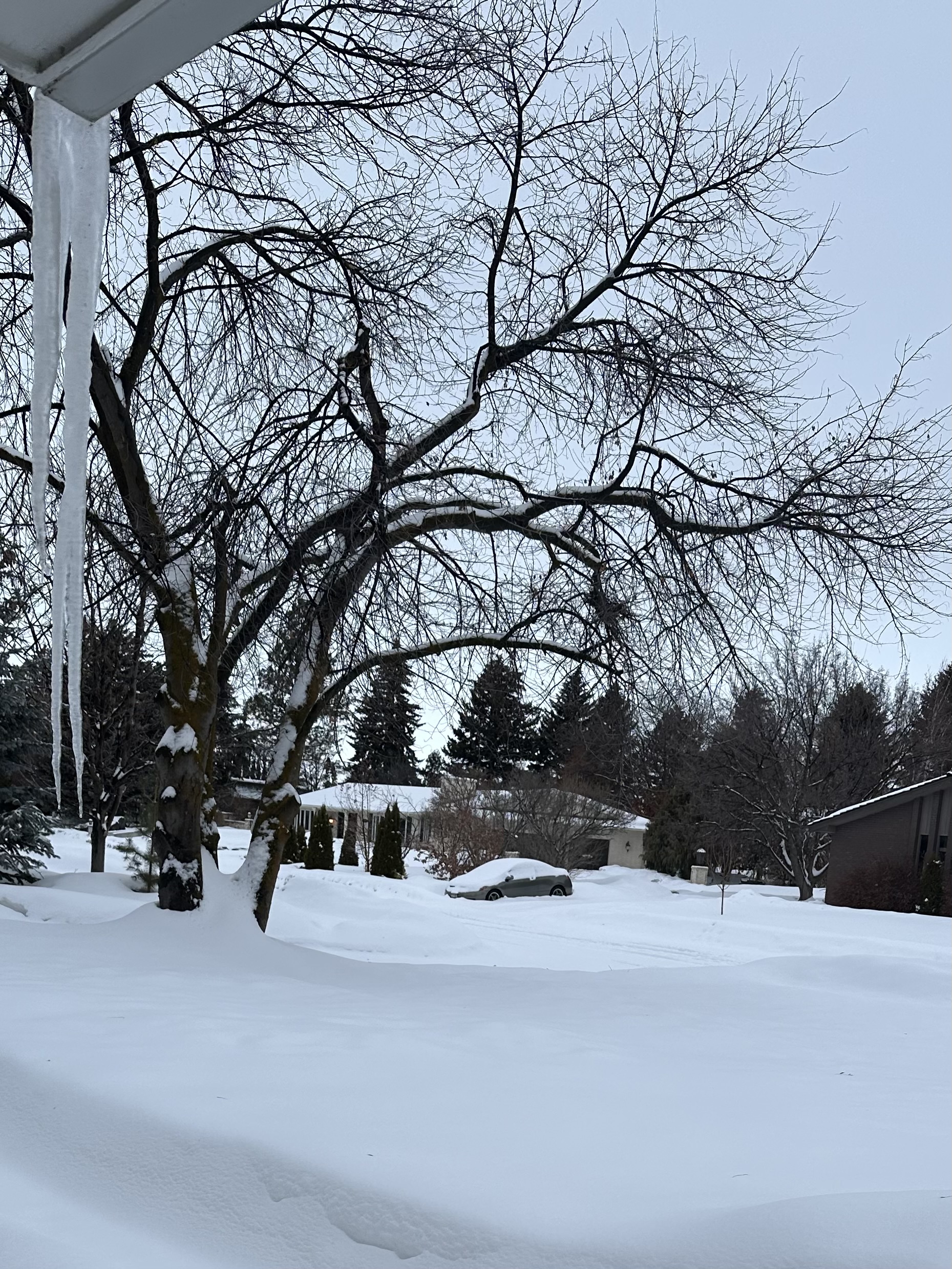
March 10! I had actually used this photo in my Kauai blog, joking that the huge icicle was no spider web, or some such thing, oblivious to the expanding construction project in our May tree.

March 10 – This would have been the moment to intervene. Had I recognized the situation – magpies building a nest right in our front yard. In our ‘Robin tree!’ But no. They kept building, I was capturing it on camera, and we were oblivious.

I guess the epiphany came on March 11. There they were! Both of them hard at work on that nest. From what I’ve since read about magpies, the male typically delivers the construction material to the female who builds the nest. You can see the female’s tail in this photo, sicking up out of the nest parallel to the male.

Magpies are building a nest in our front may tree! I just couldn’t grasp the reality of it. I’ve never seen a magpie nest as far as I know. I thought they nested near open fields. Not near humans!

I started doing some research. Here’s a link: https://bonnersferryherald.com/news/2016/nov/10/magpie-the-chatterbox-of-the-bird-world-11/ These black-billed magpies are native to Idaho and the western half of North America. I guess one could argue that they were here before humans and think about how a family of magpies must feel about a big house or a human neighborhood going up next to them! I already knew they don’t migrate in the winter. How does the saying go … “they’re scrappy- when the going gets cold they don’t get going.” They tough out the winter, which tells you how smart and industrious they are.

Magpies are part of the Corvidae family, along with the crows, ravens and blue jays. Indeed, they are highly intelligent, one of the smartest animals in the animal kingdom. Magpies are so noisy because they have communication abilities similar to basic human language, including telling if another magpie is lying!

I wanted to capture closer photos and videos of their industrious nest building, but I was confined to taking them through our dining room window. No matter how busy they were building inside the nest, as soon as I even turned the front door knob to step outside they flew away. So every photo and video you see was taken from inside the house.

Took this video on March 12. Through our dining room window, of course. Turn your sound up so you can hear the proud male announcing his delivery to the female!

Here’s a photo I took a little later on March 12. Look how big that nest is already. Maybe they’re about finished with it.

March 13 – huh, they seem to be adding a canopy or something…

By March 15 it’s clear they are building a two-story condo

March 17 – you work downstairs and I’ll work upstairs!

March 17 – Really shaping up! See the front entrance? There’s a hole there between the two stories.

March 21. Welcome first day of spring! No wonder they build a dome over the nest

Fire up the furnace!

On March 22 I took this video. It’s a little long, 48 seconds, but it’s quite entertaining. One of the magpies drops an 18-inch twig and then flies down, attempts to retrieve it, but maybe decides otherwise (?) Smart move. The other magpie flies in to assist.

They are so industrious and persistent!

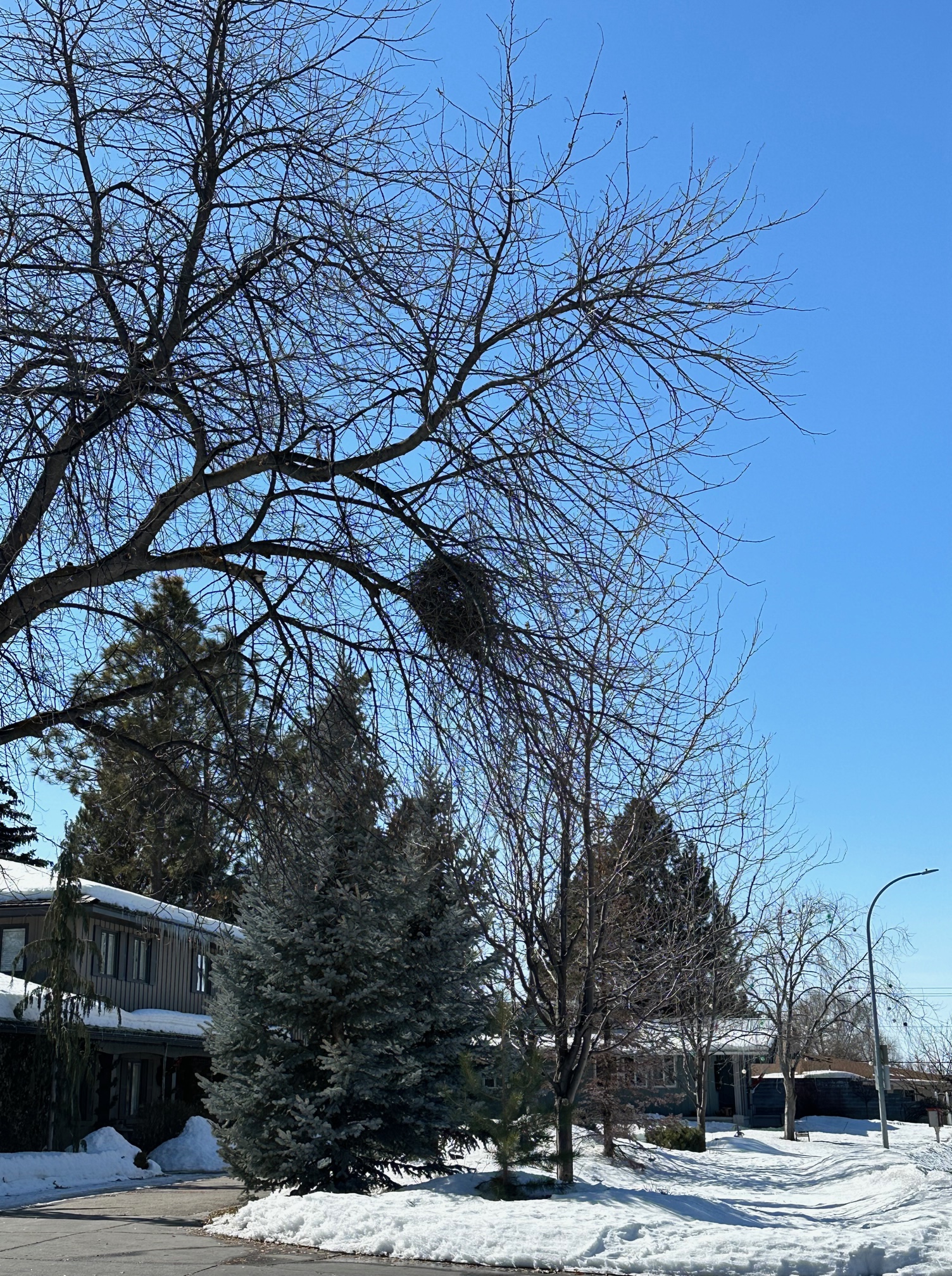
Saturday, March 25. Do you suppose you would notice this nest if you were to walk down our street?

It honestly looks like a giant womb. Which, I suppose it is.

Check out this link to learn more about magpie nesting. https://birdfact.com/articles/magpie-nesting The nesting season is April to July. Egg-laying typically starts in late March or April. Magpies may start building their nests as early as December. It obviously takes several weeks to build them. But they usually finish the nest in March.

I took this photo this morning.

The magpies have been adding finishing touches, likely lining the inside now with moss, animal fur, feathers and other soft materials. When will they lay their eggs?

At some point that may tree will leaf out obstructing the clear view of the comings and goings of this magpie family. May trees typically bloom and leaf out in the first week of May. But this year?? The way ‘spring’ is going, I’m thinking … June?

Watching these magpies is going to be interesting. Especially with all the other activity going on around here. Just last Thursday evening David came in from the back patio, “Hey check out the owl in our back spruce tree.” I did. Except when I went out there the “Whoo-whoo-whoo-ing’ was coming from across the street. So I went out the front door – captured this video. (Turn up your sound!)

Yeah, two great horned owls calling to each other. As I took the video the one roosting in our back spruce tree flew overhead and landed in a spruce tree near the other one.

And since then I’ve been watching carefully and wondering … what does an owl’s nest look like?

Yes, methinks things are going to get interesting around here with those magpies.

Aloha, Kauai!

March 19, 2023

Kauai 2023 – Part 4

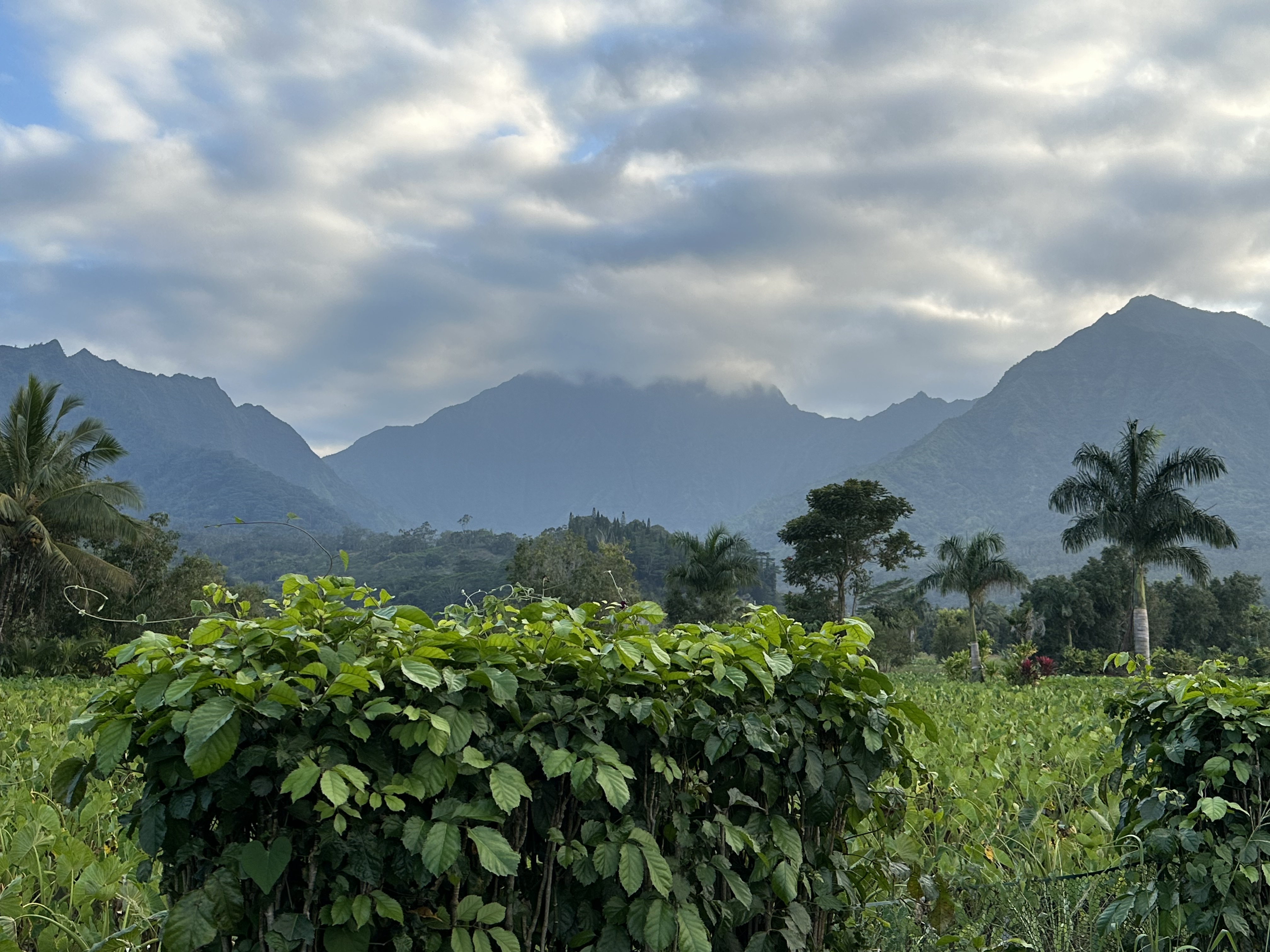
I feel weird, like I’ve left us marooned in Kauai. I have to get us back home. Spring in Idaho is nigh upon us! (Yeah, right.) Somehow I can’t move on from Kauai until I wrap up our January 2023 trip and get us safely home again.

Our last hike was on the Club Med Ruins path in Princeville on the north shore where we enjoyed gorgeous views of Hanalei Bay from the east and checked out the surfers. Well now we are in Hanalei Bay walking the beach. Here you see a view of the ‘dock of the Bay’ looking north – that greenery in the background is where we were walking yesterday – where the failed Club Med and other resorts were never built.

Okay so you’re walking the beach with us now. Here’s a video. Feel the ocean breeze on your face and the sounds of the roiling surf:

Let’s walk the whole expanse of the beach and back again. Oh, wait a minute. Too late. While we were busy taking photos and videos the rest of the group made it to the end of the bay and are already on their way back toward the dock.

That’s Eric, David and Victor on the far left side of the photo. Steph is on the far right – she likes to walk along the shore and soak her feet in the salt water.

And look who washed up the beach!

A mermaid named Megan!

We pull up in the parking lot behind the Hanalei Market. I’m always dragging behind. But when I climb out of the car I can’t help but take a photo. Check out the view!

We shop for a bunch of organic food. Yum! Eric’s got the goods.

I hope Sasquatch doesn’t carry Eric off on his bicycle

Oh but there’s a high surf today so of course we have to drive just a few miles further north on the northern tip of Kauai to Lumaha’i Beach! You pull off the side of the road above the beach and park. Then walk down a short, steep, windy path to the beach. Whoa. No swimmers today. Better stay back a ways from the crashing surf! Here, I took a photo. And a video …

I leaped up onto a ledge when a rogue wave came crashing in – almost lost my sandals. Ran into a couple on the ledge. They allowed that it wasn’t a smart move to be standing on the beach today taking videos. (Smart for tourists, though, who may never make it back here?) Yeah, do you know what the locals call this beach? they said. LumaDIE’ i beach. Oh!

To give you a little perspective on what a Lumadie’i surf might look like, here’s a You tube video – ‘Big surf at Lumaha’i January 28, 2016.’ (This might be the same You tube video I shared in a previous blog – but it’s worth sharing again.) Let me just say, a lot of girls in string bikinis risked their young lives to bring you this video, which, I assume is not being taken by their parents:

We’re headed back up to the car now, on a path through a mini-jungle.

You’re welcome, fellas! Hey, this is Kauai.

But before we leave the island, I must share the most charming experience of all, that of witnessing the nesting Layson albatross. Which, by the way, are an endangered species. Here’s a link for you: https://www.google.com/search?q=Laysan+albatross&ie=UTF-8&oe=UTF-8&hl=en-us&client=safari

Layson albatross spend most of their lives flying over the open ocean and can spend up to six years at sea. They only return to land to breed and raise their chicks on nesting sites on the northwestern Hawaiian Islands, mostly Midway and Layson Island but also on the north shore of Kauai. Albatross have a 20-40 year life span. They return to the very place they were born (called imprinting) and engage in elaborate mating dances until they find a mate at about 8 years old.

We always encounter albatross when we visit Steph and Vic in Princeville because there are usually a few nesting albatross on their street. Sure enough, this year there are two nesting albatross right in the yards of a neighbor 3 doors down. I took this photo from the street just walking past it.

We always encounter albatross when we hike Larsen’s beach. They have a nesting site on top of the bluff at the end of the point. Larsen’s beach is probably our favorite hike on Kauai’s north shore, as we also frequently encounter endangered sea turtles and Monk seals sunning themselves on the beach. I’ve blogged about our hikes there several times, but we just can’t leave Kauai (sigh) without me sharing photos and videos from this year. Are you coming along?

They are magnificent in flight

There’s one flying overhead!

Walking back now, we encounter one all by himself, engaging in mating calls, perhaps? Certainly he’ll catch the attention of another albatross!

We encountered a monk seal too. Do you see it in this photo? Look in the sand.

I’m always lagging behind. Do you see Eric and David in this photo? We’ve almost made it to the point at Larsen’s beach.

Find Eric in this photo:

Here’s a photo of Megan as we head back toward the trail head at Larsen’s beach.

Enough already. Get your butts home to Idaho! Okay…

Aloha, Kauai.

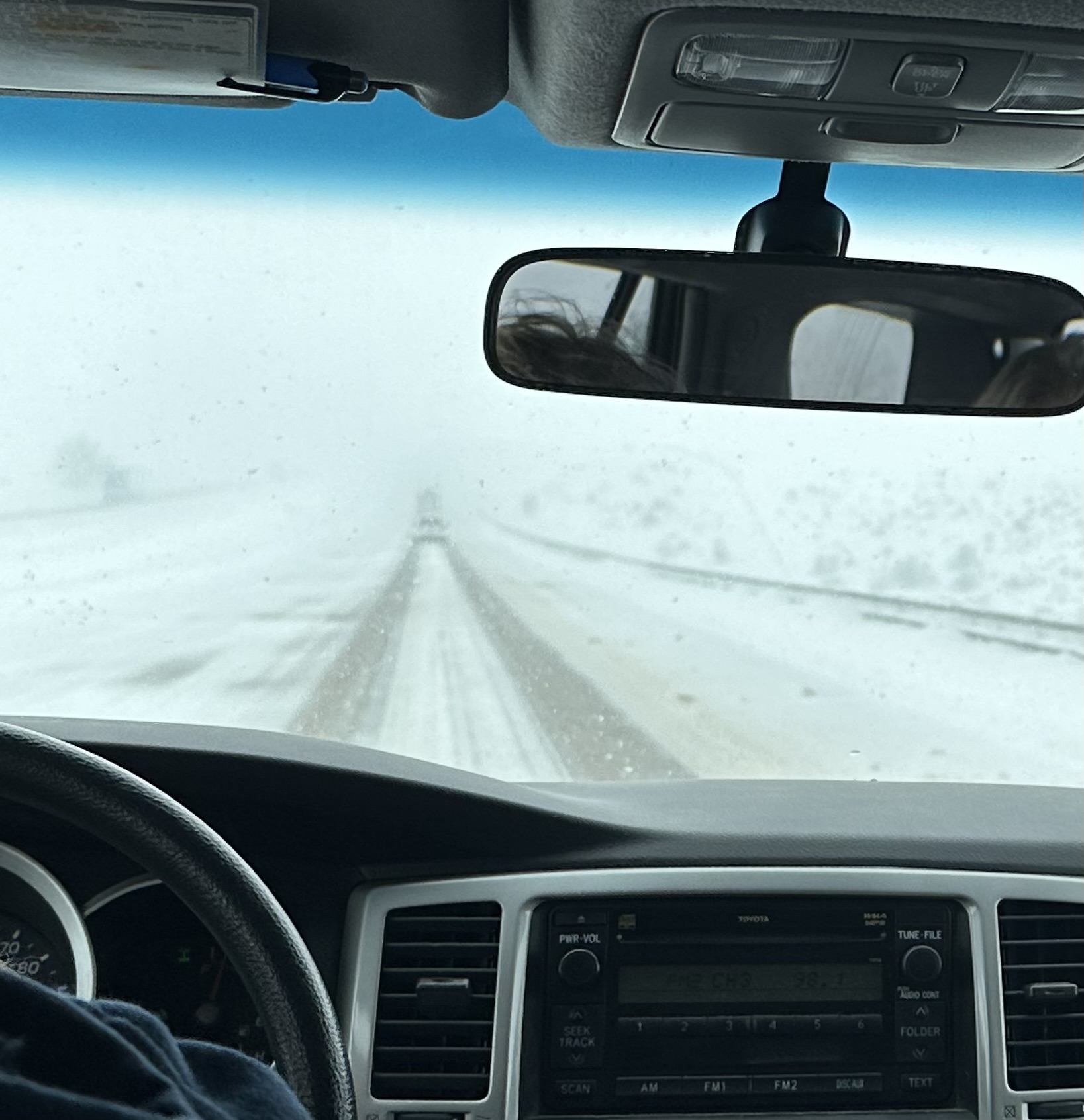
Thursday evening January 26, 2023, and we’re headed to the airport in Lihue to catch the red eye to Los Angeles. I’m a little sad and my phone is stowed away in my purse. Enough photos! We land in LA without a hitch (thank goodness) about 7am Friday and catch our second flight to Salt Lake City. We land in Salt Lake before noon. Of course I just don’t sleep well on the red eye so I’m glad I’m not the one driving us the 200+ miles home to Idaho Falls. Accompanied by ‘old man winter.’ I pull my phone back out and capture a few photos of our drive home from the back seat. Here we are nearing Malad, Idaho. David is driving.

Make sure your seatbelt is securely fastened. It gets messier.

Eric takes over the wheel. David didn’t sleep well on the red eye either.

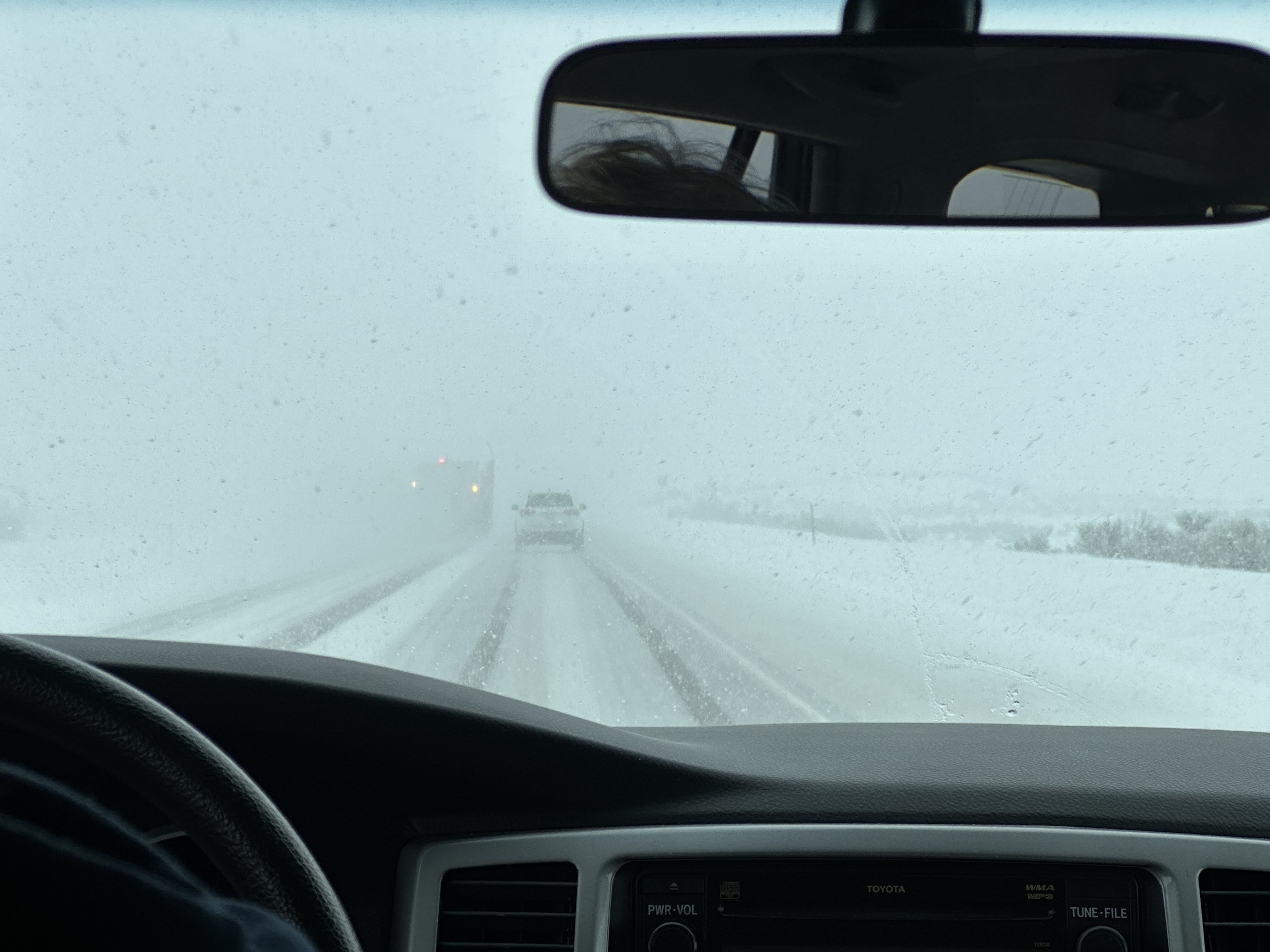
Near McCammon, Idaho now. Snowplows are a welcomed sight! Well, if you have enough visibility to see them…

Near Inkom, Idaho now. Uh-oh.

Dropping into Pocatello

Oh goody! How many miles to Idaho Falls??

We’re just a few miles from home now. Oh no!

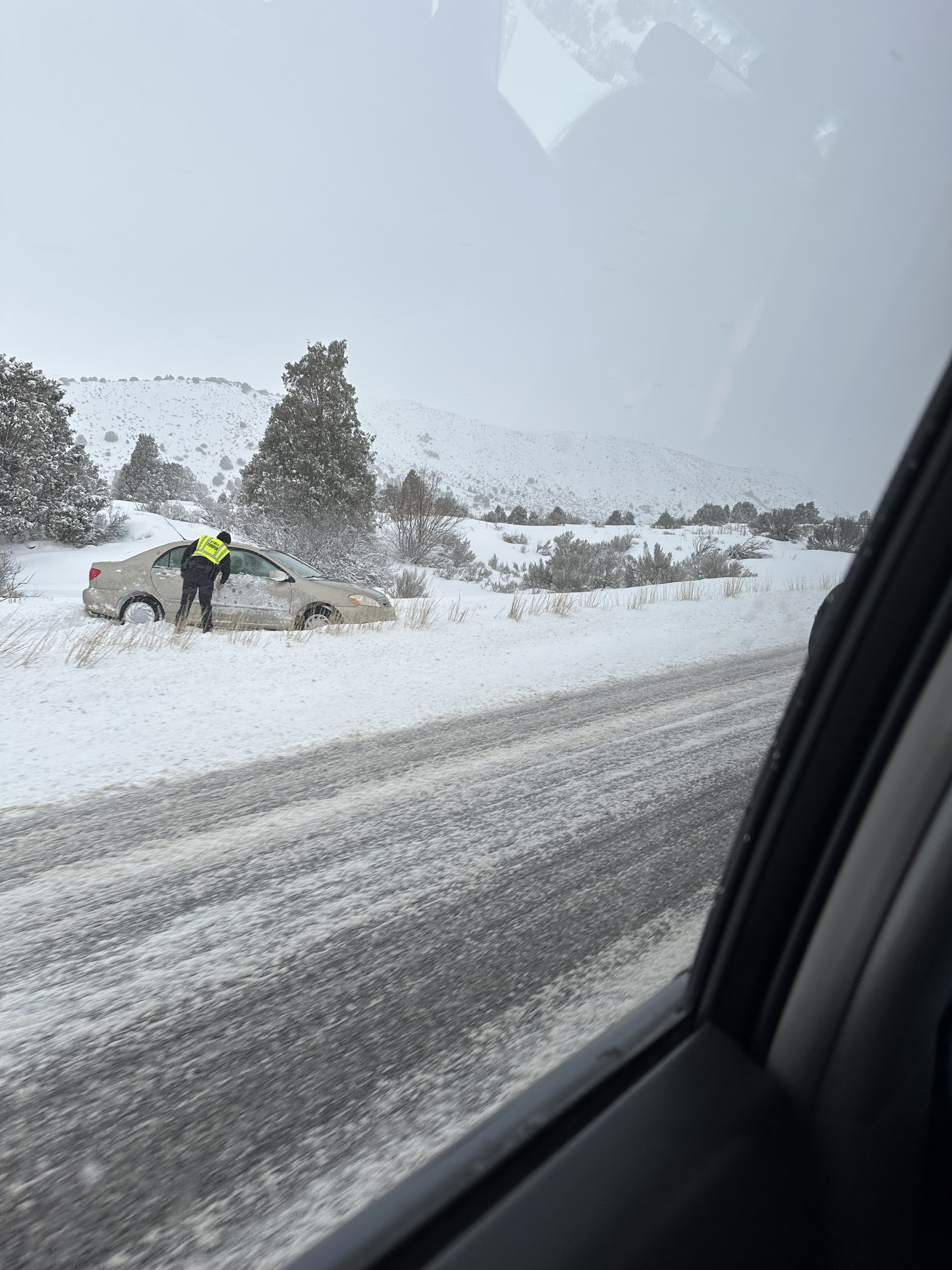
There were five cars off the road in the last ten miles. Oh goody. A tow truck! Somebody will be vey happy to see him!

Just pulled onto our street.

I’m not sure why the photo is so blurry. The scene did seem a bit surreal, arriving home jet lagged and stressed out from travel after spending 15 days in Kauai.

We hunkered in for the long haul alongside old man winter. After we were home, Victor and Stephanie sent us updates from Kauai. On February 1st, just 5 days after we left, the baby albatross on their street (where I had taken the photo) hatched out. Victor sent a photo:

A few days later the second baby in their neighborhood hatched. It seems like a miracle that these babies can survive – sitting in nests on the ground. It’s possible because everyone in the neighborhood is on guard for their safety, keeping their dogs leashed, (what about cats? Yikes!) and there are no mongoose (hopefully) on Kauai.

On February 27 we received this video from Steph and Vic. The baby is now almost a month old. A time for celebration! Watch the video carefully and you will see the baby in the nest to the right of the sign in the video:

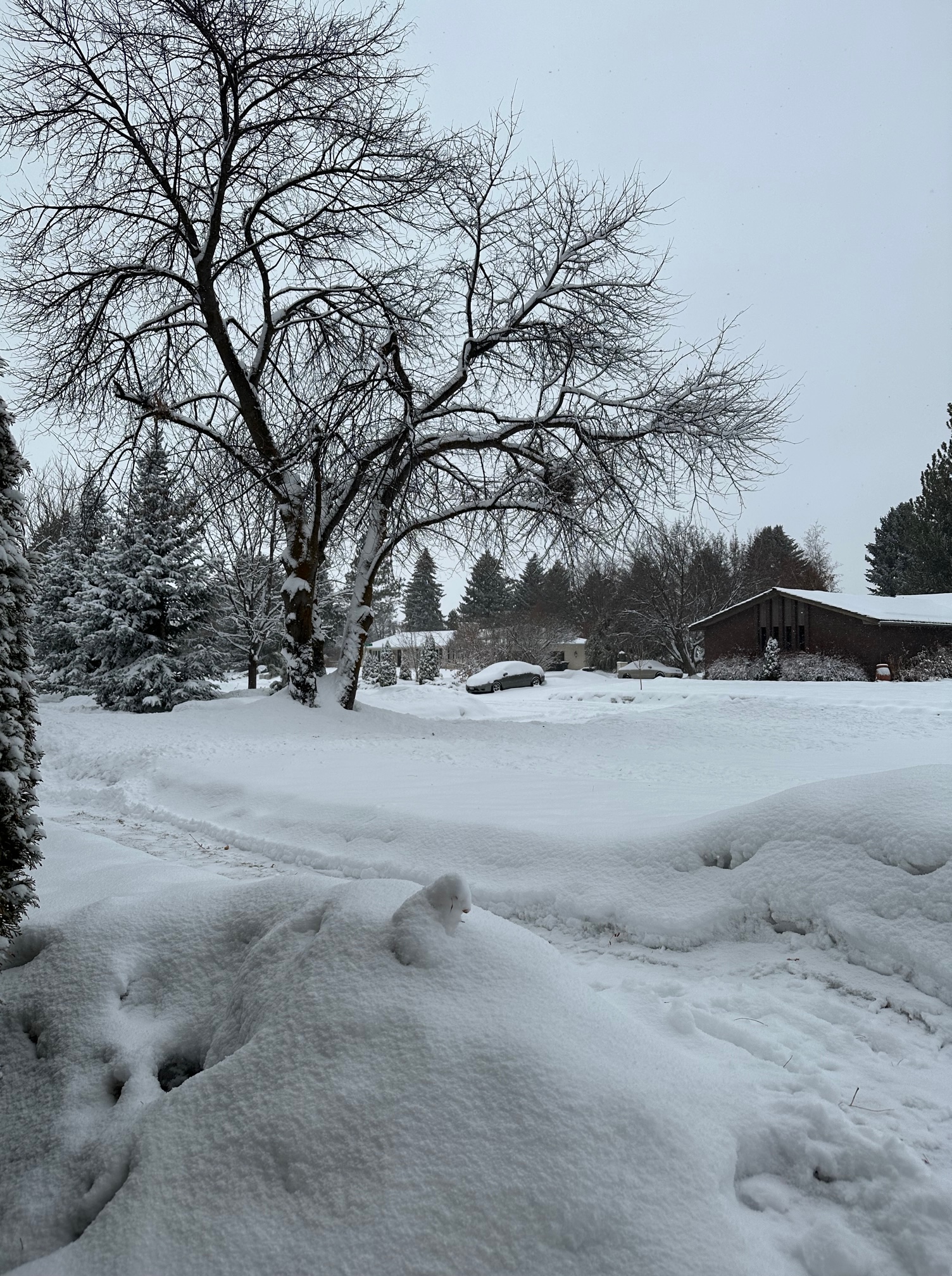
Here in southeast Idaho we’ve experienced one of the coldest, snowiest winters in 20 years. We still have mountains of snow in our front yard, accumulating since November with not much melting in between. We have been hopeful for signs of spring and by golly I saw one the other day when a magpie flew past our front window with a large sprig in its beak. Sure enough a pair of magpies are working feverishly on a 2-story magpie bungalow in our front may tree.

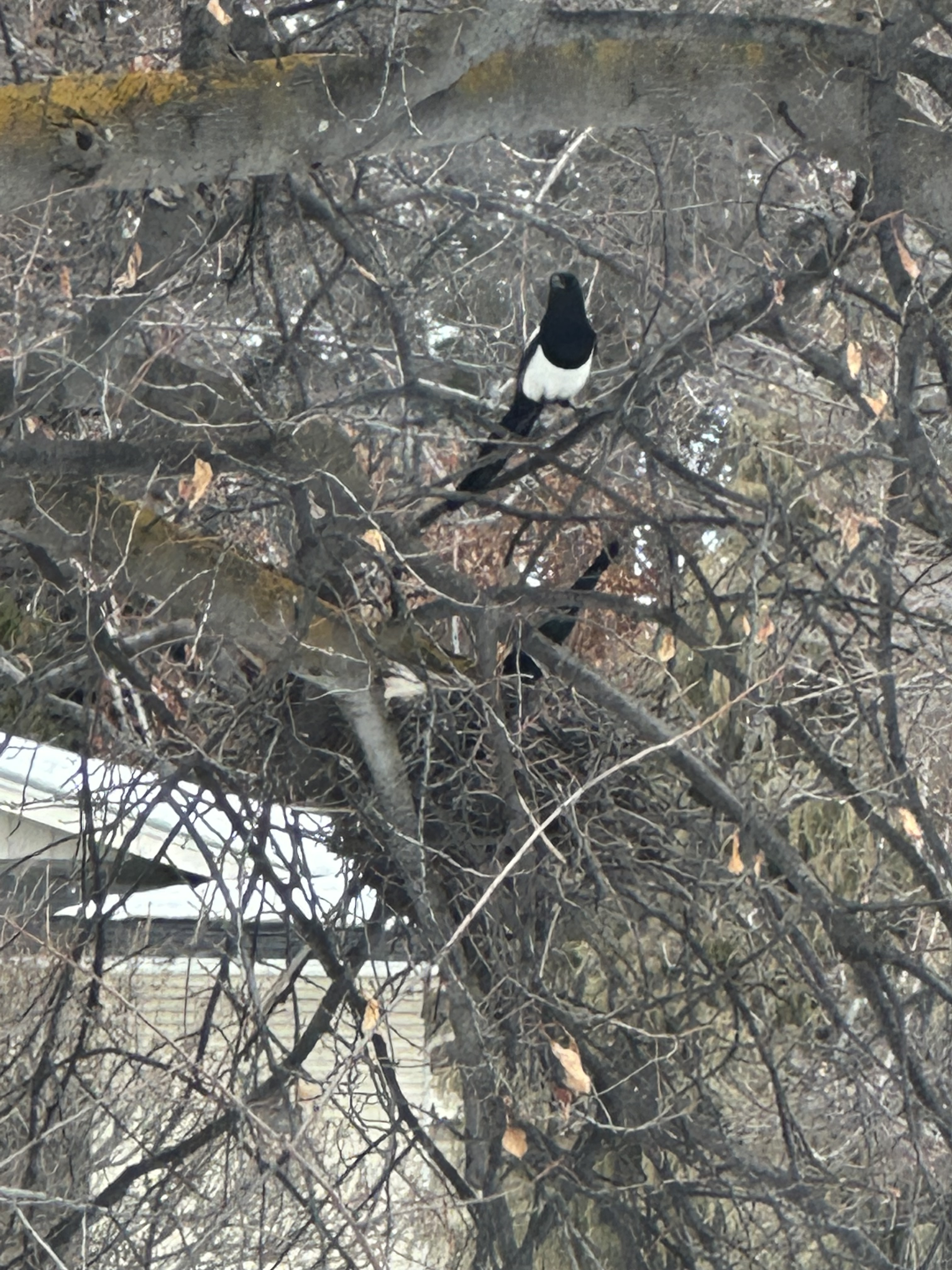
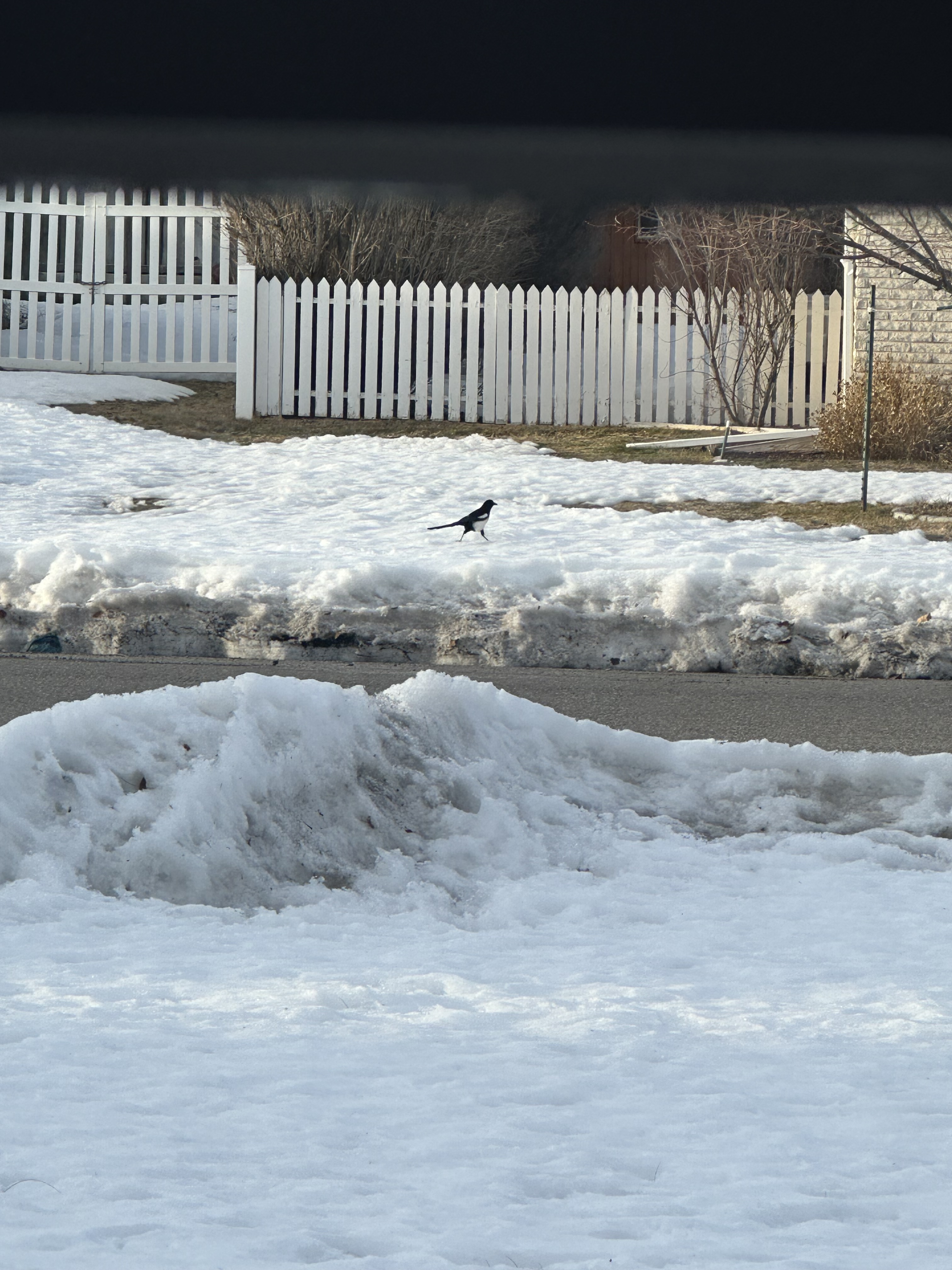
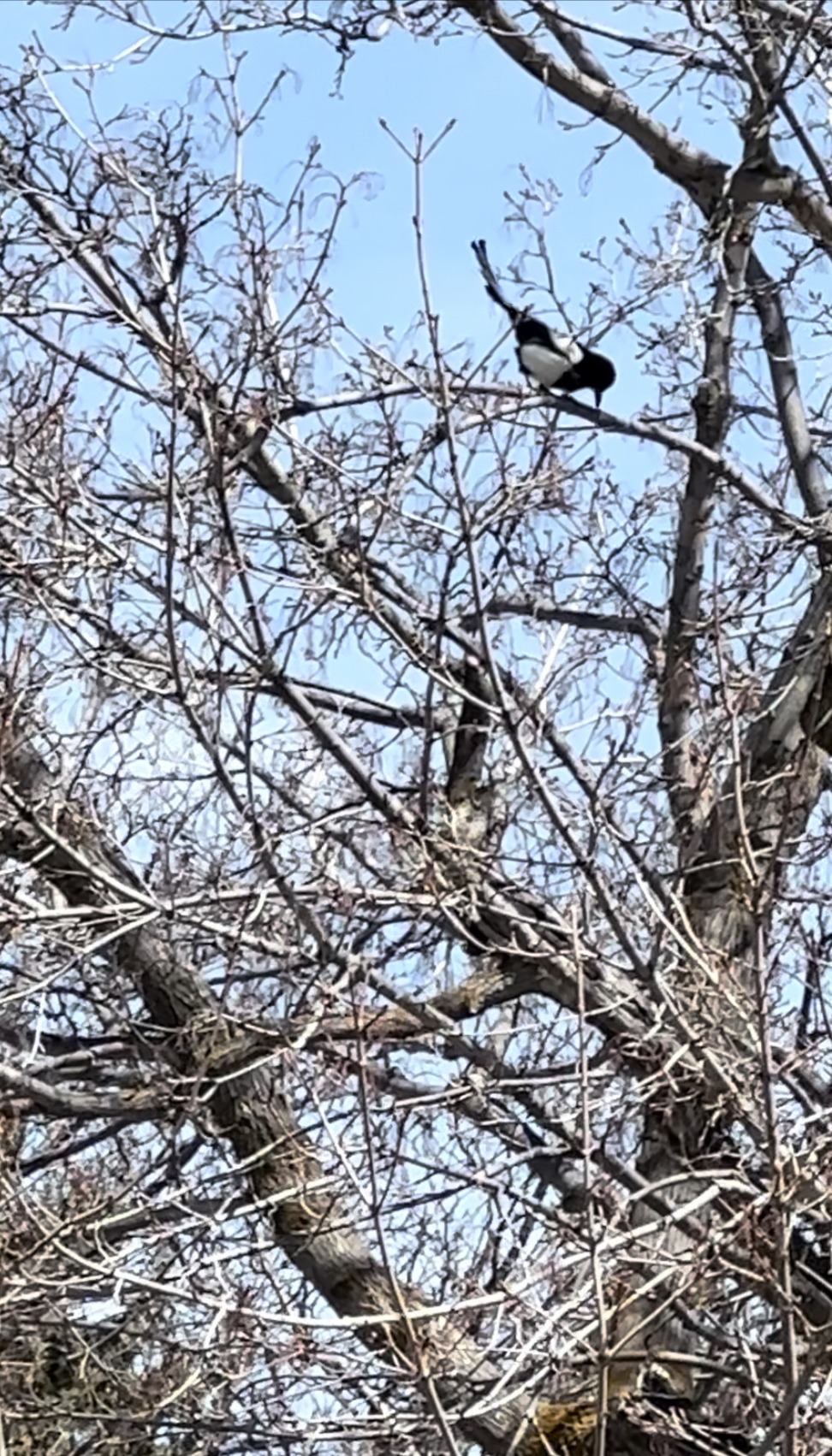
In case you don’t know what a magpie looks like, I just captured this picture of one of the pair. Boy have they been busy.

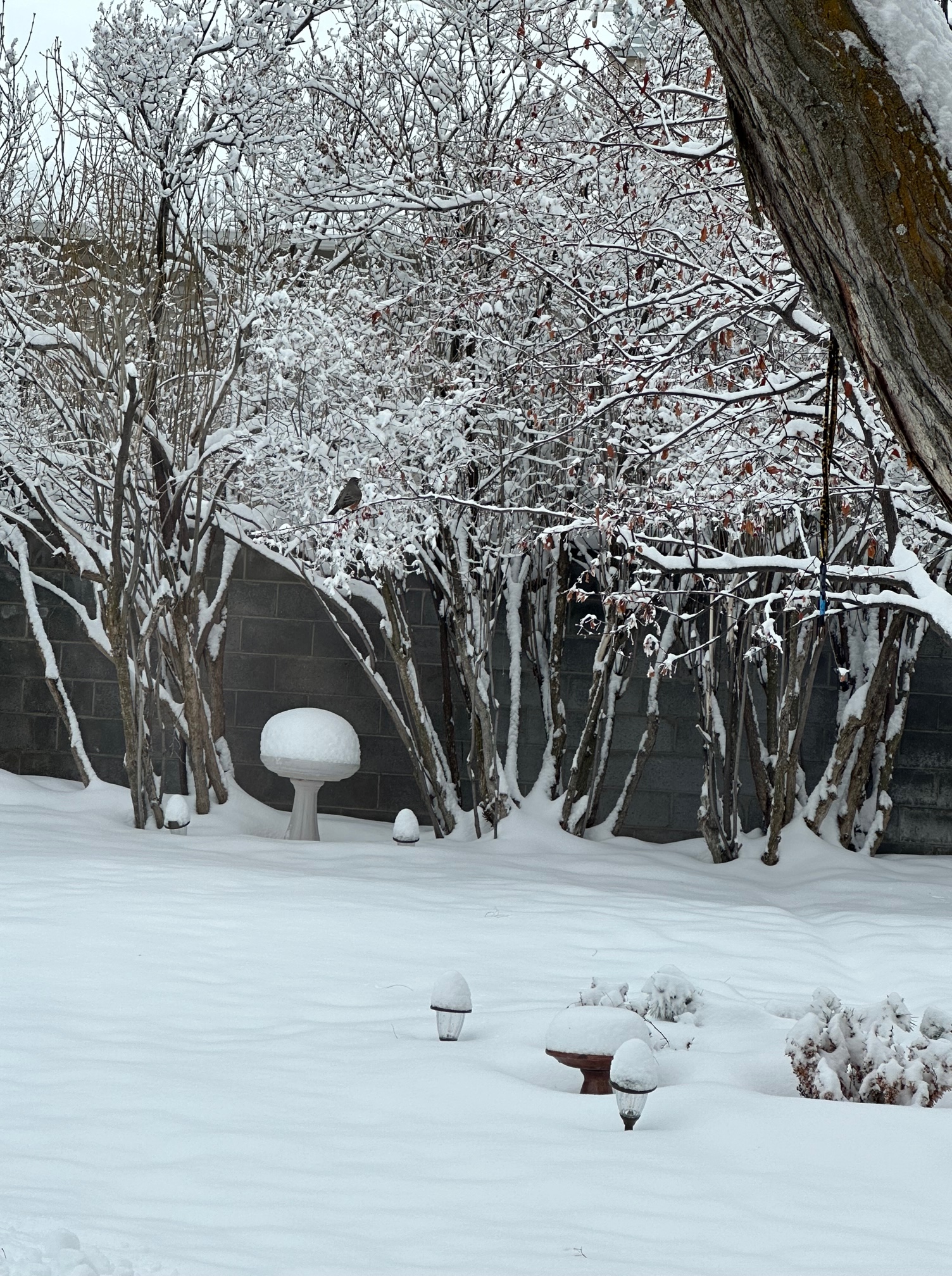
Oh, and did I mention that I also captured a photo of a robin in our back yard? Tough bird, that one. A sign of spring? Hey, I’ll take it!

And what’s the current weather forecast for Idaho Falls? “A return of snow on the first day of spring.”

And now you know why I’ve had such a hard time leaving Kauai.

Finding Spring

May 9, 2022

I’ve always lived in northern climes, experiencing the distinct changes in light and weather over the four seasons. Here in southeast Idaho winters are long, and much of spring can feel just like winter.

This past winter was colder and drier than normal. We were walloped with snow in late December, with a couple more storms in January and February, and it pretty much stayed on the ground till March. Here’s a photo I took on March 5.

March roars in and intermittently melts and refurbishes the winter snowpack. It’s a strange experience to stop in traffic on a main thoroughfare in town and find yourself alongside a large snowcapped mountain peak of shoveled snow. How did all that snow turn so black? Surely the parking lots are not that filthy! How much of that soot and grime was deposited by the wind over the last three months?

Mount Filthydomarro

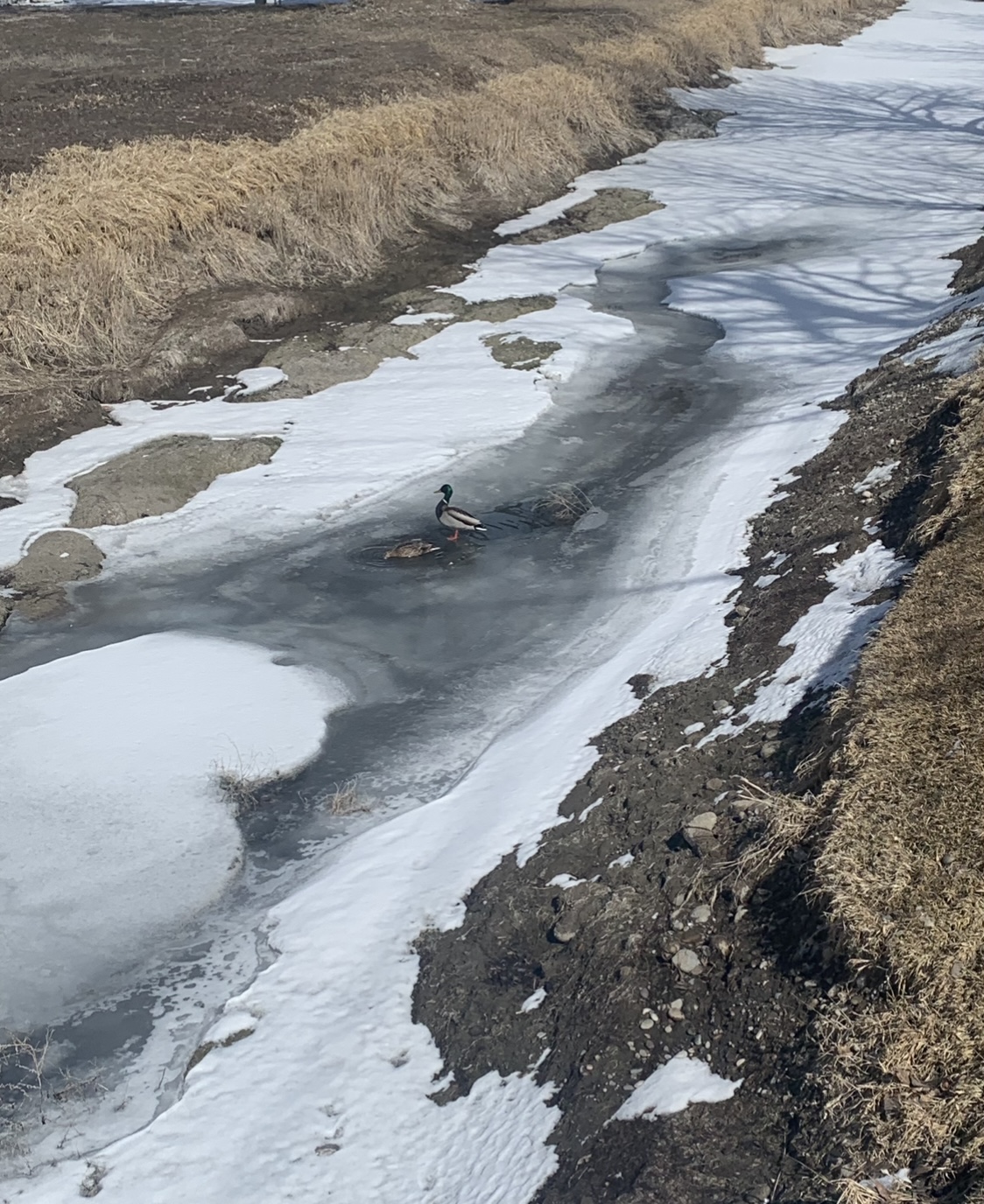
But we’re thawing out and hopeful for signs of spring. By March 12 a local canal thaws into a puddle big enough to accommodate two ducks! But you have to look carefully to see them.

By March 15 our Christmas lights come down.

But on March 16 it feels like Christmas again

And by March 20 we’re back to December.

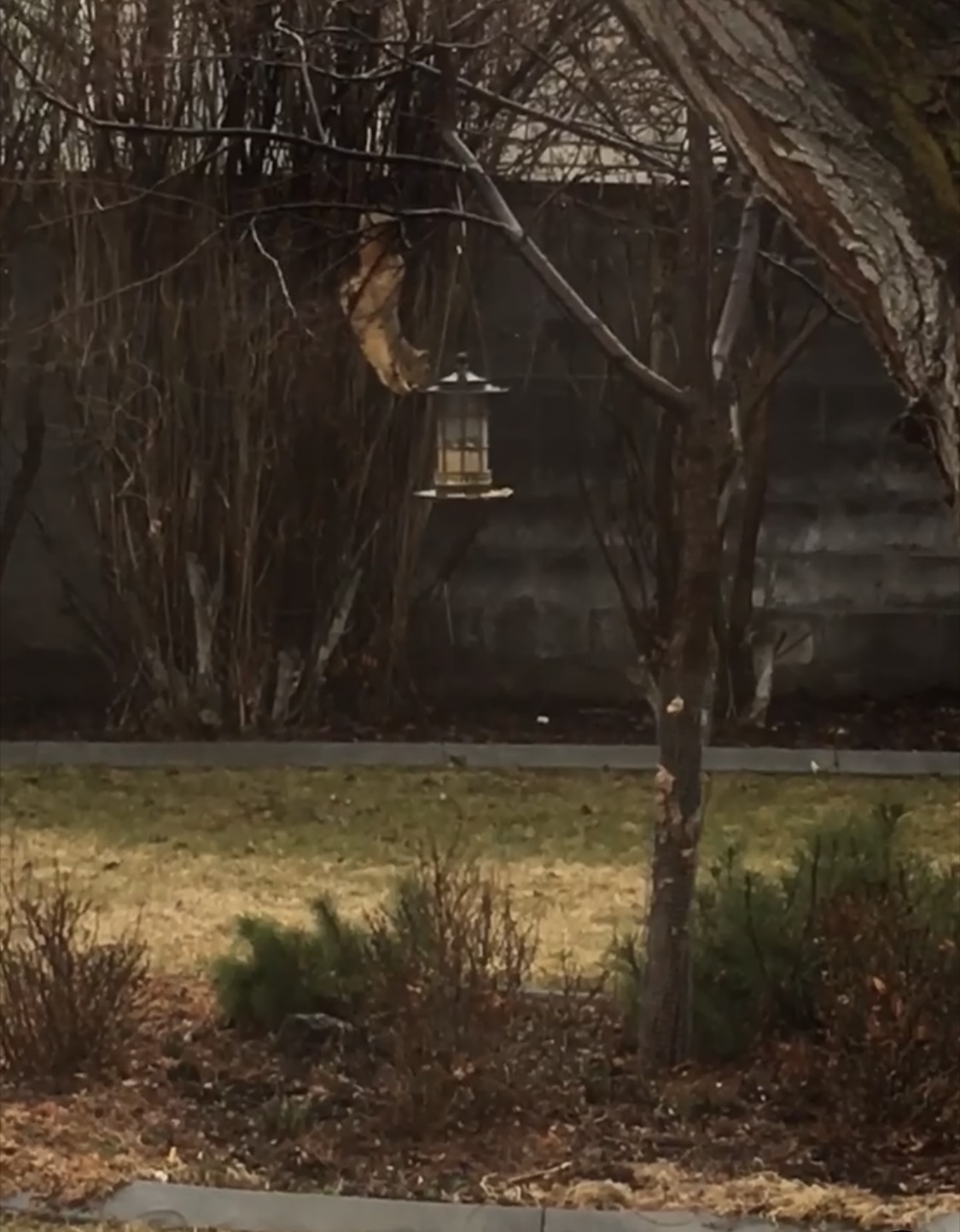
Do you see the squirrel? He’s back there somewhere

Idaho Falls, March 20

By April 4 the tulips are up and crocuses are blooming!

Things haven’t changed much by April 12. Except we’ve hung a couple bird feeders.

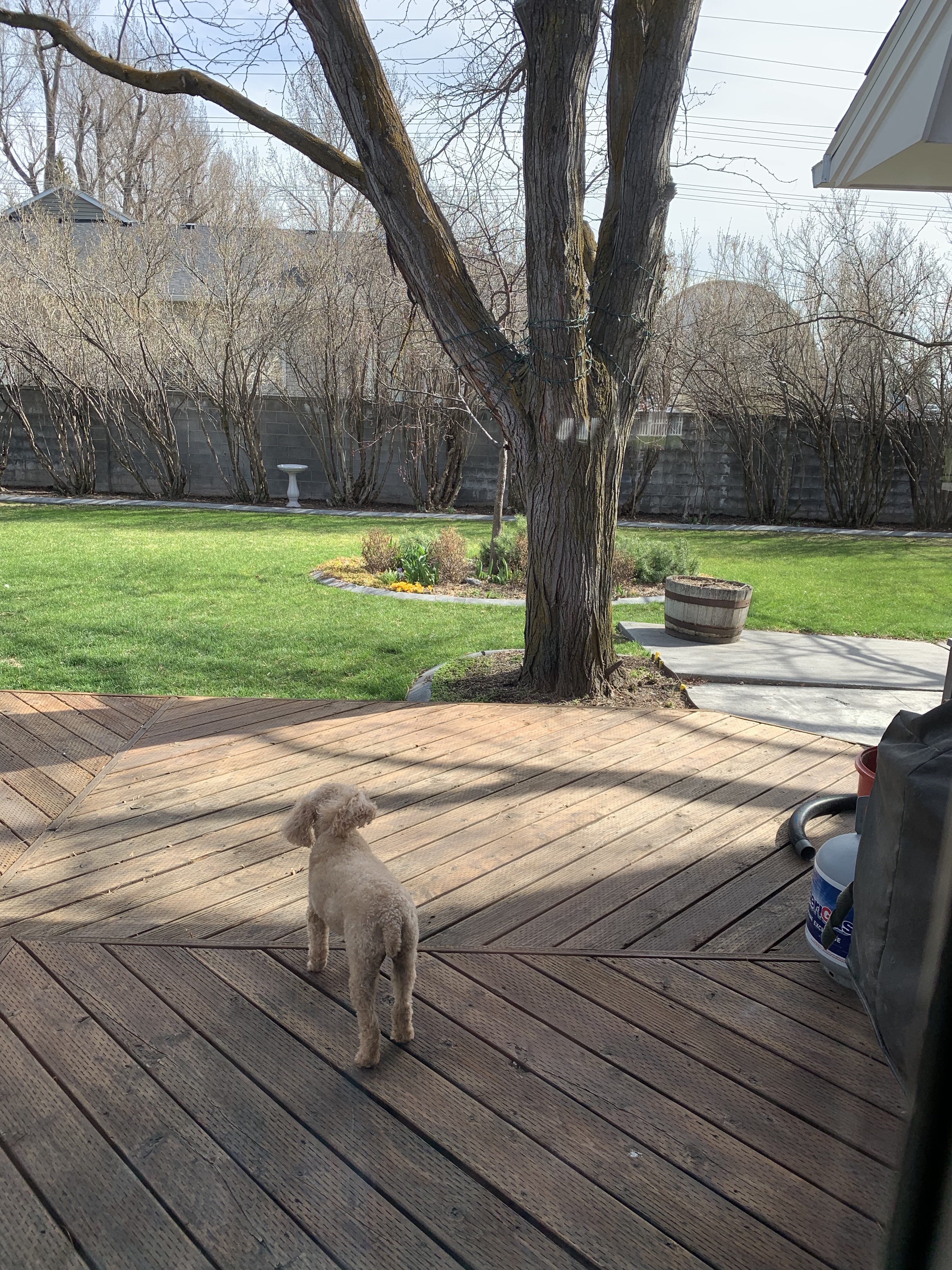
Rudy keeps an eye on things. In between naps.

Can we make you more comfortable, Rudy?

Yeah, well, time to wake up from our long winter’s naps and search for more signs of spring!

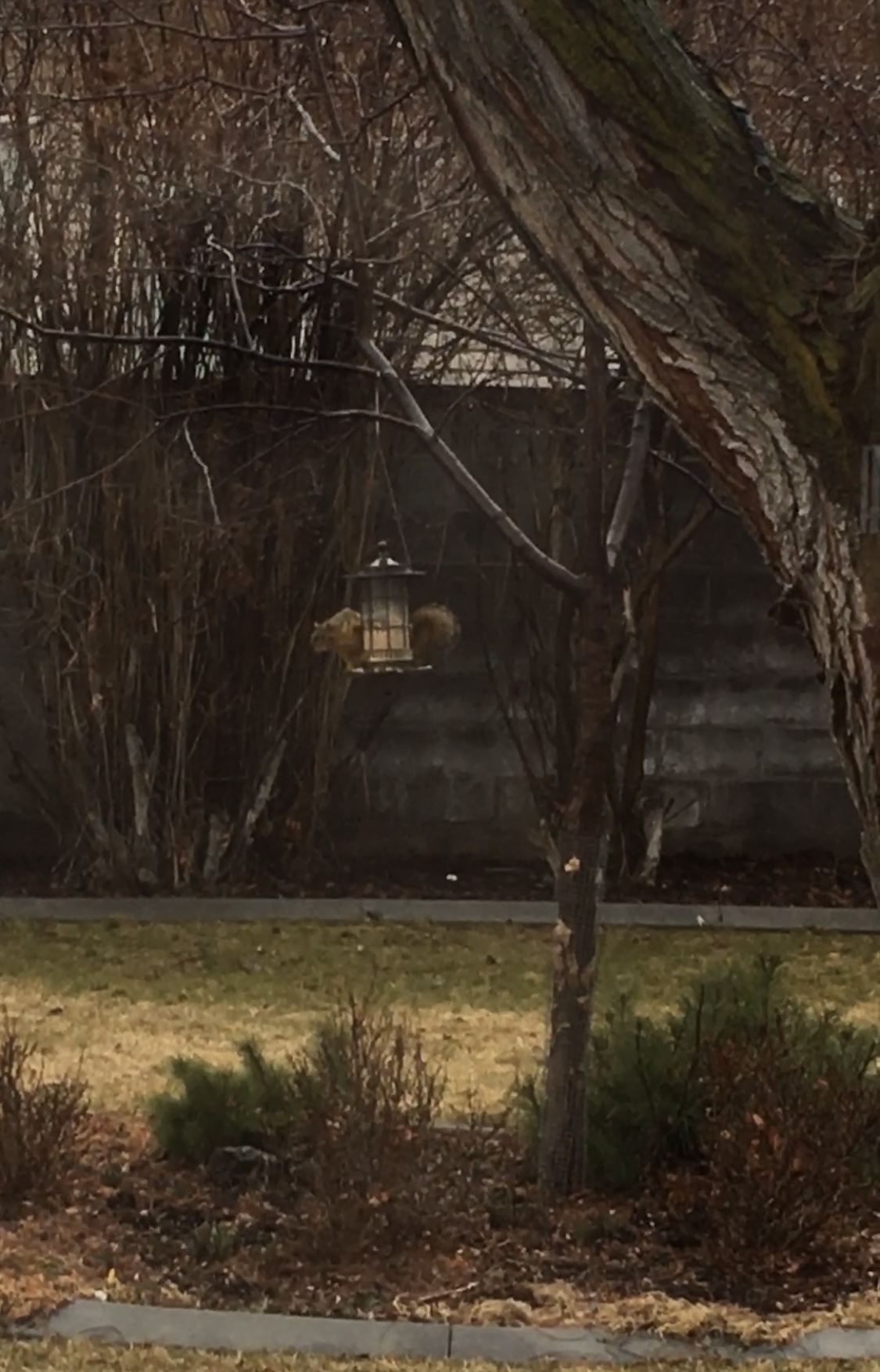
What say you Squirrel? No, you’re not getting on the bird feeder.

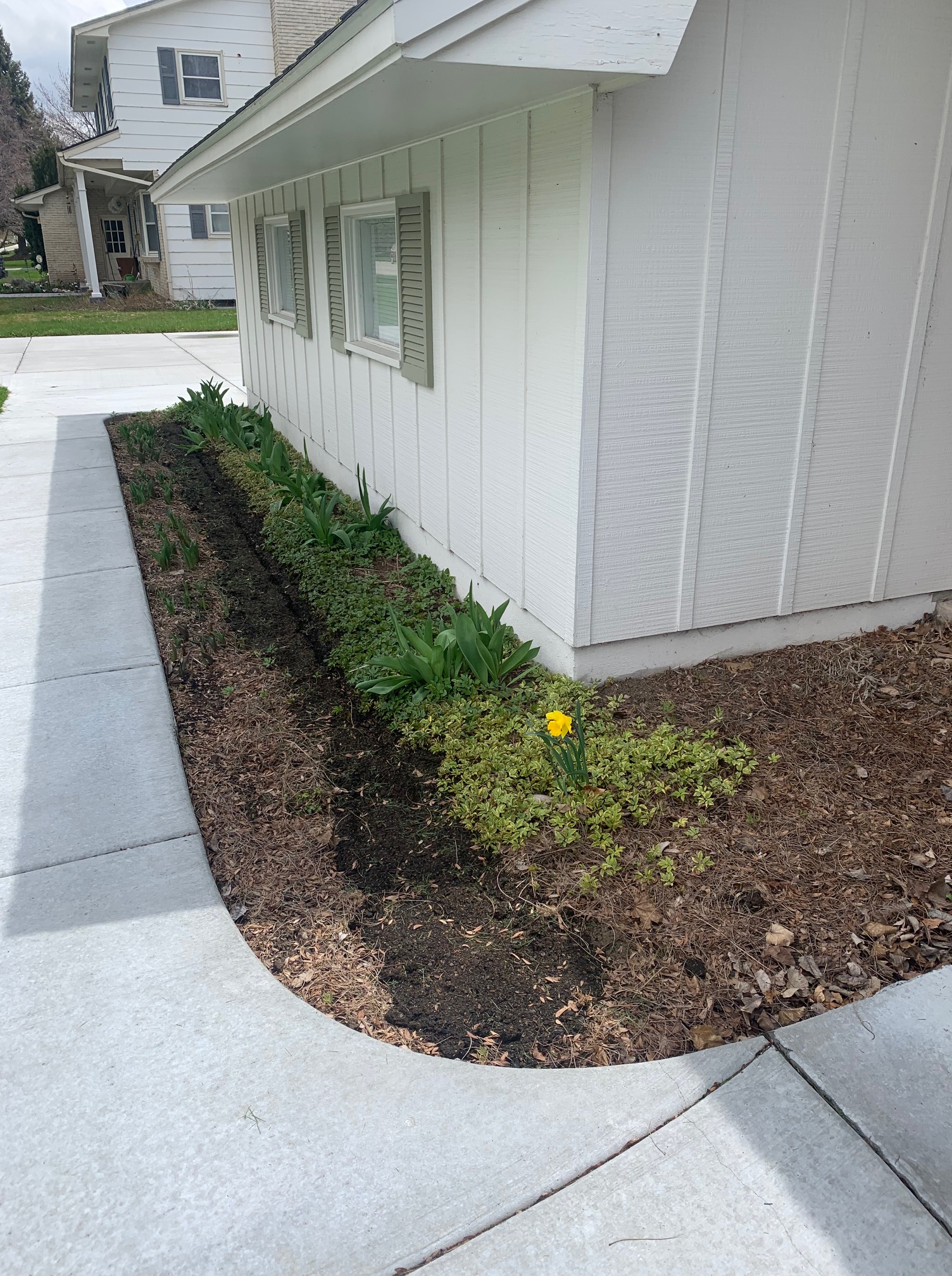
Oh wow! It’s May 1st and we have a daffodil blooming out front. Yes, one daffodil. Can you see it?

Here’s a better view.

Awesome. A daffodil!

Yeah, find the other hundred daffodiIs I planted last fall. They’re poking up, but hey, what’s the rush? As I said, sometimes in southeast Idaho you have to look carefully for signs of spring.

Can you find the tulip sprouting up in our rock bed? Why of course, I planned it that way.

It’s May now and all the lawns in the neighborhood are greening up. The chickadees keep us busy refilling the bird feeder.

Two ducks have become regular workhorses in our backyard cleaning up the birdseed the chickadees keep flipping out of the bird feeder.

They could almost be disguised as yard art. Notice the proliferation of three daffodils now blooming in our back yard.

The ducks have others joining the team to clean up the mess from the chickadees. Enter, squirrel and mourning dove:

Eurasian doves are helping too. But they all have to be on constant high alert for predators, specifically, raptors circling above. A couple of weeks ago we were passively gazing out our kitchen window at a Eurasian dove in our back lawn, when a hawk swooped in and snatched it up in front of our eyes, leaving only a scattering cloud of feathers. Now you see the Eurasian dove, and ‘poof’, now you don’t. Yikes.

The hawks are circling overhead alright!

Thank God they don’t prey on humans. They could sure ruin a good outdoor picnic, never mind the weather.

Yeah well try having a picnic on a windy day in April or May. Hold onto your sandwich and let the chips blow where they may.

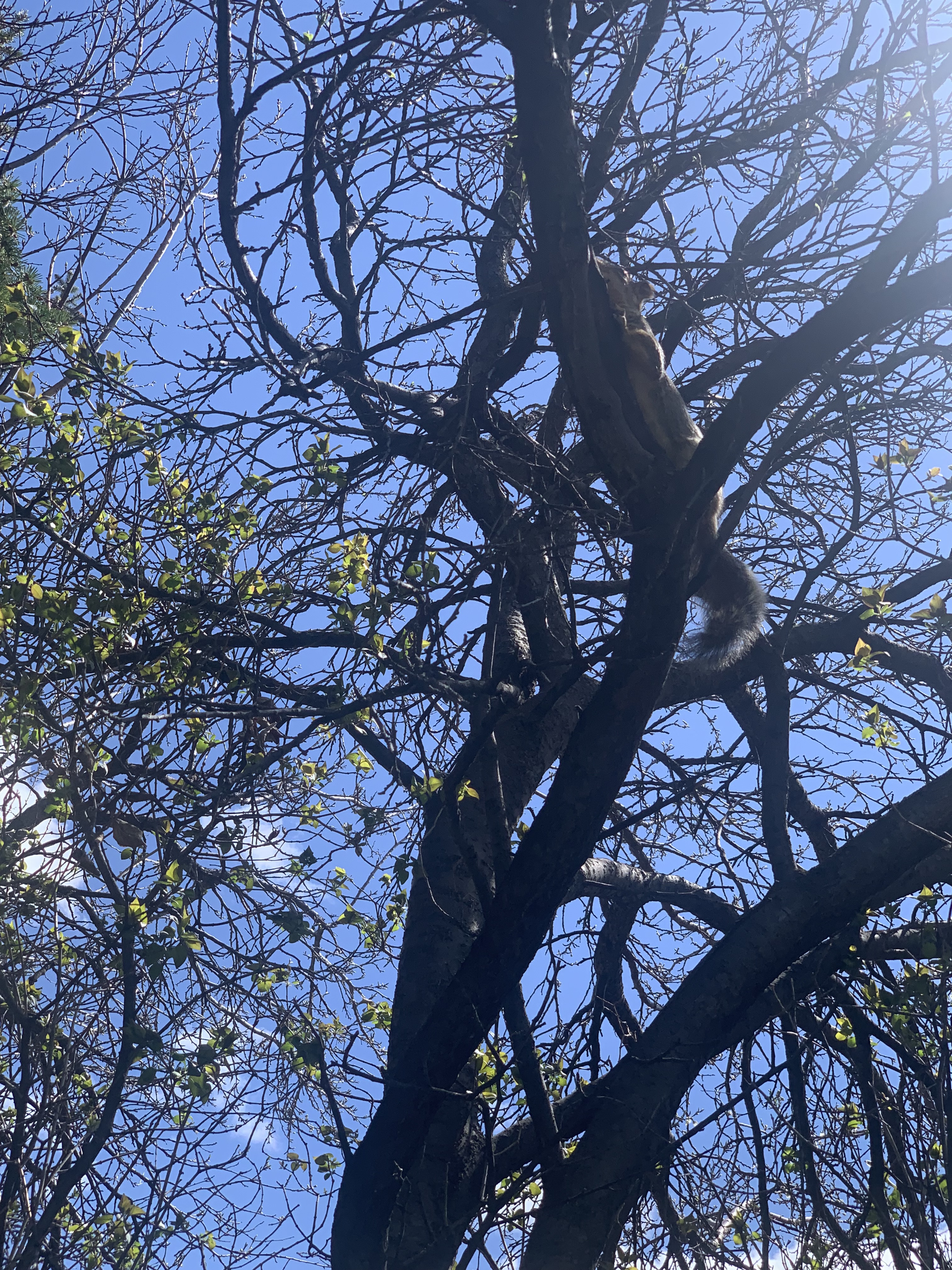
Just last week I was out in the yard in a 20mph wind when I spotted squirrel. Hold on there, buddy!

Morph yourself to a tree limb to keep your bearings!

Can you spot the chickadee in this next photo?

Hint: It’s nearly dead-center (no, not dead) in the arborvitae. Safe from hawk and wind! That’s a May tree by the way, above the arborvitae, so named because they usually bloom by the first of May. Yeah, well it’s May 9th, and it hasn’t bloomed yet. Haven’t seen even one May tree in bloom in town.

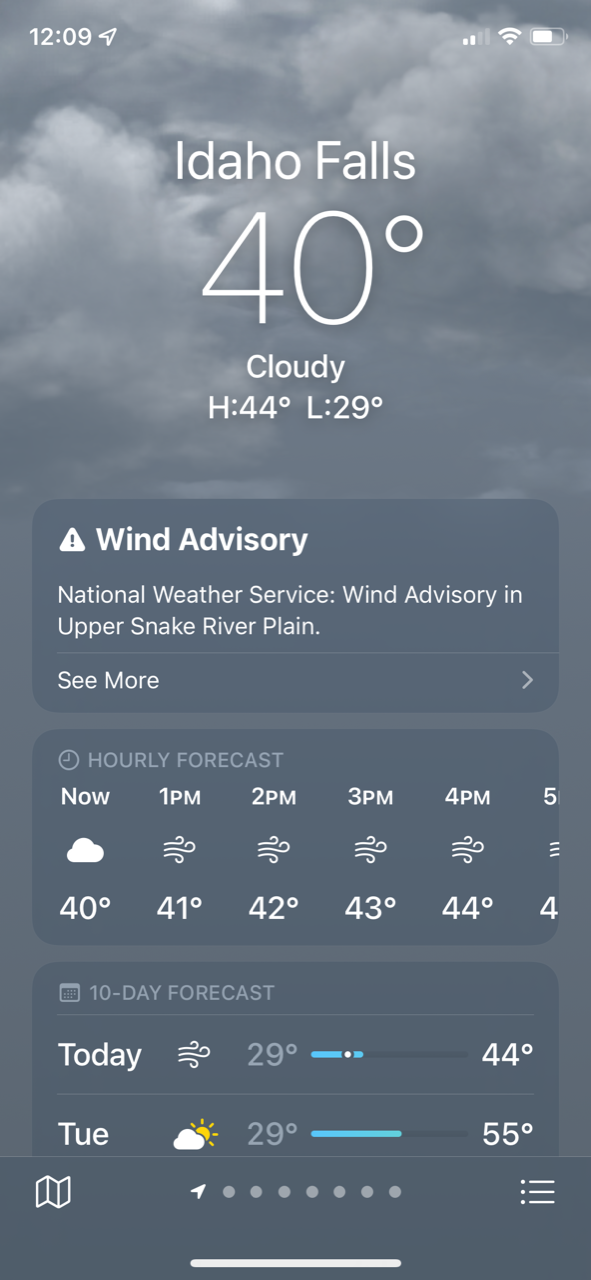
Well I guess I should put a wrap on this. Not too motivated today to take a walk and look for spring. Here, I just took a screenshot of our weather app today. High of 44 and cloudy with a wind advisory.

I stepped out and took a photo of our back yard this morning.

More than 3 daffodils blooming in our center garden there! (ya, I knew I planted them last fall). Hopeful signs. The tall lilacs along the fence are shooting out leaves and I swear that flowering crab in the center garden has flower buds. One warm spell and everything will pop!

Oh, and did I mention the robins? We have one tough dude hanging around who thinks he’s a hawk.

A Spring Tail

April 5, 2022

How wonderful the blossoming of spring after a long cold winter! The sweet month of April has arrived, the crocus are blooming, and the summer birds are back to establish their breeding grounds. I spotted our first robin high in a May tree on March 13.

… chirping away as I retrieved the morning paper. I came back out and took a video so you can hear it too.

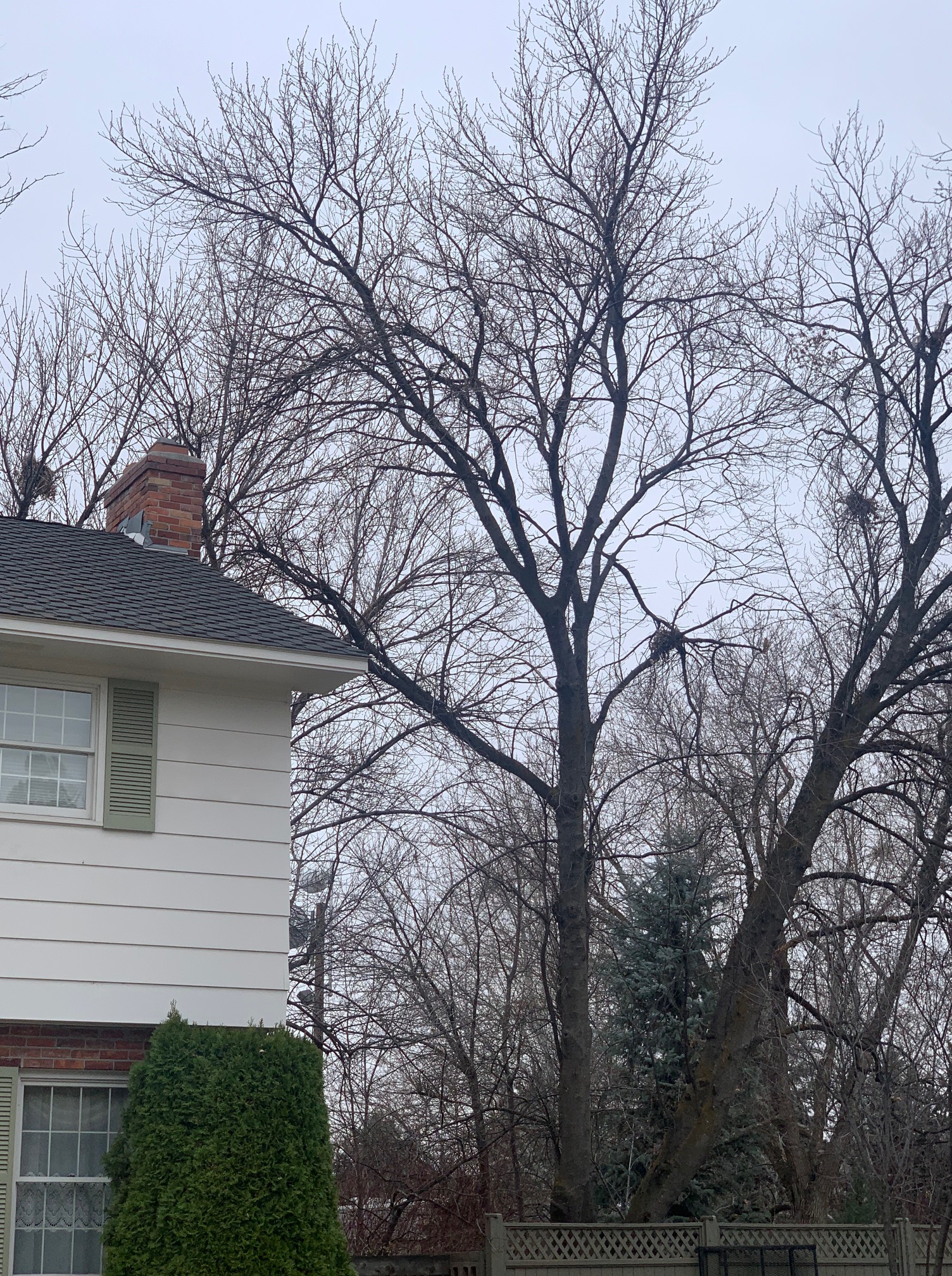
We have gray squirrels scampering across our back yard all winter long, see all those nests up there in those ancient trees behind our house?

A veritable scurry of squirrels. Okay, so I know squirrels are rodents, part of the scientific order Rodentia. https://www.westernexterminator.com/blog/are-squirrels-rodents/

And they are certainly considered by many humans to be pests and a bit of a nuisance. They chew on things like telephone wires, electrocute themselves on transformers and knock out power lines. They scurry on your roof when you’re trying to sleep and might chew their way into your attic, but hey, they’re just looking for tree nuts and acorns and maybe a place to nest. You have inevitably flattened a squirrel while driving because they are a bit OCD about crossing the road, dang it, make up your mind which direction you’re going there, Mr. Squirrel! Darned if you’re going to slam on your automobile brakes to avoid running over a squirrel.

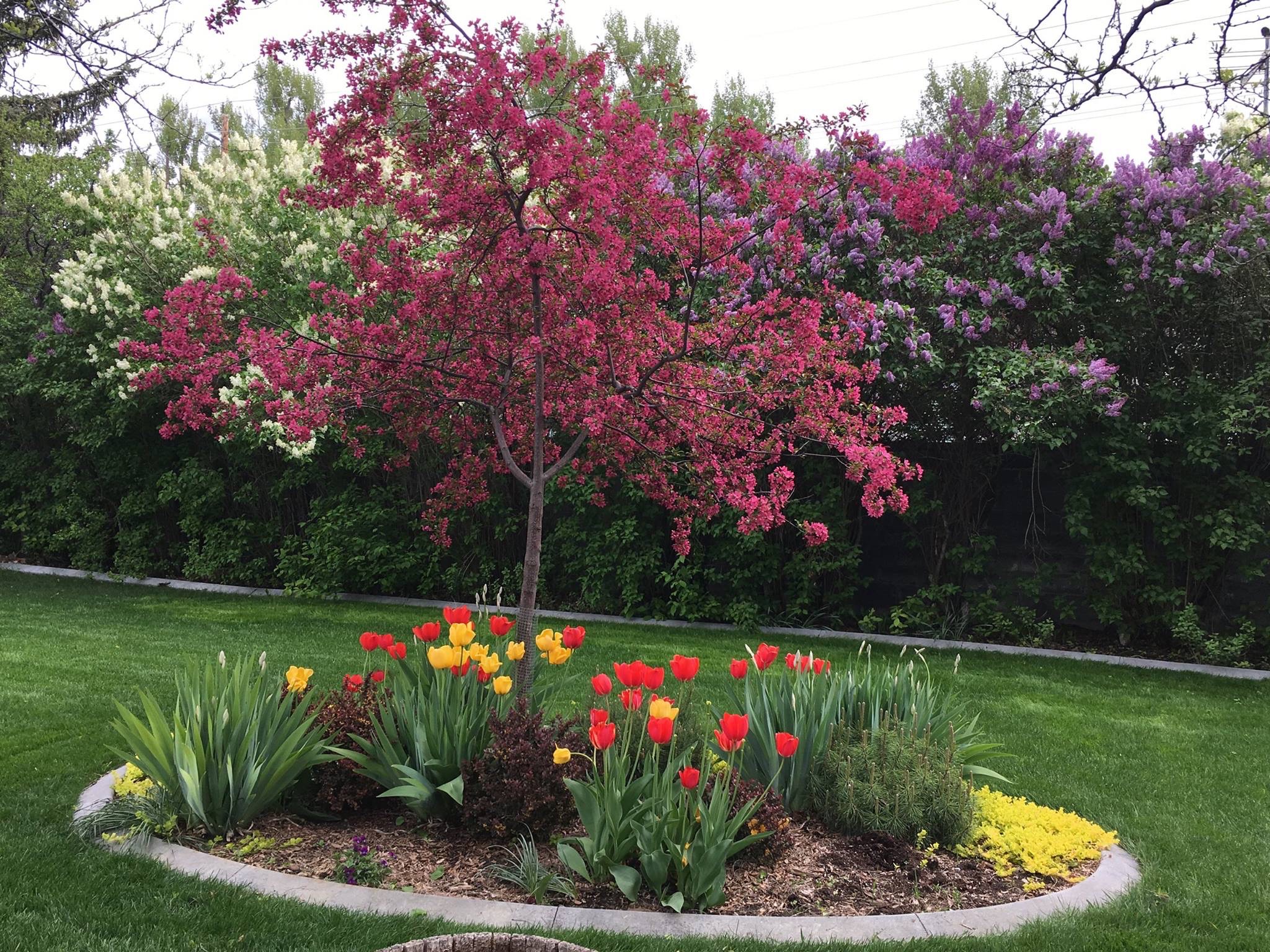
But I love watching the squirrels in our back yard. It’s a pretty sweet spot for them on account of we have an ever bearing flowering crab apple tree planted right in a center garden. The tree should bloom in the next few weeks, beautiful dark pink blossoms, the fruit comes late summer and hangs on the tree all winter. To feed the squirrels and birds. I love to watch them!

I captured a video of the squirrel from inside the house when our dog decided he was thirsty. A weird soundtrack. Don’t worry. The dog is not sloshing water from the dog dish onto your shoe and you really don’t have to let him out to chase the squirrel.

By mid March the bird feeders come out. What species will we attract? Small woodpeckers perhaps? The chickadees. Yellow warblers?

Squirrels. Let the bird feeder wars begin!

He’s on!

Yes, but I’ve got a solution. Watch this video for the big reveal:

Rabid squirrel-chaser dog. Okay, but I have to step up my game here. Feeder situation not tenable.

I head to my friend Rene’s house. She’s way ahead of me in all areas garden related. She has birds on her feeders. An Audubon book to identify them. Huge trees in her back yard, and at least three gray squirrels foraging around all the time. She thought she had outsmarted them hanging her bird feeder 12 feet down from a tree limb. We were standing at her back door enjoying her utopian garden landscape when suddenly a squirrel leaped from a limb onto the hook 3 feet above the feeder and dropped right down on the feeder. Easy peasy.

Stealthy little bugger!

A few days later Rene looked out her back door and there lying on the ground near the feeder was a tail. Just a tail.

Oh no! A tail without a squirrel attached to it? How did that happen? Is the squirrel dead and eaten? By a …. raccoon? No. Surely they are too slow for squirrels. A hawk? Did a large raptor swoop down and snatch the squirrel? No, would the tail be sitting here right by the back door, then? A cat? A wily quick snatch of its claws, torture and kill, the body eaten, save for the tail. (And a kidney. Is there a squirrel kidney splayed out on a neighbor’s back stoop dropped there as a trophy from the kill, compliments of the cat?)

I just can’t stop thinking about that tail. As it turns out, it isn’t that uncommon for squirrels to lose their tails. Not like lizards lose their tails, where they drop off and bounce on their own to confuse a predator and then the lizard just grows it back. Squirrels can get their tails caught in fences. A predator can rip it off, but once the tail is gone, it’s gone. But I just can’t imagine being a lowly rodent squirrel going forward in life without that bushy tail. A squirrel without a tail? Lowlier than a vole!

A disturbing spring tale.

Here’s a Google link with interesting facts about squirrels losing their tails, not surprising, on a “squirrels at the feeder’ site (you can find anything on the Internet)

Squirrels can live without their thick, bushy tails, albeit, at a higher risk for early death. Their fluffy appendage helps with balance, regulates body temperature, breaks their falls, and serves as a parachute in the air (yeah, we know). A squirrel’s tail is an important thermoregulatory device. Did you think about the tail providing a source of shade for the squirrel in warm weather? The squirrel can wrap its tail around itself in the winter to keep warm and use the tail to protect itself from rain. A squirrel can control blood flow to the tail – rushing blood to the tail to disperse body heat or reducing blood flow to the tail to conserve heat. During a fall, the hairs on the tail separate in order to catch as much air as possible. This slows the squirrel’s fall and provides time for the squirrel to orient its body to land safely. You know, verses falling to its death with a splat from a high tree limb with no tail or a rat tail.

I dunno. This is a dumb squirrel story. I did feel pretty sad thinking about that squirrel tail, obviously belonging to a squirrel, likely a dead squirrel. Rene has been watching out in her back yard for a tail-less squirrel. She hasn’t seen it yet. If alive, it’s likely hiding out somewhere, utterly devasted and depressed over losing its fine bushy appendage. Rene certainly won’t see it on the bird feeder.

Yeah, that thick bushy tail is a pretty dang fancy appendage, for any living thing to lose. Even if the living thing happens to be a medium-sized rodent foraging for tree nuts and acorns, and otherwise, a bit of a pest and, on most accounts, a general nuisance.

Picture taken of our flowering crab, May 7, 2017

Robin Territory!

June 28, 2020

I have a thing for the American robin. Sure, it’s a common bird of North America and who hasn’t seen a robin’s nest, a robin’s egg – a fledgling? Do you ever have a summer pass where you haven’t had robins foraging for food in your front yard? Discovered a nest?

They disappear in the fall and as winter passes into spring I start watching for the first sign of robins.They are a migratory bird, but some do stay through the winter, high up in the trees, hidden out of sight. I never see robins here in the winter months. It’s such a thrill when you first hear one in early spring and to experience that first sighting – which, this year, happened for us on March 17. The robin was high up in our May tree and I captured a photo of it from an upstairs window.

First robin sighting! March 17

We enjoyed sitting on our patio watching for the robins. One robin would perch on a high limb in our honey locust tree and break out into a sharp lilting song – as if announcing the official arrival of spring, yet a new season of hope and rebirth!

Or maybe to lay claim to his (or her) territory – to announce to the world that this robin has found a place to nest and raise a family, possibly two or three broods – in our back yard. (We are careful not to use any lawn chemicals or pesticides – I literally claw the pigweed out between the cracks in our brick walk, to avoid using Roundup.)

Well, sure enough, on May 21 we discovered a nest with at least 3 eggs. Yay!!

Discovered it May 21 – Yippee!

The female was roosting faithfully.

Look carefully and you will see her tail. Female robins build the nest and sit on the eggs.

Robins can produce 3 successful broods in one year, but only 40 per cent of nests successfully produce young. We were hopeful for this nest.

Then on Saturday, May 23, Memorial Day weekend hit. Literally. We woke up to snow on Saturday. And it kept snowing through the morning.

Our back yard, Saturday May 23

We felt like we were living a live scene from the Twilight Zone. I took a video of our back yard. (Notice on the patio table the bubbles we had been playing with the day before with our grandkids):

Nature delivered a cruel blow. Several branches of our blooming lilacs snapped from the weight of the snow

Good thing lilac limbs are flexible

and our front magnificent maple tree lost two large limbs. (Aren’t we used to this? Why don’t we own a chain saw?)

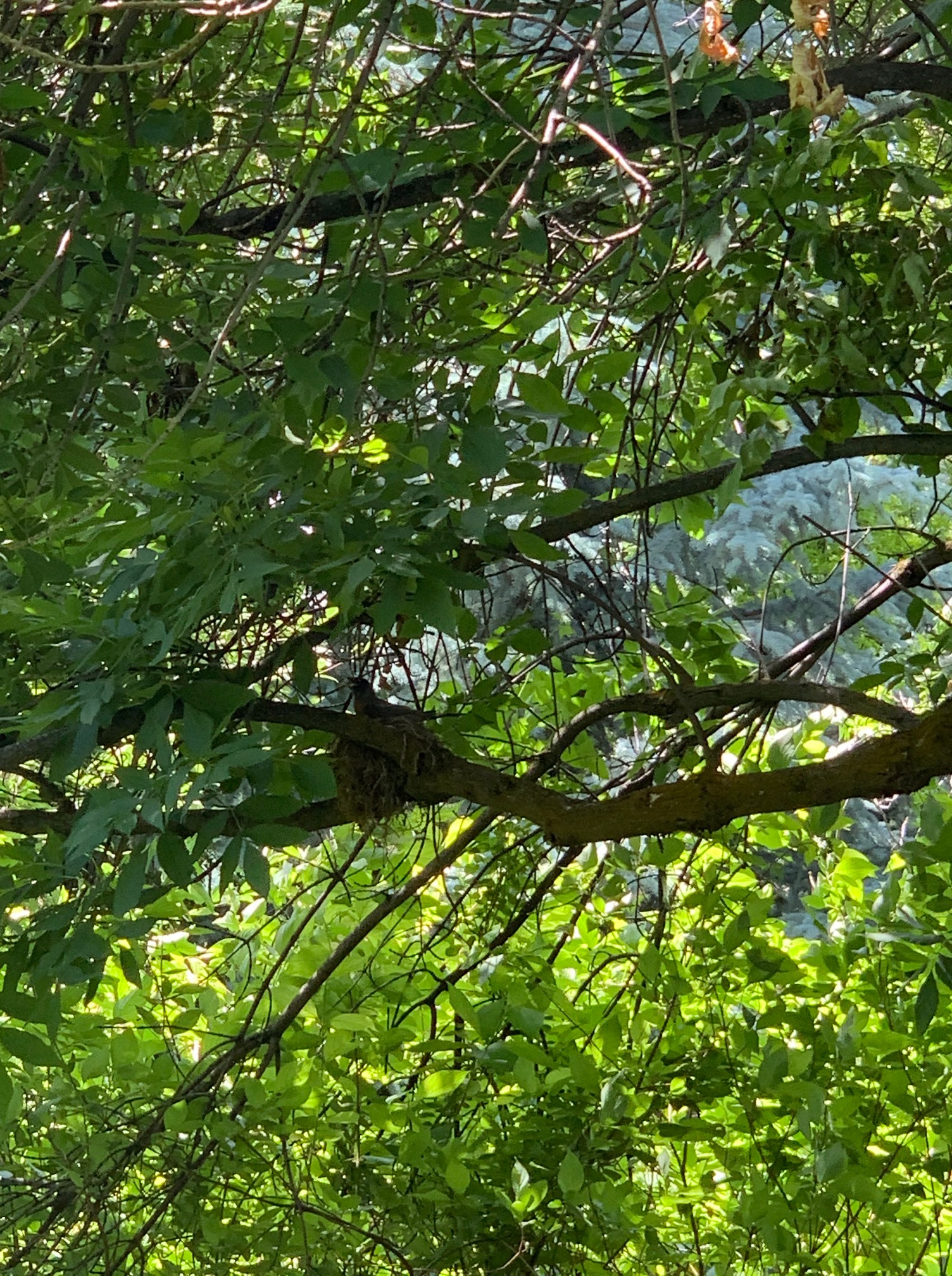
I checked on the robin’s nest. Can you see her tail?

She was faithfully roosting, and, yes, covered in snow. Poor thing.

By days end, though, the skies had cleared and the snow was melting away. And sadly, the nest was empty. Had the mother robin just given up? It was a vicious storm.

I read that 40% of robins’ nests successfully produce young. Tough odds! Would they try again?

Sure enough, on June 9 we discovered a new nest. The female was just finishing it when we discovered it.

New nest! June 9

We kept an eye on the nest for several days, but so far no roosting. Then this past Monday June 22, there she was – sitting on it. Dang! These robins are sneaky. The incubation period for eggs is about 14 days. Will we be hearing the peeps of hatchlings by … July 4th? Maybe. One can hope.

I checked on the nest yesterday – lookin’ good …

I was sitting on our patio when I started hearing what was surely the cries of a hungry robin fledgling, coming from the direction of the large spruce by the shed in our back yard. I wandered closer and, there it was perched on an outer branch about 5 feet off the ground, peeping away. I watched that little bird for a long while and captured some photos and videos. Here’s the first one:

Daddy takes charge

After the robins leave the nest, it’s the dad who takes over their care, feeds them for about two weeks, while they learn how to fly, groom, hunt for earthworms and ripe fruits, how to signal a cry of distress. It’s an extremely vulnerable time! Only 25% of fledged young survive until November. And from that point on, only about half the robins alive in any year will make it to the next year.

A lucky robin can live to be 14 years old, but robins live on average only 2 years in the wild.

Getting back to our little fledgling, he stood quietly for a good while, waiting for daddy to return. Magpies, cousins of the crows, were squawking nearby, and I’m sure this little one knows to keep quiet …

Well, until he got really hungry. Here comes daddy to the rescue.

Our daughter Megan and her friend Olivia were out on the patio with me now, witnessing this little fledgling. It turns out – it could fly – a bit – which I caught in the next video seconds after I took the last one.

I wasn’t sure exactly where it landed, but it was obviously in those tall bushes.

You can see the weather had turned blustery. Yeah, well that wind ushered in a 25-degree drop in temperature and pouring rain overnight, with much cooler weather forecasted to persist through today and tomorrow.

Haven’t even tried to find our little fledgling or checked on the robin’s nest today. I’m all bundled up in layers inside our house made of brick, with the heat blasting. Just glad I’m not a little fledgling, to be honest.

A little Easter Miracle during Covid-19

April 12, 2020

April, 2020 – Spring in southeast Idaho! We’re sheltering in place – David, Megan and I – doing a lot of puzzles at home. I make runs to the grocery store. We do venture out for long walks through our neighboring park, Tautphaus Park, weather permitting. We skipped our walk on April 2:

April 2, 2020

I know the fresh snow is beautiful – pristine! You just have to dress for it, right? Wrong. That much snow is flat out ugly this time of year. But yes, just wear your down parkas, pull up your boot straps and your hoods, don’t forget your gloves! Early spring in Idaho is just like winter. The highs in early April feel like the highs in February.

Then just like that the temperature sails up 20 degrees. You’re in the middle of your walk and you’re burning up in your jacket. You peel it off and tie it around your waist. This happened to us this past Tuesday, just five days after that snow storm. We were walking toward home in a big open area at Tautphaus Park, when I peeled off my jacket, then turned to Megan, grabbed and jerked her arms out of the sleeves of her winter jacket – whew! love it! Spring is here!

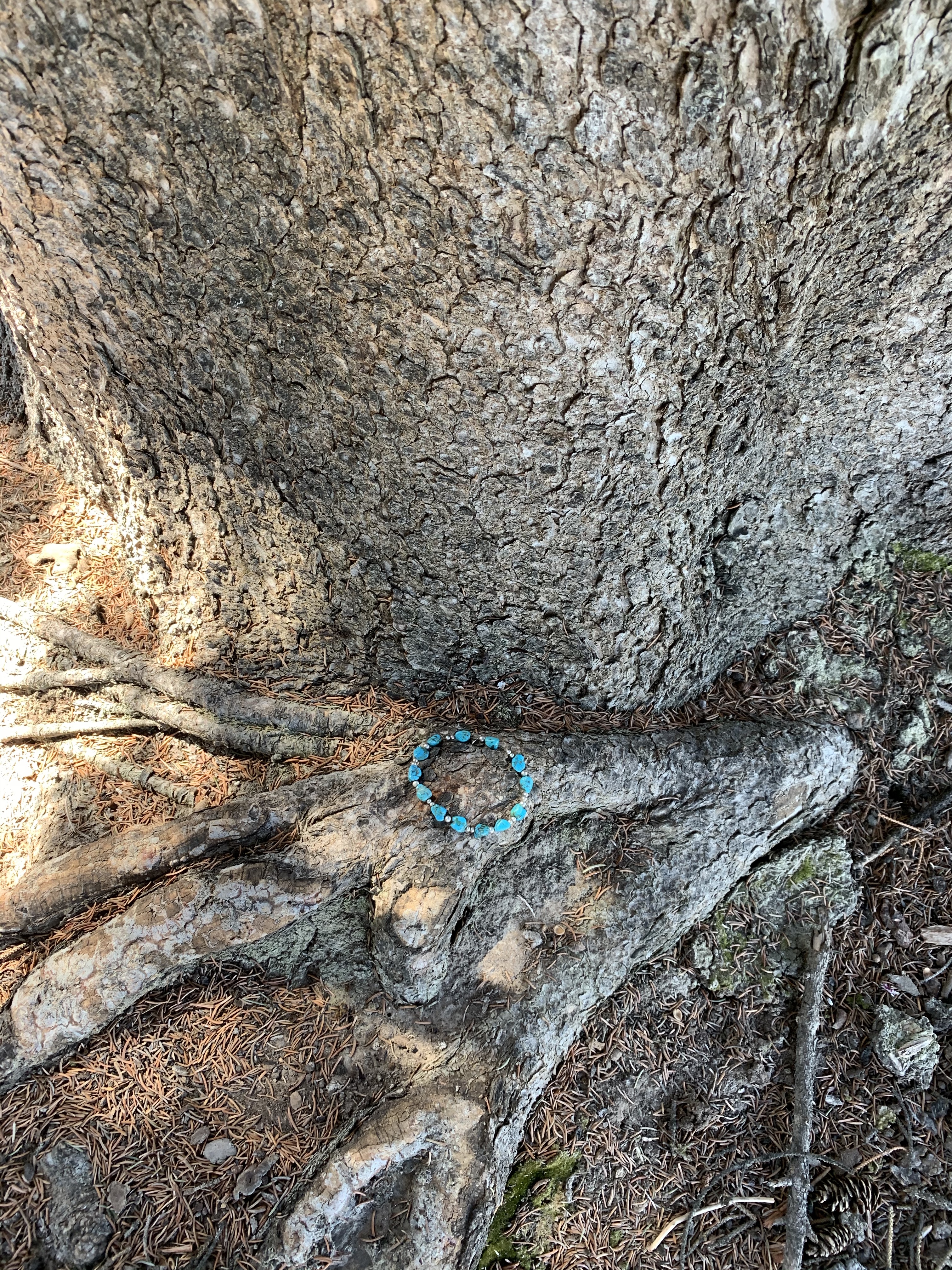
But when we got home Megan said, “Mom, my bracelet is gone.” Oh no! It must have come off with the coat! Suddenly in my mind, there has never been a bracelet more loved, more precious, than Megan’s bracelet. We had bought it at a flea market in Beacon, New York – last September – when we were visiting Adam and Meredith – Megan’s oldest brother and his wife. Oh what a wonderful trip that was – all those great memories embodied in that bracelet. Oh why had I been so careless? I loved that bracelet.

The next day, last Wednesday, I said, “Hey Megan, let’s go back and try to retrace our steps on that walk – see if we can find your bracelet.” (Okay, super long shot here, but what the heck, we have to try, right?) “Oh yes, I remember – first we passed that huge old tree with a raptor perched up high in it – then we turned on the street by the skate park past the huge cottonwood forest, then we walked diagonally across that wide open field by the fountain. Half way across that field, that’s where we got hot and pulled our jackets off.”

We were at the wide open area now, with our eyes scanning the ground in circles looking for a stretchy bracelet made of turquoise nuggets and silver beads. Uh-oh. Oops. There’s a guy hitting light golf balls right in our direction. Shoot! Well, lets zig-zag our way quickly toward him – he’ll just have to be patient with us while we look till we get to him.

Sadly, we didn’t find the bracelet. When we made it up to the golfer and his female friend I explained (from ten feet away, of course) our situation. That Megan had lost her bracelet here yesterday and thank you for being patient with us while we looked for it. He said, yes, he’s lost a lot of golf balls too. But he would keep a look out for the bracelet when he’s retrieving his balls. Yeah, sure. Oh, if you happen to find the bracelet, maybe just leave it at the base of that tree over there. He nodded.

Darn it! Oh well. Easy come, easy go. Well, not really, but I’m trying. The following day, Thursday, the three of us, David, Megan and I (and Rudy of course) repeated that walk we had done on Tuesday through Tautphaus Park- past that tree where the raptor was

Some kind of Raptor

(I had taken a picture of it on Tuesday.)

and the huge cottonwood forest

Tautphaus Park

Although, it seemed pretty futile at this point, finding the bracelet. It was a goner. We got all philosophical about it on the walk … “You know what?” I said. “We were lucky to have found that bracelet in the first place. It was really special. Likely made by an American Indian. The Great Spirit led us to it and now the Great Sprit has freed it back to the Universe – to anoint the life of another living creature.” “Yes.” said David. “Maybe a crow.”

“He picked the bracelet up in his beak and flew off with it to drop it in his nest as a bauble.”

“Or perhaps a squirrel. They are very busy this time of year.”

As sad as I am about losing that bracelet – don’t think I’d climb to the top of a tree to retrieve it from a squirrels’ nest.

We’re back at that huge field near the fountain where we took our coats off:

The three of us fanned out to scan a wider area, searched quite thoroughly, as we worked our way to the end of the field. Oh well. No go, Joe. It’s okay. Oh wait, let’s just check the base of that tree, can’t hurt …
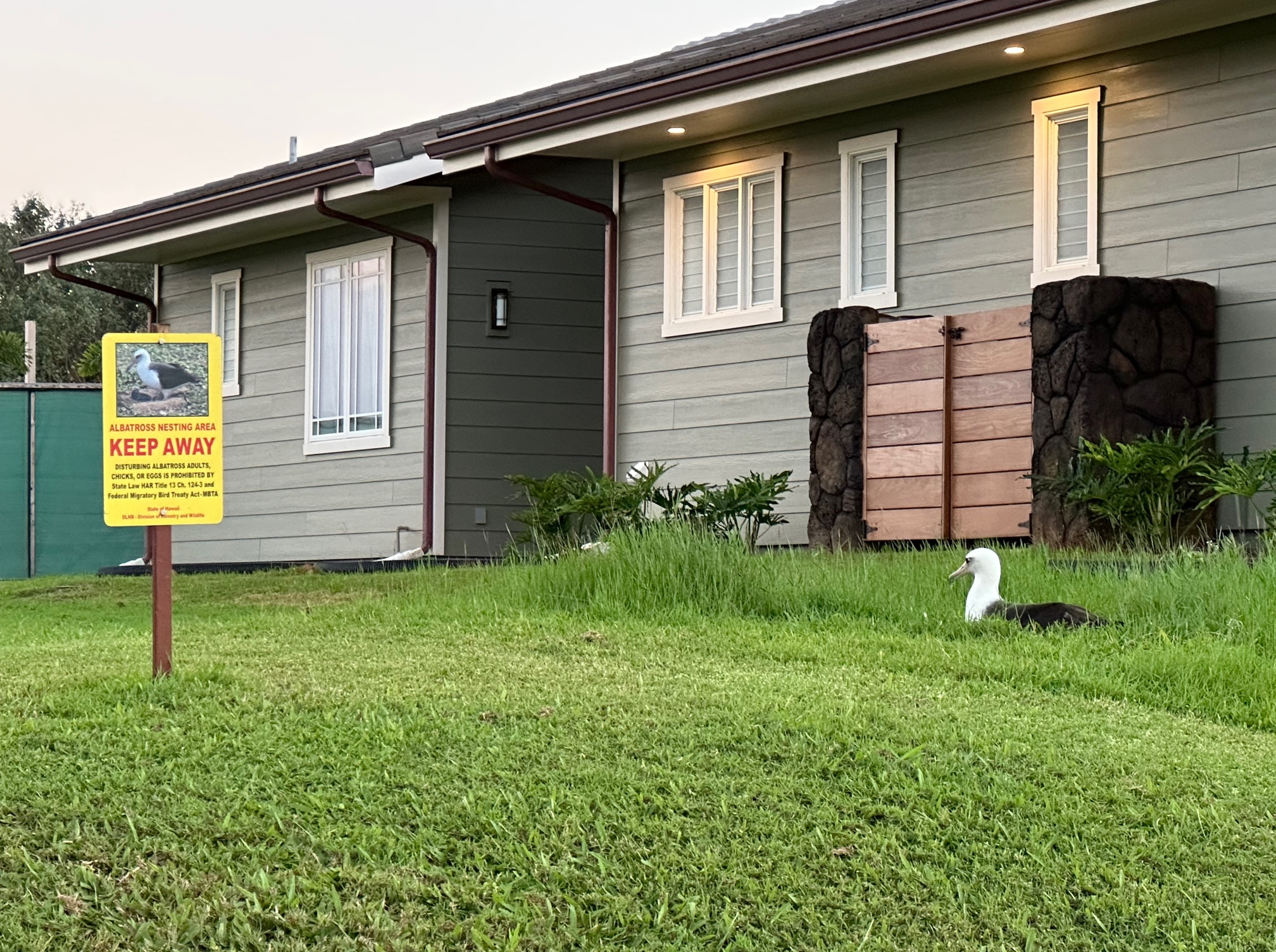
What? Megan, come see!

What were the odds? It feels like a miracle!

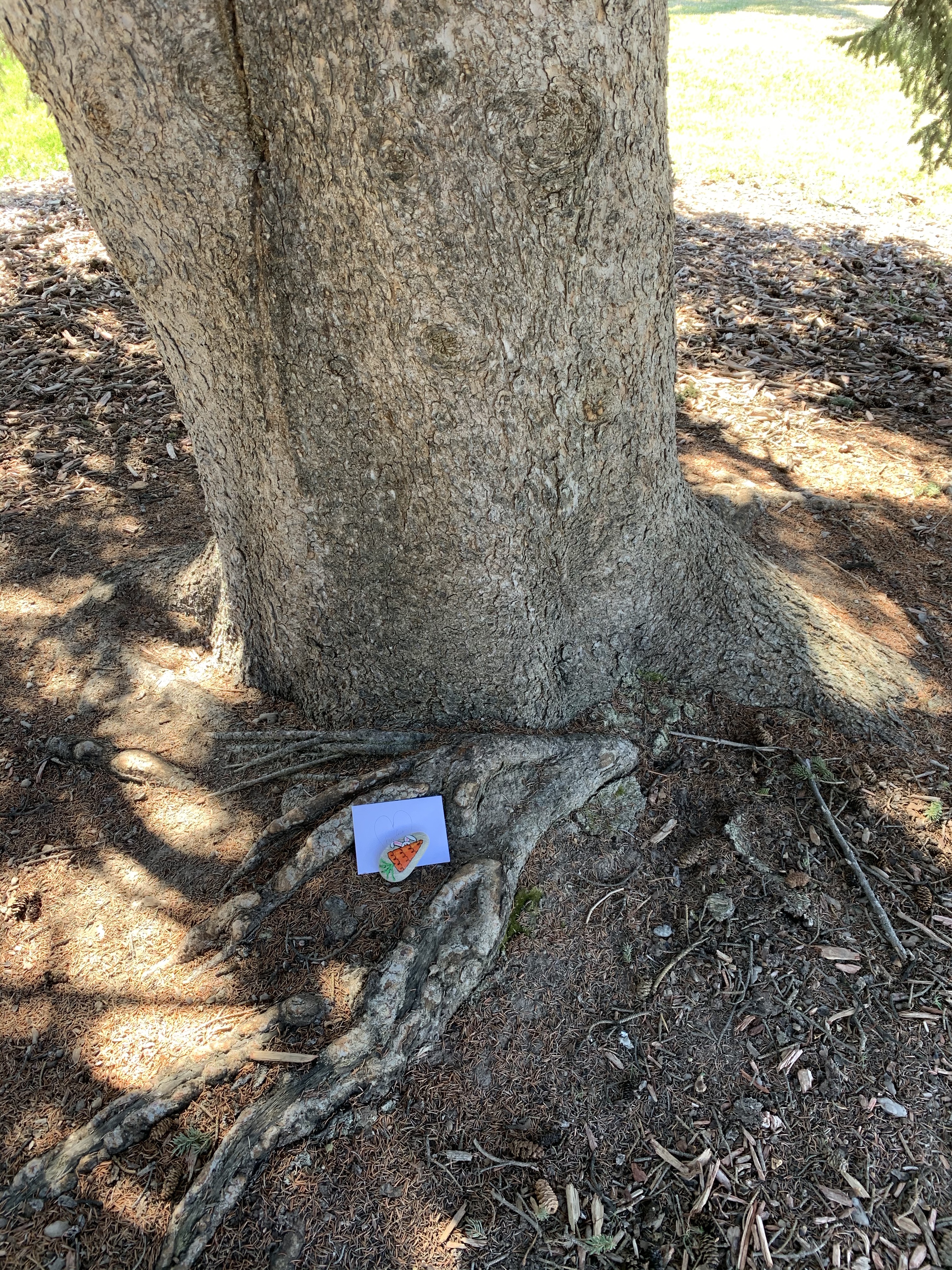
Back at home we signed a thank you note.

Set it at the base of that tree right where we had found the bracelet.

The next day, Good Friday, we walked over to the park again. Was the note still there?

Megan! Come look!!

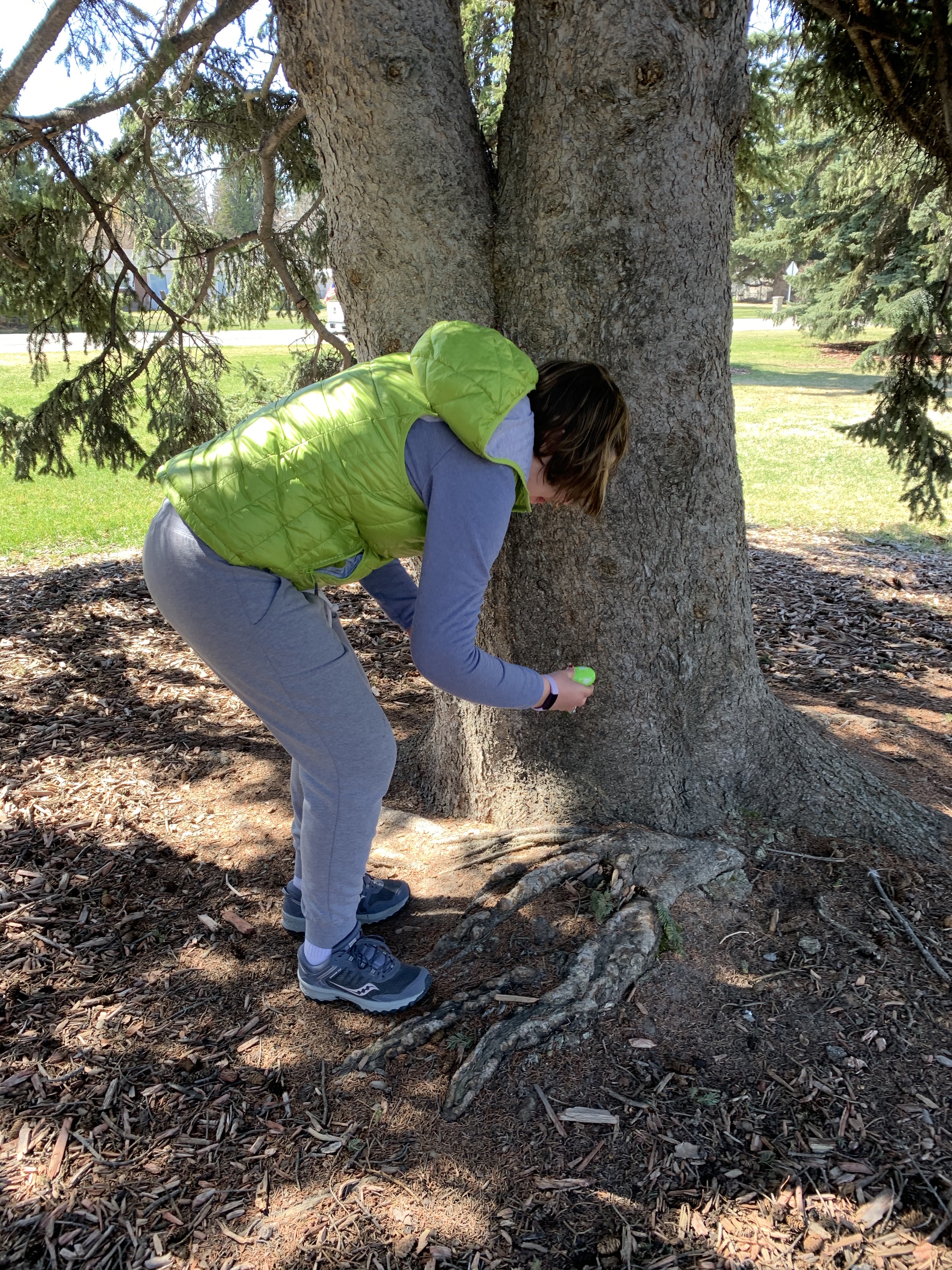
It’s an Easter Egg!

We brought it home. Washed the plastic egg with soap and water, of course, wiped it down with a disinfectant wipe, then set it out in the sun for the afternoon, take that, Covid-19!

As always Megan puts her bracelet on first thing every morning.

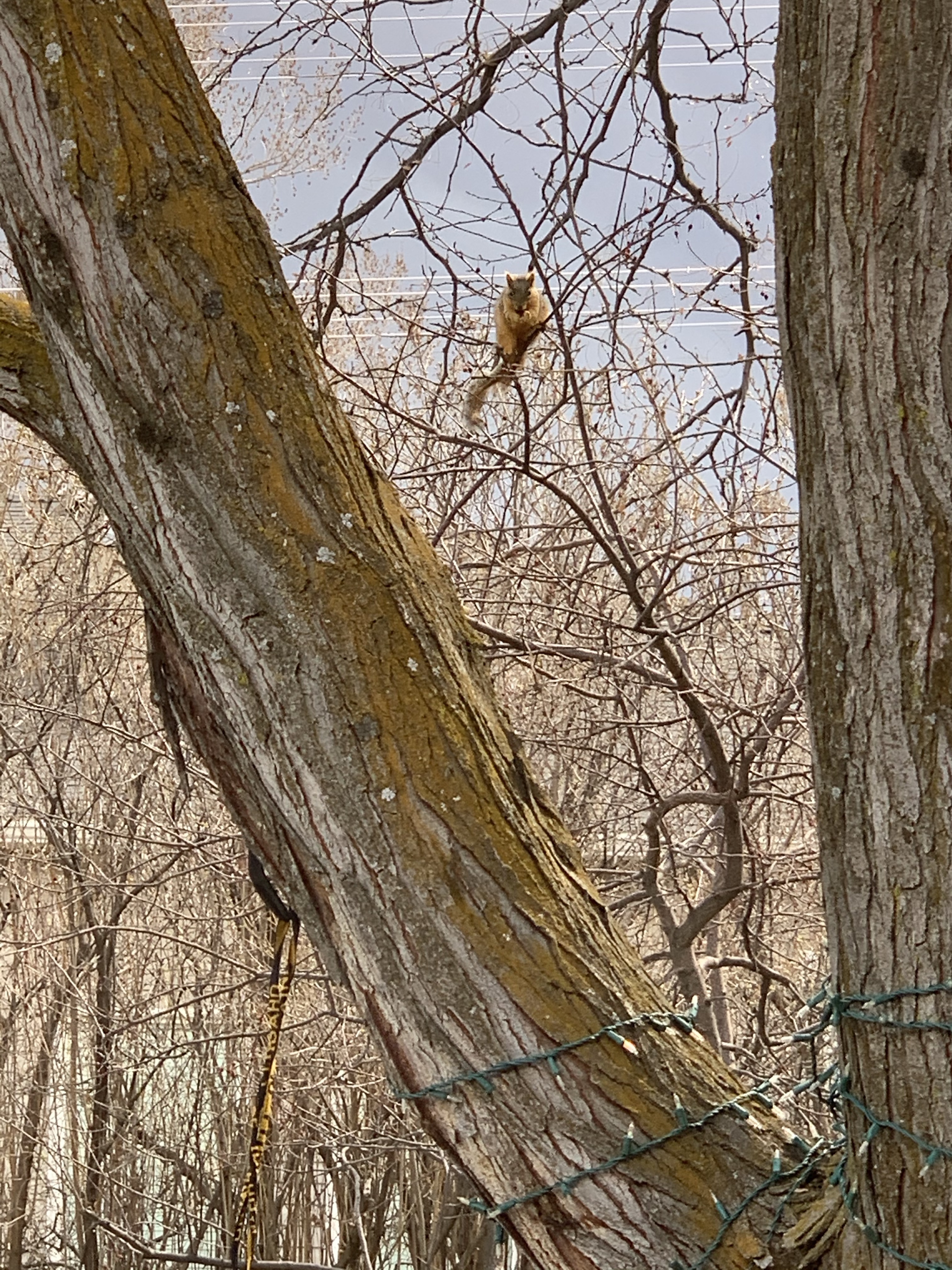
And Rudy keeps his eye on that wiley squirrel in our back yard,

April 11, 2020

who is expert at social distancing himself from Rudy.

Saturday, April 11, 2020

Alpine Mountain Days!

July 2, 2019

Every year the town of Alpine, Wyoming holds a Mountain Days Festival on the third weekend of June, a tradition which started over a quarter-century ago. This year it was held on Friday-Sunday, June 21st – 23rd. The festival includes Mountain Men, Native American Performances, live music, food vendors, commercial booths, a triathlon, chili cookoff, raptor show …

Alpine Mountain Days
June 21-23, 2019

My brother Eric, who owns an Antique/gift store, has a booth at this festival every year. This year David and I decided to travel to Alpine and check it out. We rented a room at the Flying Saddle Resort just outside of town, on account of the motel on the main drag, the Bull Moose Inn and Saloon, was booked. (Do towns with a population of 828 have suburbs?)

Alpine, Wyoming, is about 40 miles south of Jackson Hole (where purportedly the billionaires have run off the millionaires) and many Alpine residents work in Jackson. Alpine sits at the end of the Snake River Canyon where the Snake River enters the Palisades Reservoir. Three rivers converge at Alpine, the Snake, the Salt and the Greys. You would love Alpine if you enjoy snowshoeing, ice fishing, or skiing. The snowfall, on average, is about 500 inches a year.

Here you see an aerial photo of Alpine from this Wiki page (which grants permission to share)

Alpine – uh, somewhere in that valley snowfield

We arrived in Alpine on Friday evening, June 21st. The first day of summer (yay!) and a high of … 58 degrees? Although when I complained about it to Eric he said, “You should have been here two years ago when it was 93 degrees.”

I took a photo of Alpine from our resort – where you can see the convergence of the Greys river into the Snake.

Alpine is hard to catch in photos


The Salt River converges into the Snake near Palisades Reservoir on the other side of Alpine.

Up and at em’ early Saturday to hit the Mountain Days Festivities. Free Pancake breakfast! Or breakfast at the one restaurant in town, the Yankee Doodle Cafe. The triathlon starts at 8 Am – swimming! We heard that participants were jumping in, then back out, on account of the 33-degree water temperature. But they did announce a winner after 10:30 am who crossed the finish line.

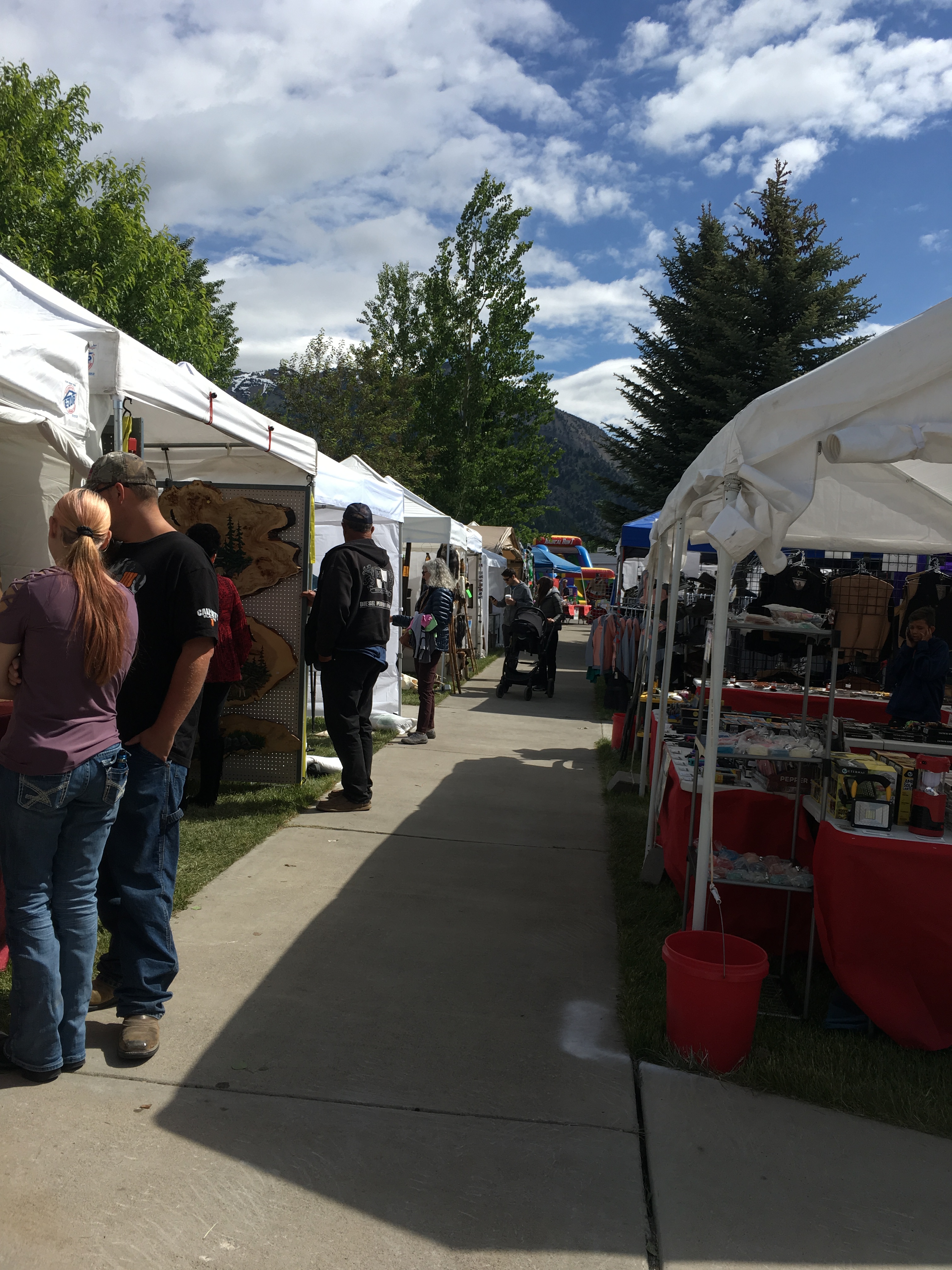
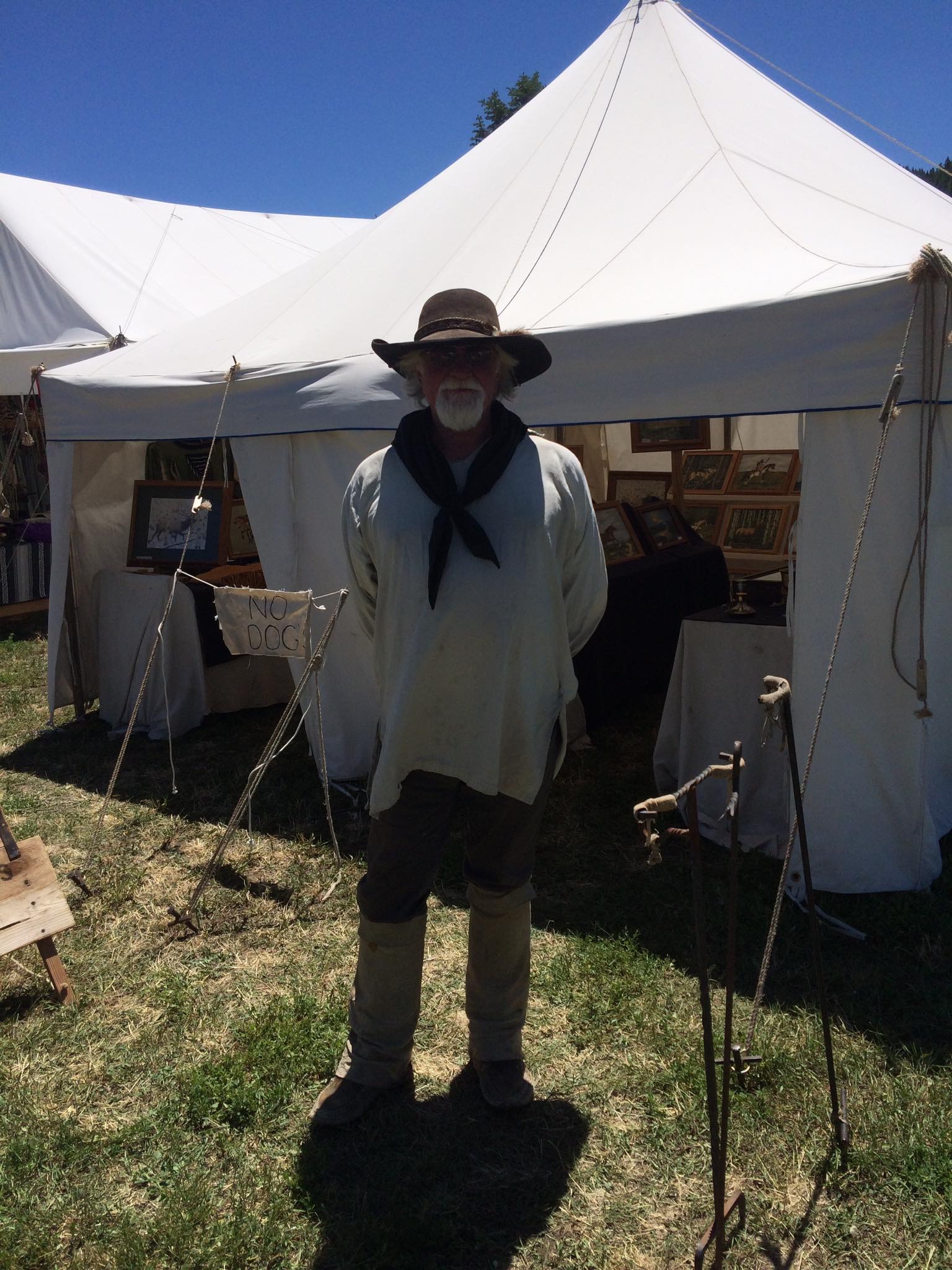
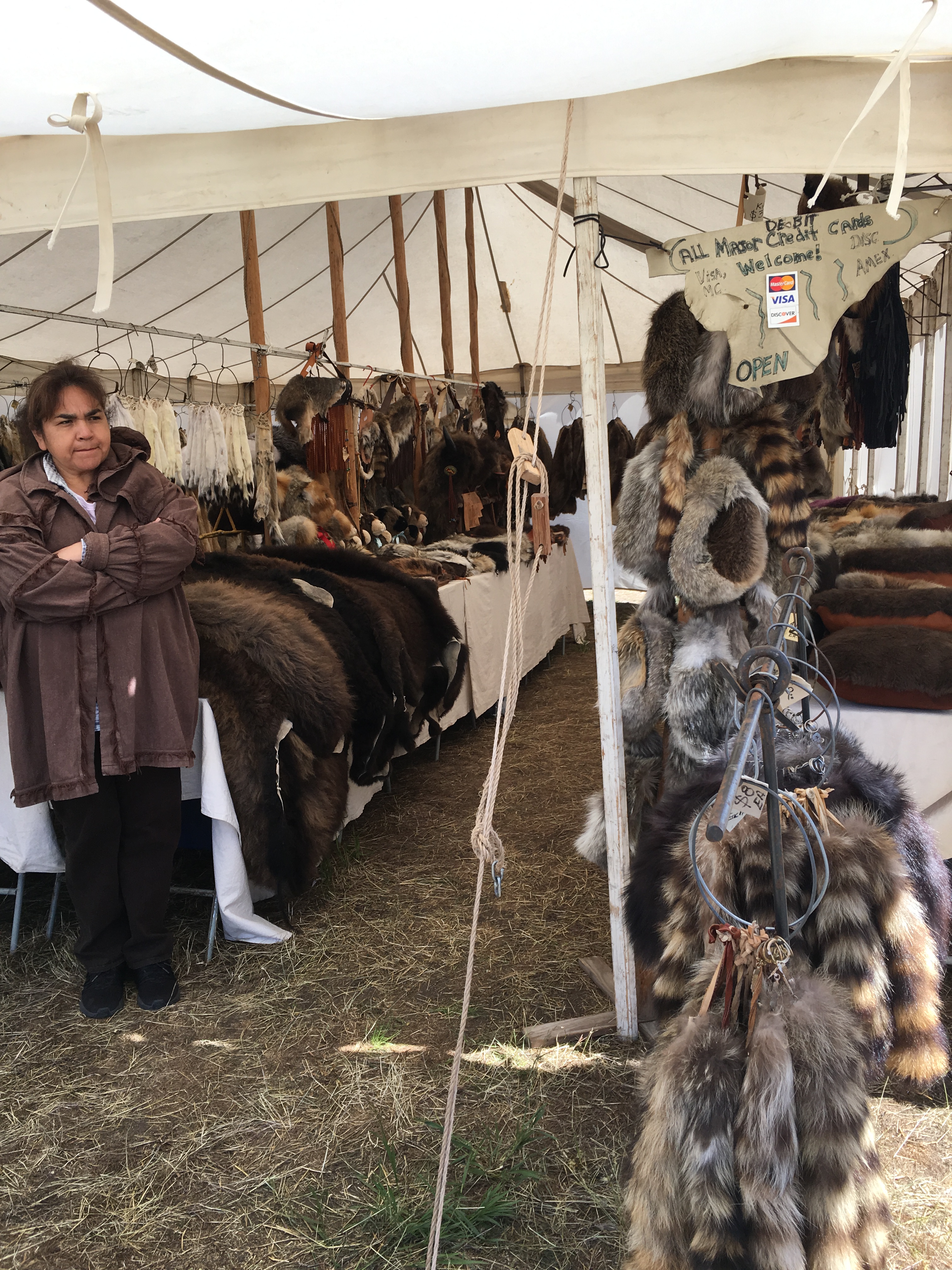
Meanwhile check out the booths! At least 30 of them, food vendors and merchants selling American Indian jewelry, photography, alpaca wool clothing, pottery, art, furs, Davy Crockett coon hats (Classic! My brothers each had one, uh, about 55-60 years ago?) – here, I took some photos – :

Shop till you drop!

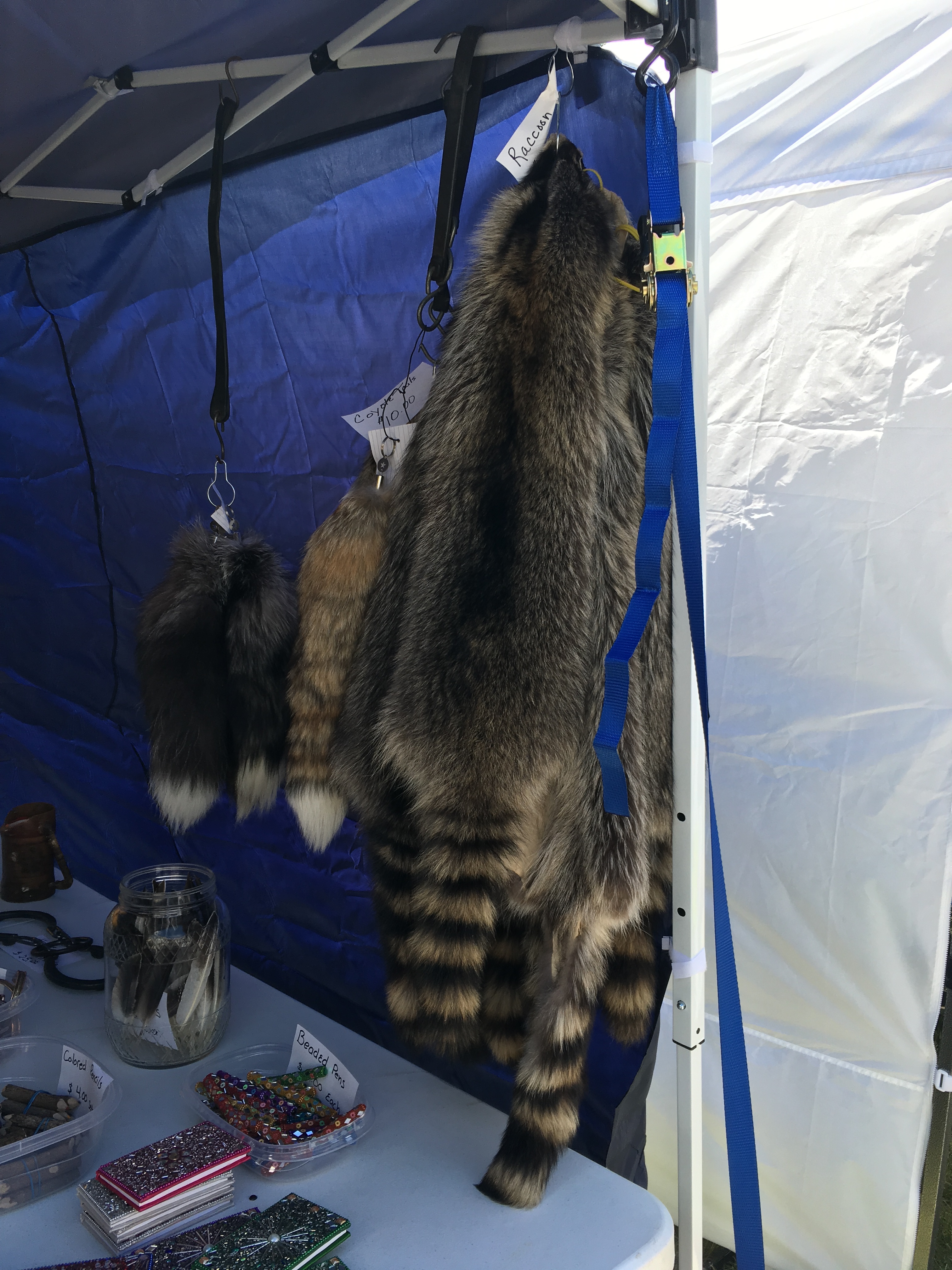
Might be tempted on a Davy Crockett coon tail hat for nostalgia, but a whole skinned coon?

No country for raccoons

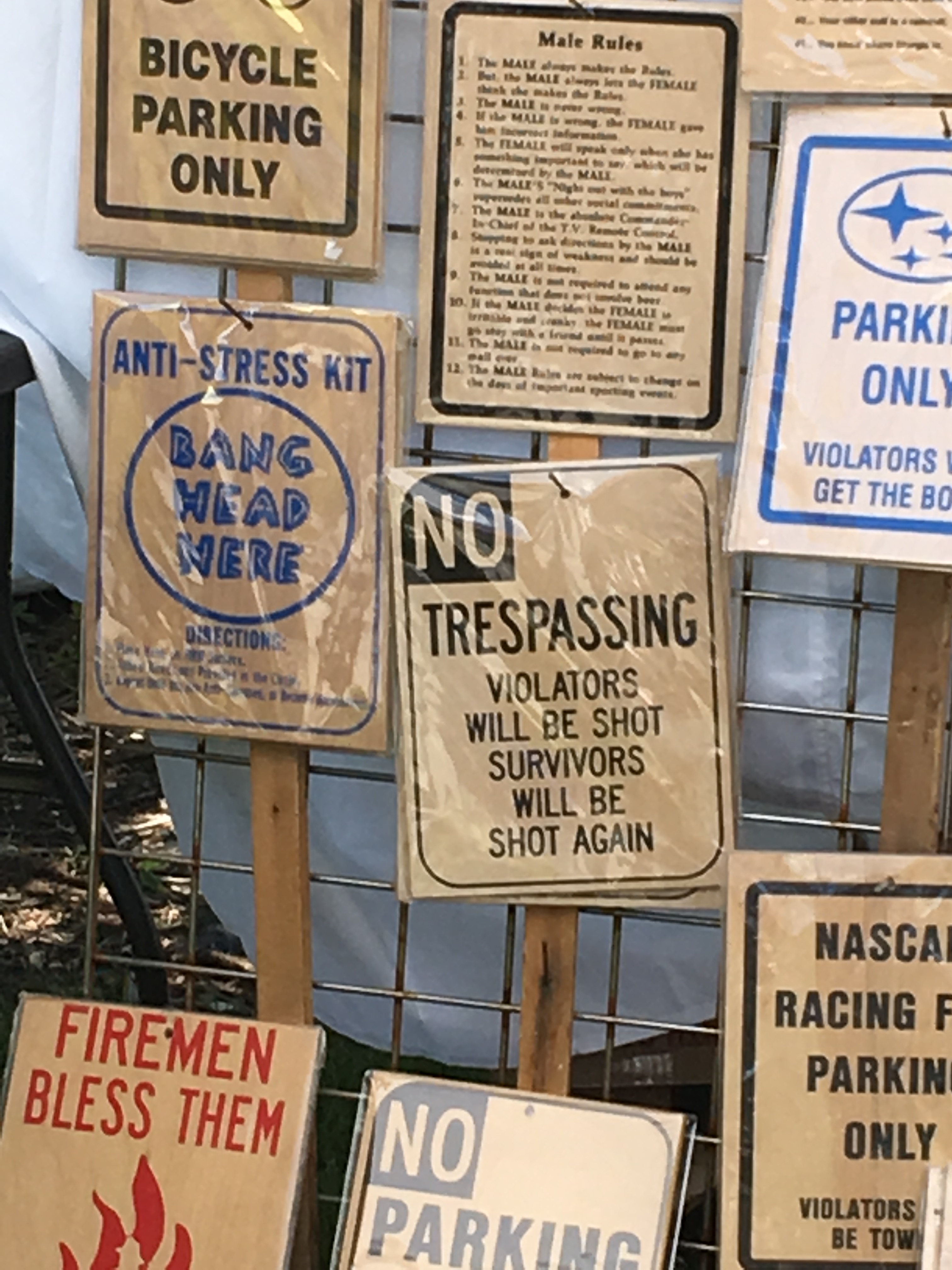
One booth was plastered with wooden signs:

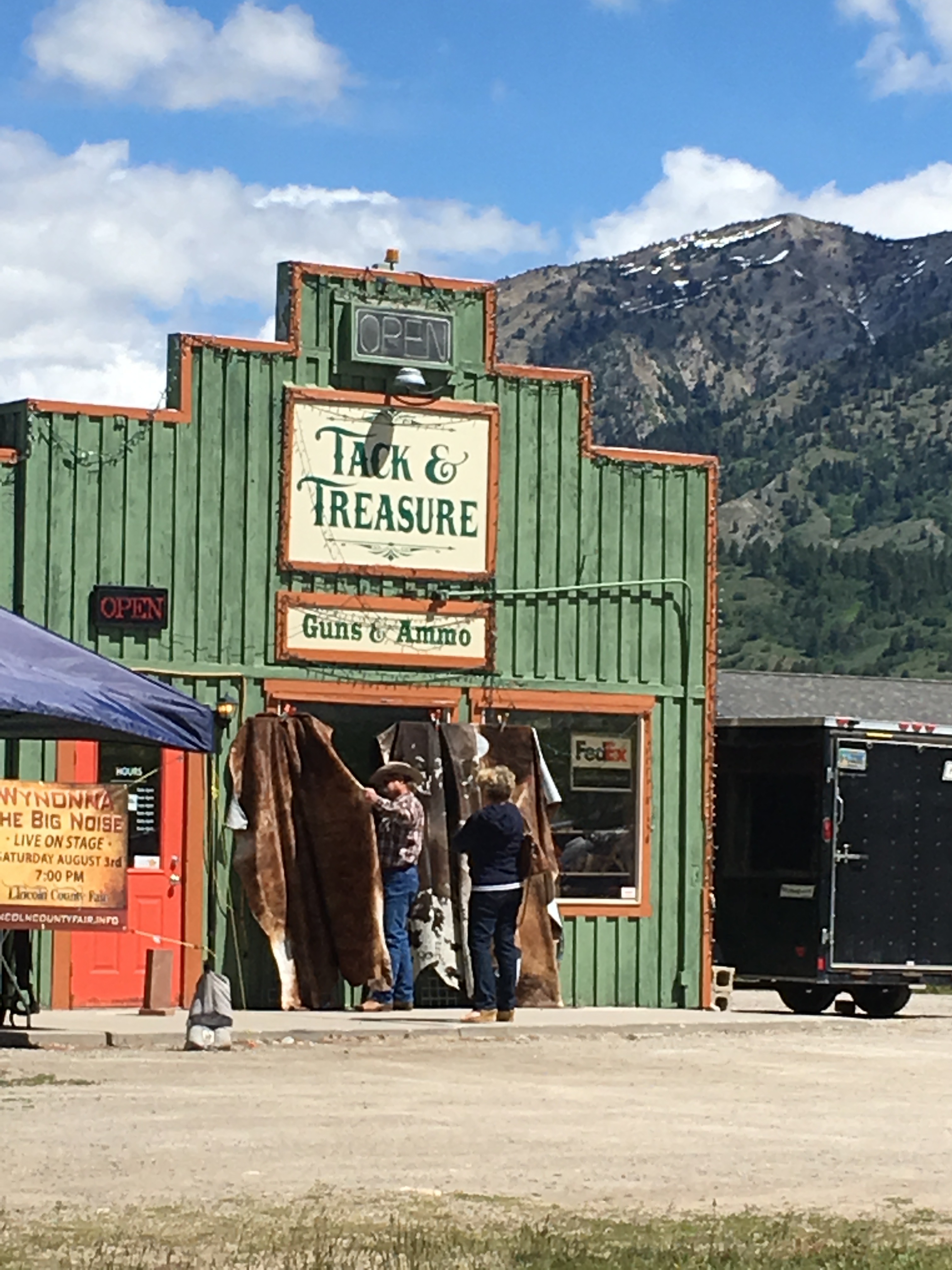
“NO TRESPASSING – VIOLATORS WILL BE SHOT – SURVIVORS WILL BE SHOT AGAIN” (??) Might be a big seller in this part of the country, based on the retail shop on the main drag across the street:

Get your guns and ammo here!

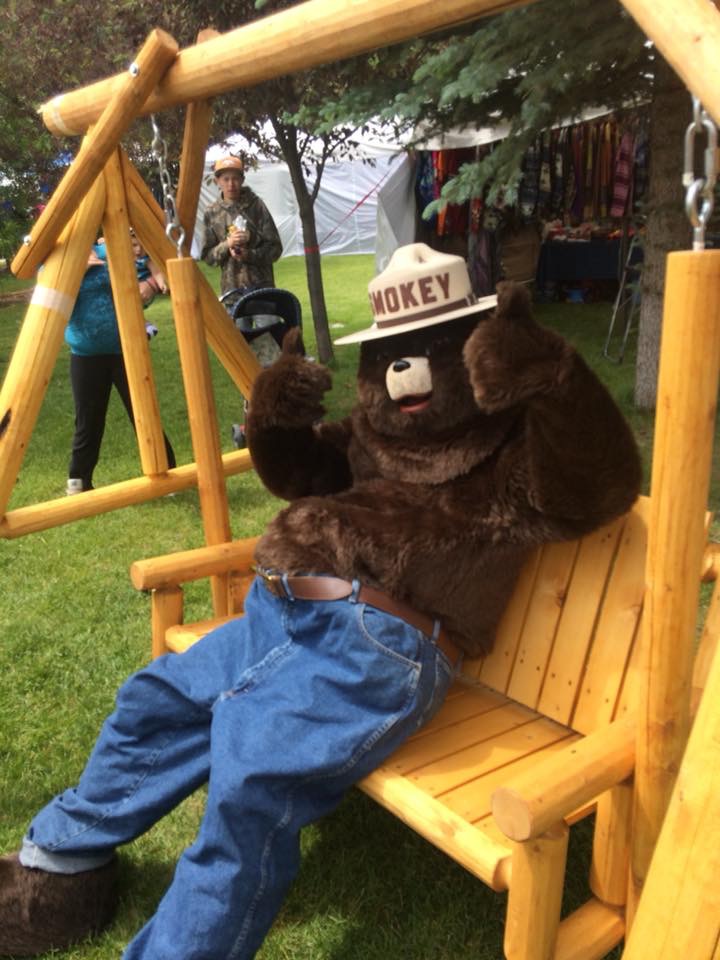
At some point Smokey the Bear made an appearance

“Only YOU can prevent forest fires!”

Smokey on a toke break. (Ha – Just kidding)

Our most favorite booth of all was, of course, Eric’s. We walked right past it the first time through, I was so distracted by the bright merchandise and baubles around me – I was looking left, and you entered his booth to the right, under a little awning, but then it spread out into an open grassy area, because, well, I can only explain this in a video I took of Eric’s booth. (Turn up your sound…)

That’s Eric sitting back there in the blue fleece, on this breezy Saturday in Alpine.

Garden spinners – flowers, eagles and owls, Oh My! Dragonflies, and even a bat – metal garden art of all sorts. Propelled by the wind. Newly refinished antique trunks and dressers. An old carpenter’s work bench. And Sasquatch!

A disgruntled Sasquatch walking out of Eric’s booth

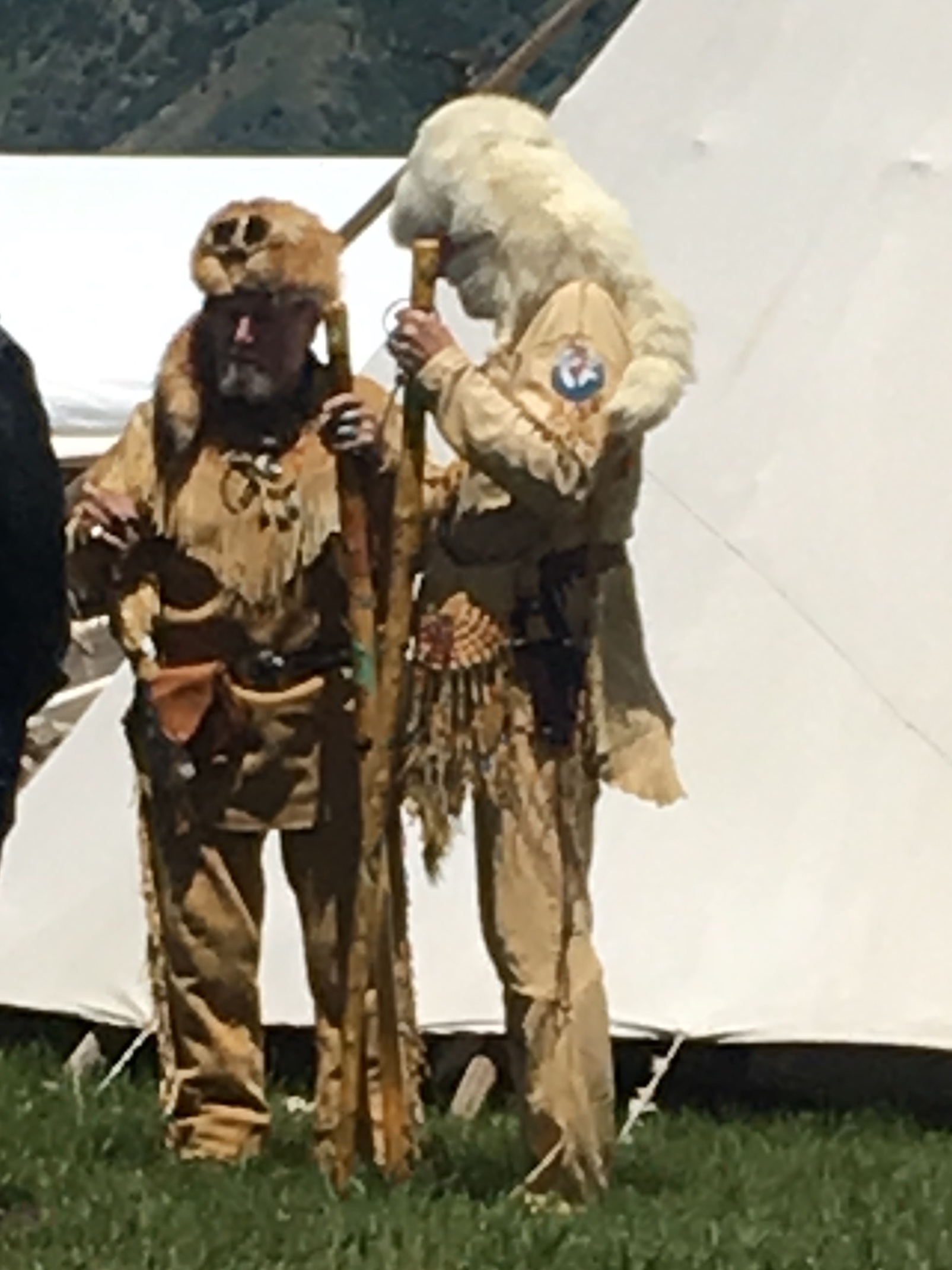
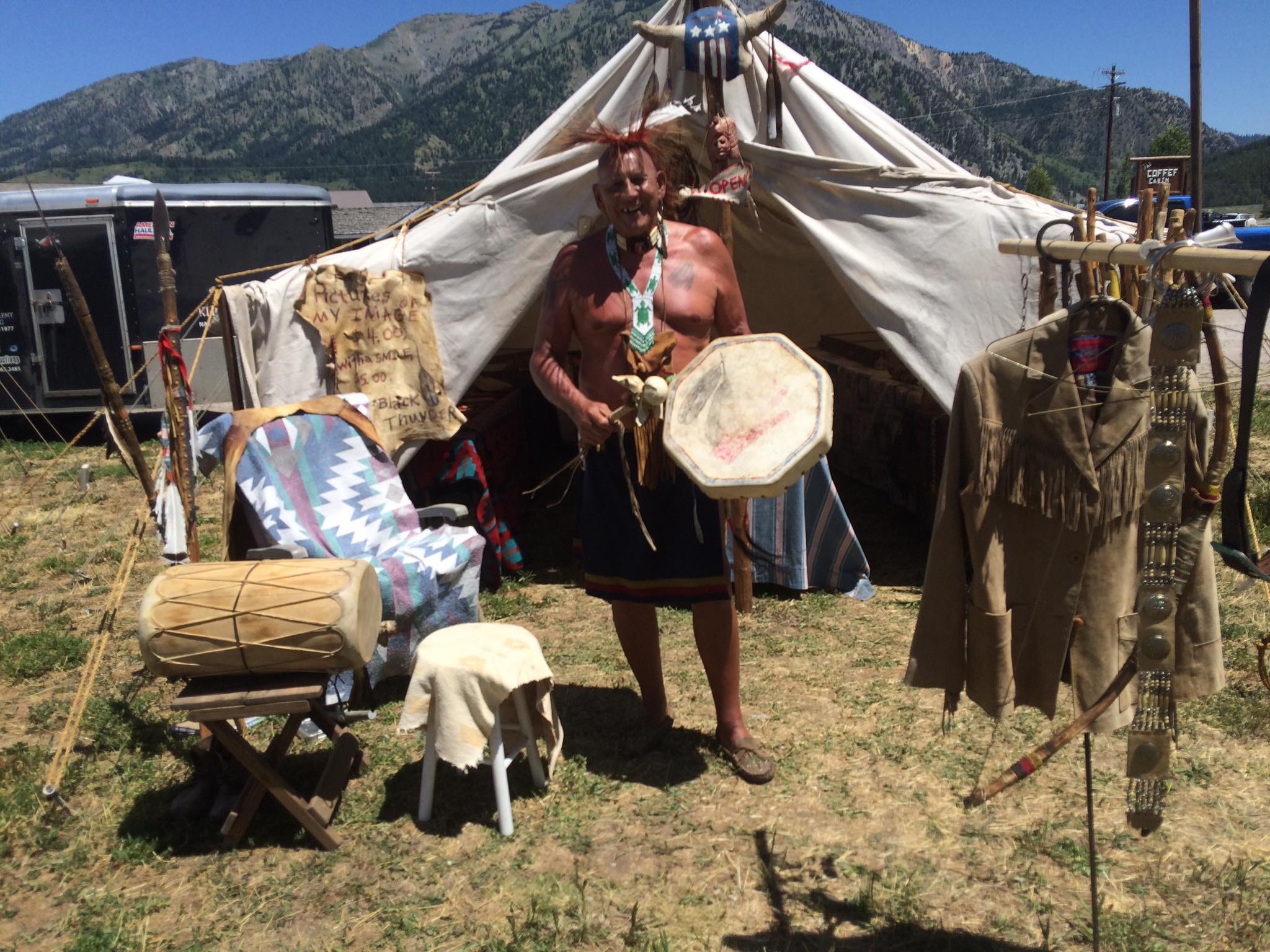
Across the street from the vendors is Mountain Man Trader’s Row and the Indian Village:

A weathered bunch

Where the mountain men and Indians gathered, danced and sold their wares.

The Shoshone Indians performed ceremonial dances. I captured a bit of one – not the most elaborate, but worth sharing

imparts maybe some understanding of the origins of punk rock (??)

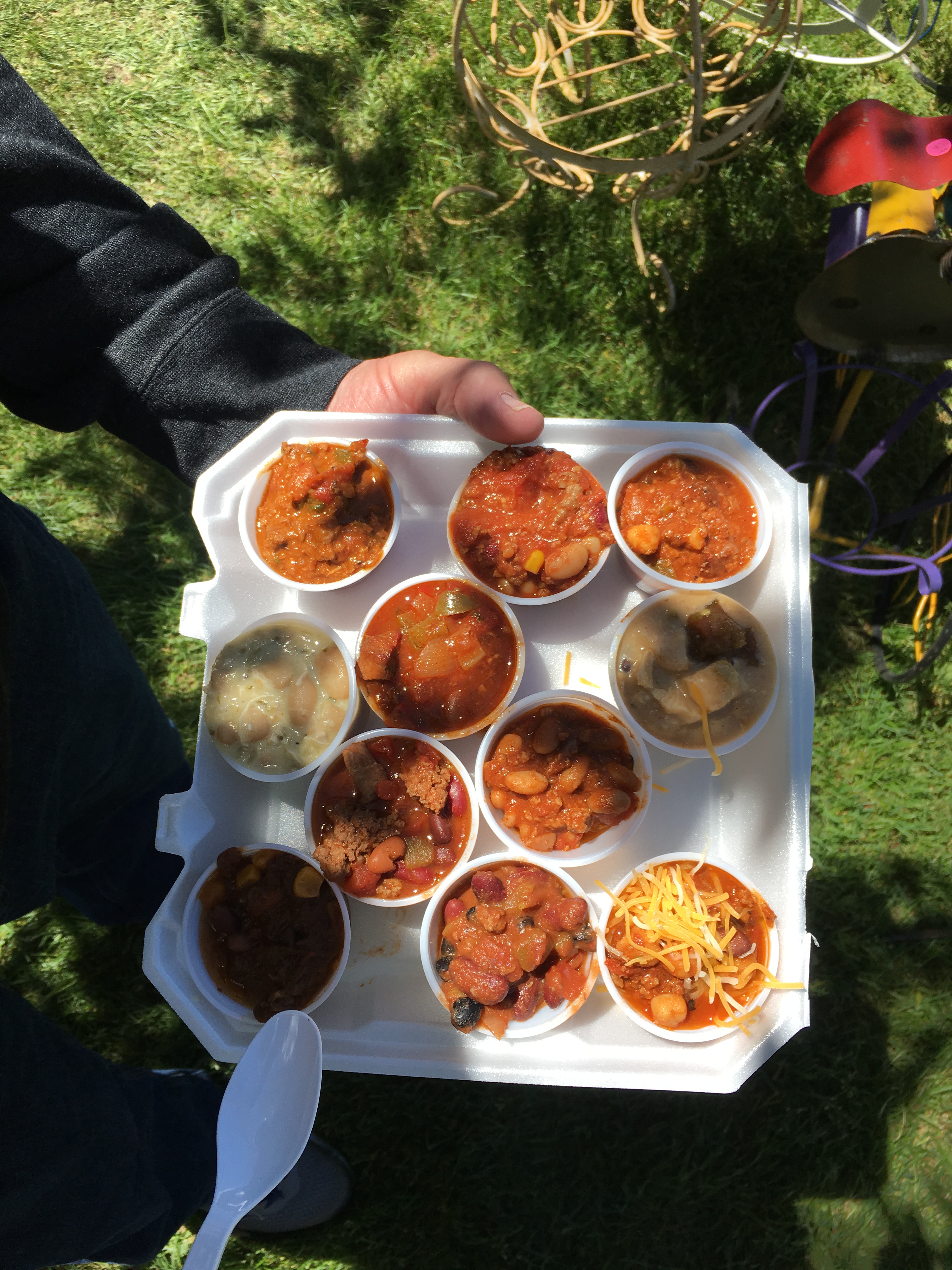
And of course, the chili cookoff. Eleven entries – and for five bucks you could sample them all and not be hungry again for six hours.

Chili Cookoff!

The chicken chili won. (Note to self- Make chicken chili next time I enter into a chili cook-off contest with a $50.00 1st place prize. All the red chili’s taste nearly the same, because they look the same.)

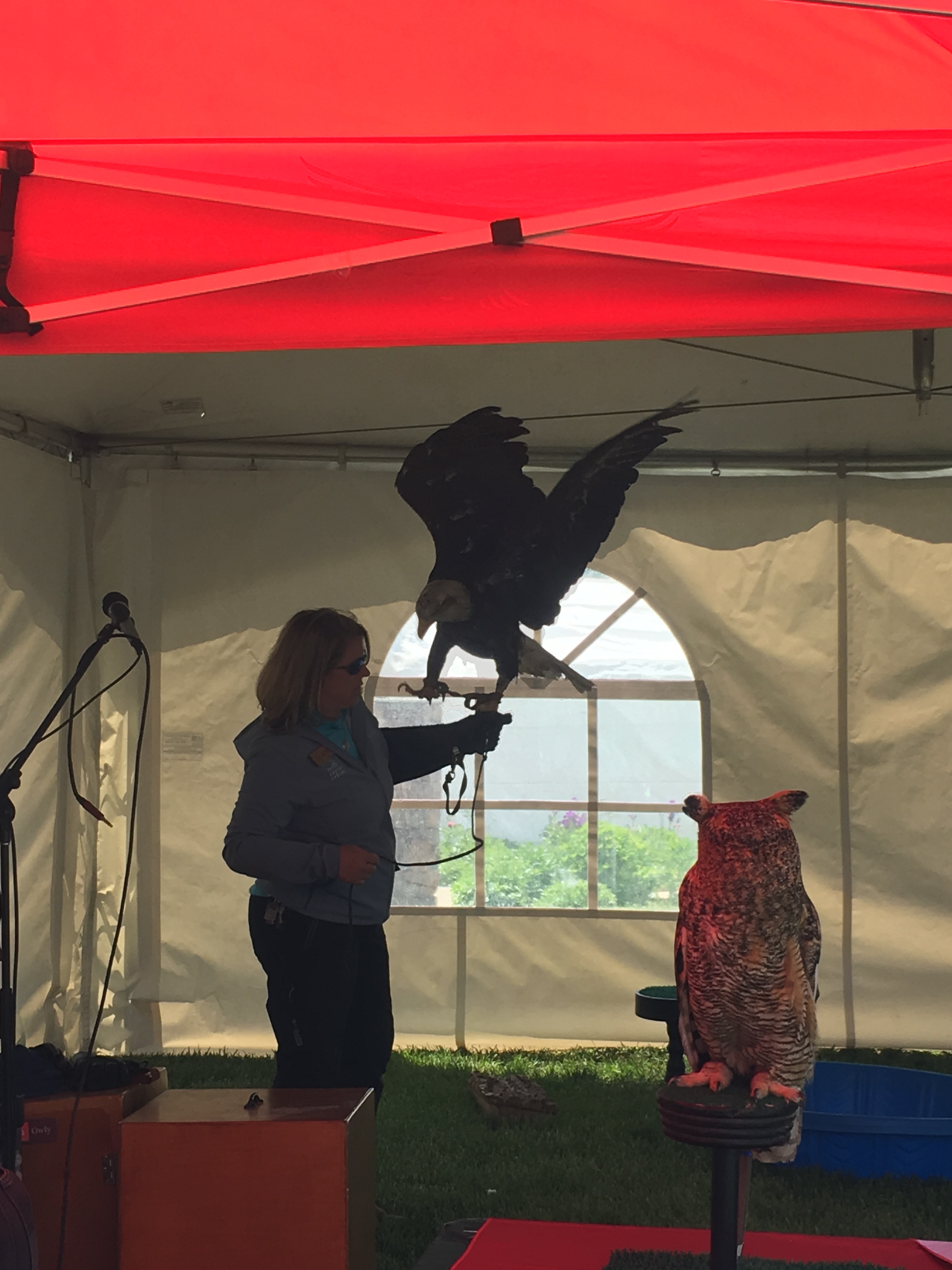
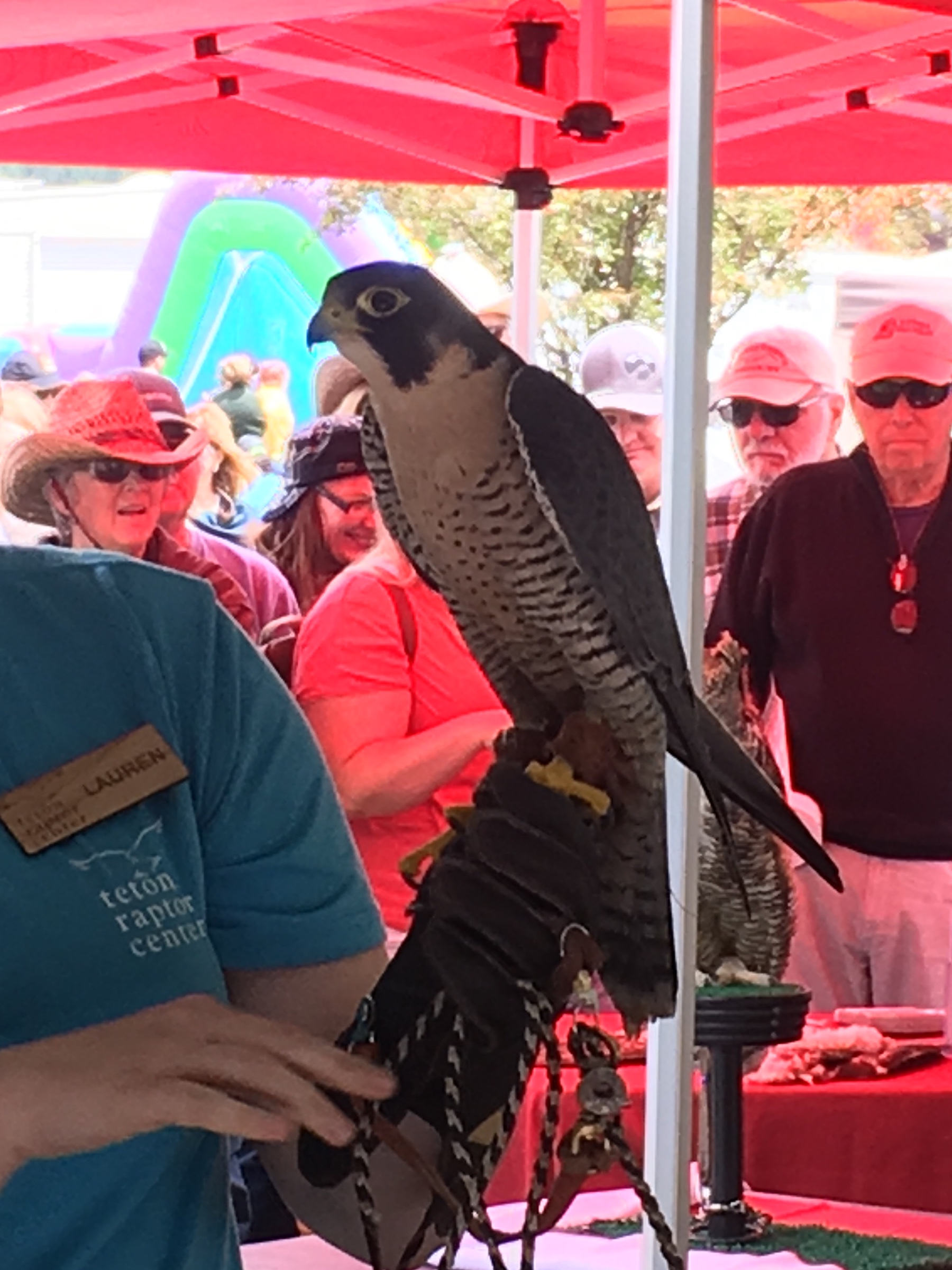
On Saturday afternoon The Teton Raptor Center presented two raptor presentations, free to the public. Well worth seeing! Located in Wilson, Wyoming (near Jackson Hole) the Teton Raptor Center receives and rehabilitates injured raptors from private citizens and Fish and Game, with the goal of releasing them back into the wild. They keep the raptors who can’t survive in the wild, due to permanent injuries. They use these birds to educate people about raptors and how human behavior affects their well-being. The presentation today included a Golden Eagle, Red-tailed Hawk, Great-horned Owl,a Bald Eagle,a Kestrel, and a Peregrine Falcon. I took photos of them all while listening to their histories.

Meet Gus, the Golden Eagle:

He fledged the nest with a broken wing that never healed properly. So he couldn’t fly. Gus is the second oldest bird in the center, at 14 years old.

Owlie – the Great horned owl – was hit by a truck in Wilson Wyoming.

Owlie and the Bald Eagle

One wing was too badly damaged to heal properly. His disposition was very grumpy until they discovered he had severe arthritis in his damaged wing. They removed the section of wing that was inflamed and learned that owlie’s owlishness had been due to pain. He is now a much happier bird. Owlie is also 14 years old, one of the original birds in the center.

Owlie with the red tailed hawk

Red tailed hawk

The red-tailed hawk – was brought in with a broken wing after being hit by a car. The wing was rehabilitated but when they released him he refused to leave. They finally determined that in addition to a broken wing he suffered from a brain injury.

One point that was driven home in the presentation – Don’t toss apple cores and other edible scraps out your car window thinking it’s fine because they are ‘biodegradable’. Birds fly down to snatch up the food but can’t get aloft enough on take-off to avoid getting hit by passing cars!

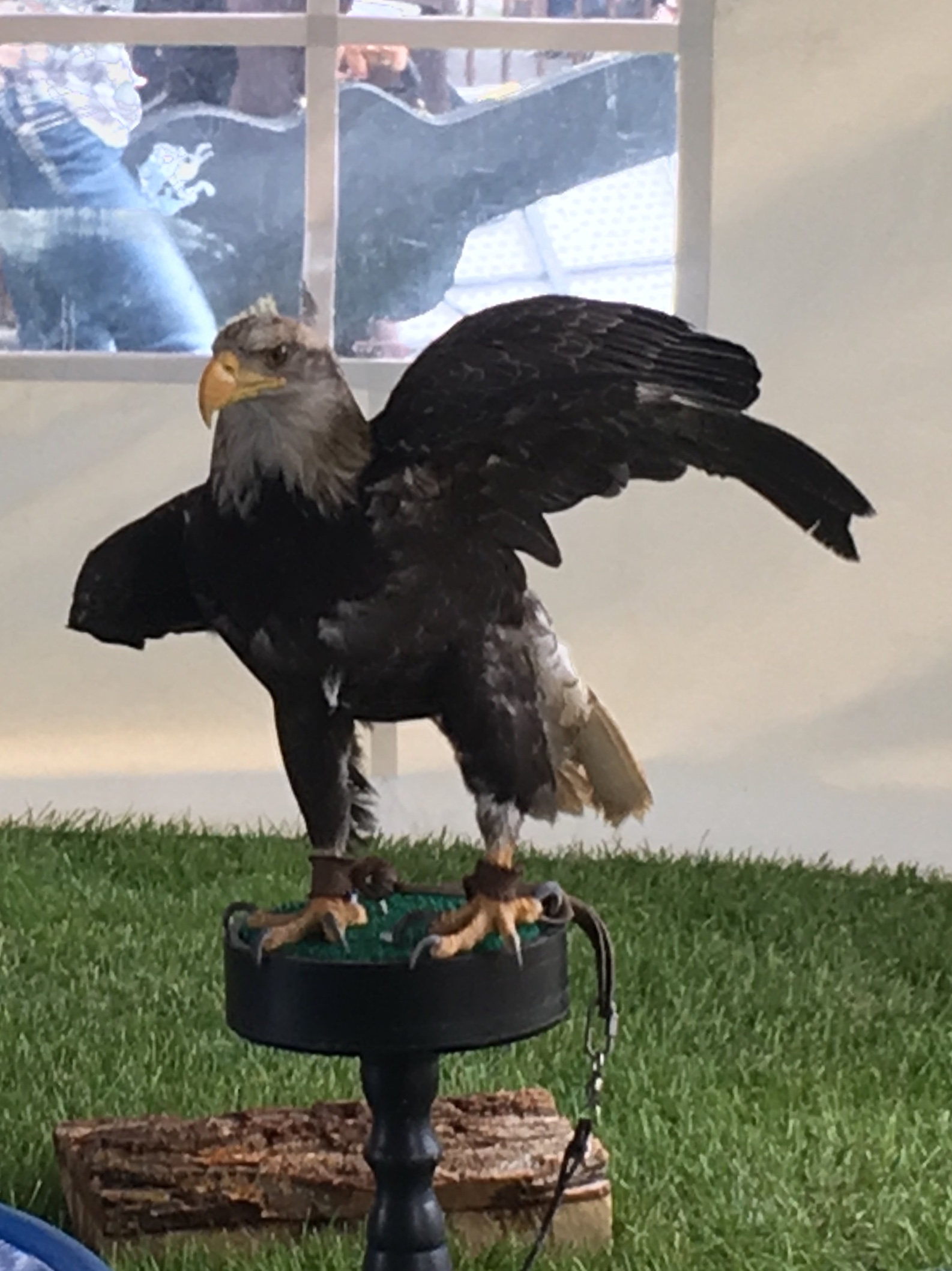
The Bald Eagle: Female (you can tell males and females apart by their size – females are much larger than males!)

Bald Eagle!

She was sent to the center from Missouri – found sick from a severe bacterial infection caused by drinking polluted water. She was finally healed, but the infection had seriously damaged the bones in her wings so she could no longer fly.

You can tell her age by the color of her head. It doesn’t turn completely white until the bald eagle is about five years old. This eagle is about four, which is why she has a salt-and-pepper-colored head.

Photo of the kestrel – a much smaller bird, but still a raptor (but I don’t remember the story…)

Kestrel- in the photo above and below

Peregrine Falcon: This guy was captured after not leaving his nest:

It was discovered that he had a bacterial infection in his eyes. The center was able to cure the infection and restore his vision, but the peregrine falcon couldn’t hunt because his cloudy vision had caused him to miss grades K-12 where the parents had taught the fledglings to hunt.

Check out this link to the Teton Raptor Center. You can visit these birds in Wilson and experience educational raptor encounters similar to what we experienced here at Alpine Mountain Days. Or come to Alpine the third weekend of June during any year!

Eric, David and I ate dinner Saturday night at the new brewery in Alpine – Melvin Brewery – that started up in Jackson, Wyoming, and then they moved their headquarters to Alpine and vastly expanded their operation.

The Melvin Brewery sits right at the tip of Palisades Reservoir. They distribute beer to bars in Idaho Falls and other surrounding areas. Here is the view from their patio (although lovely for summer, but a bit too chilly to eat outside today.)

Melvin Brewery Patio overlooking Palisades

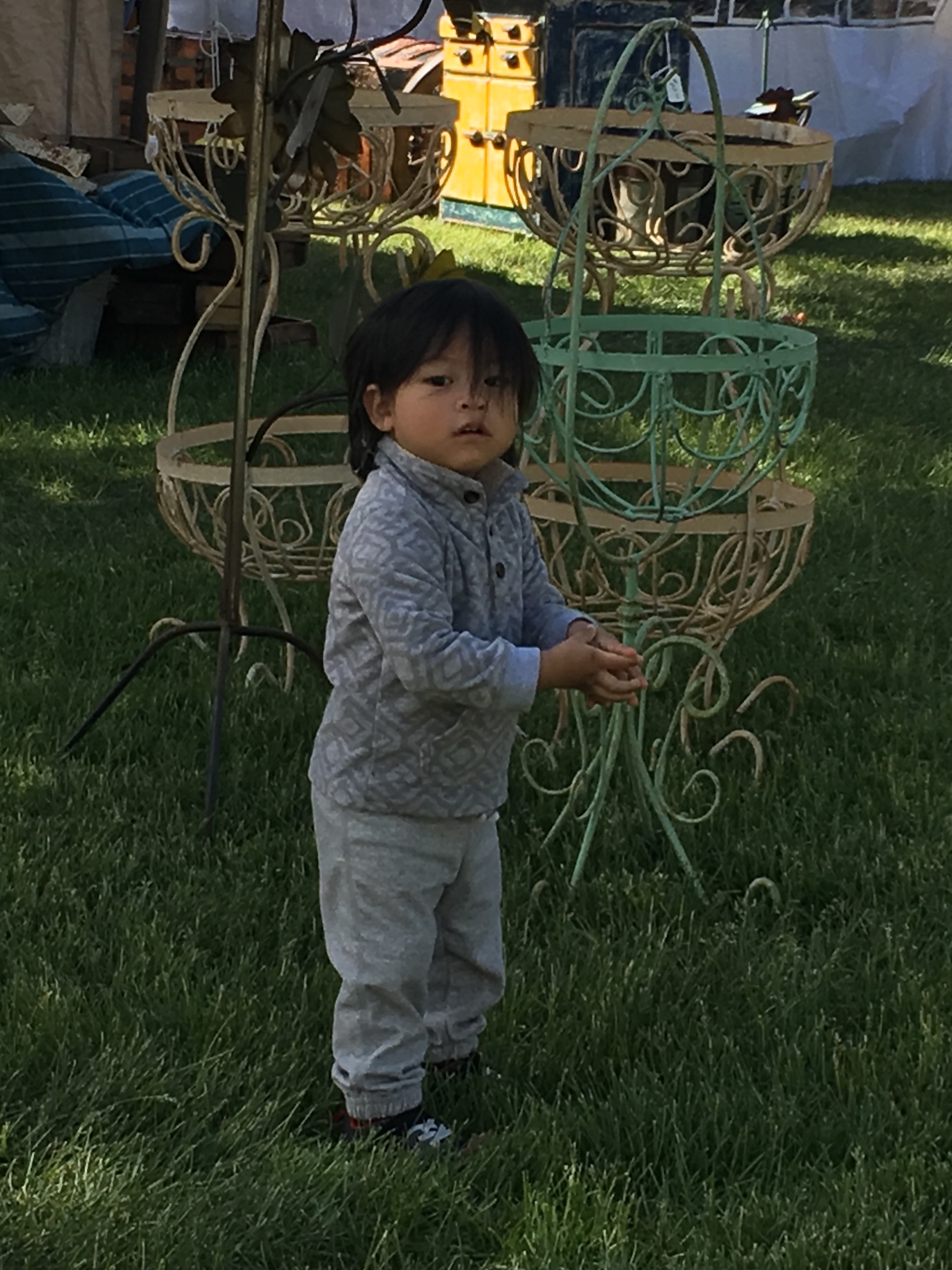
It’s Sunday morning and we need to hit the road back home. We stop by Eric’s booth one more time and hang out a bit. The morning is peaceful, the air is calm, and noticeably warmer than yesterday. We sit, entertained by the little children that belong to the Indian family that sells alpaca wool clothing in the booth behind Eric …

Too precious!

David is wearing his new ‘Melvin Brewery’ sweatshirt he bought yesterday from a vendor.

We particularly like the back of it.

Yeah! Don’t hate. Party.

And on that note I think I’ll put a wrap on this.